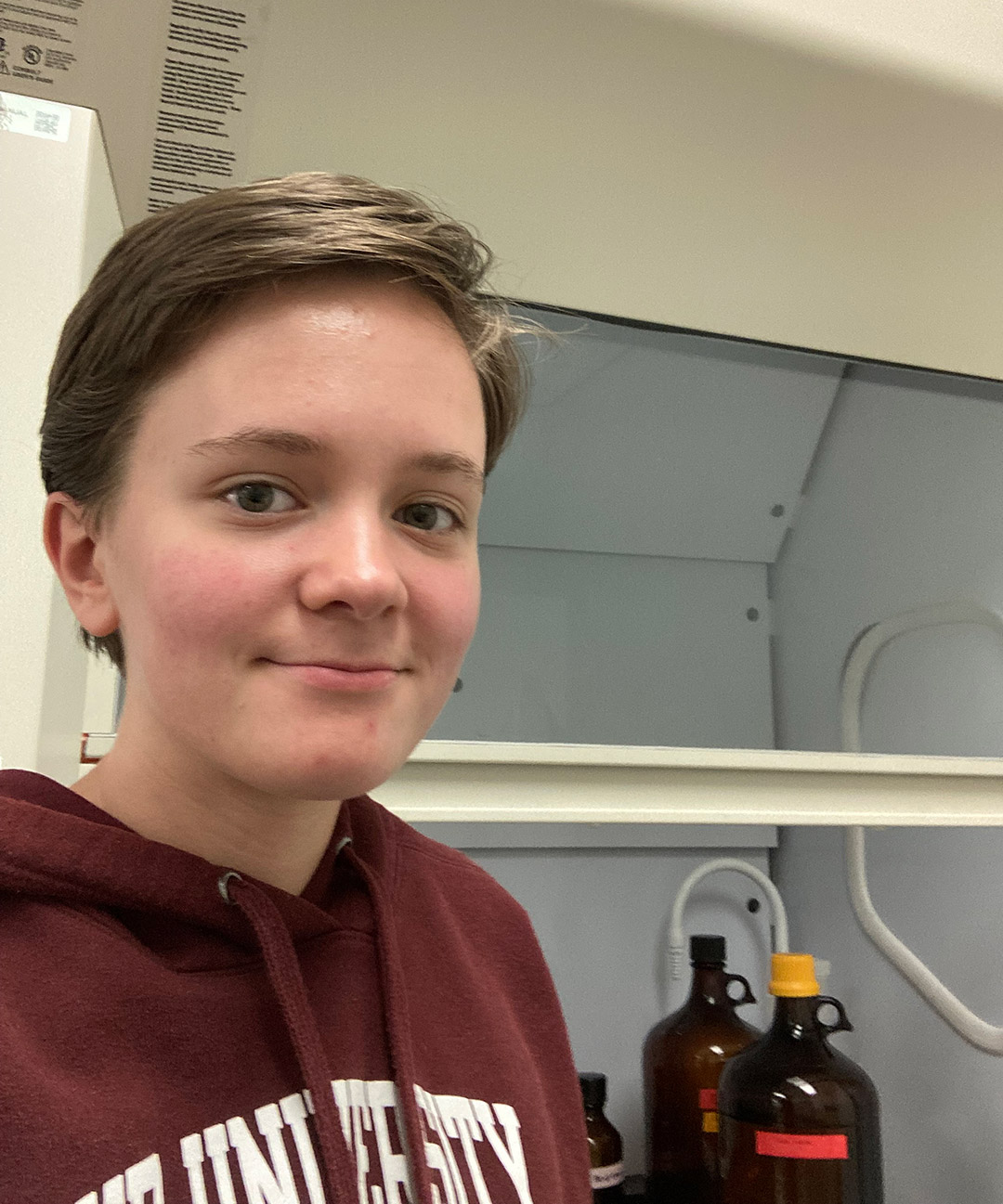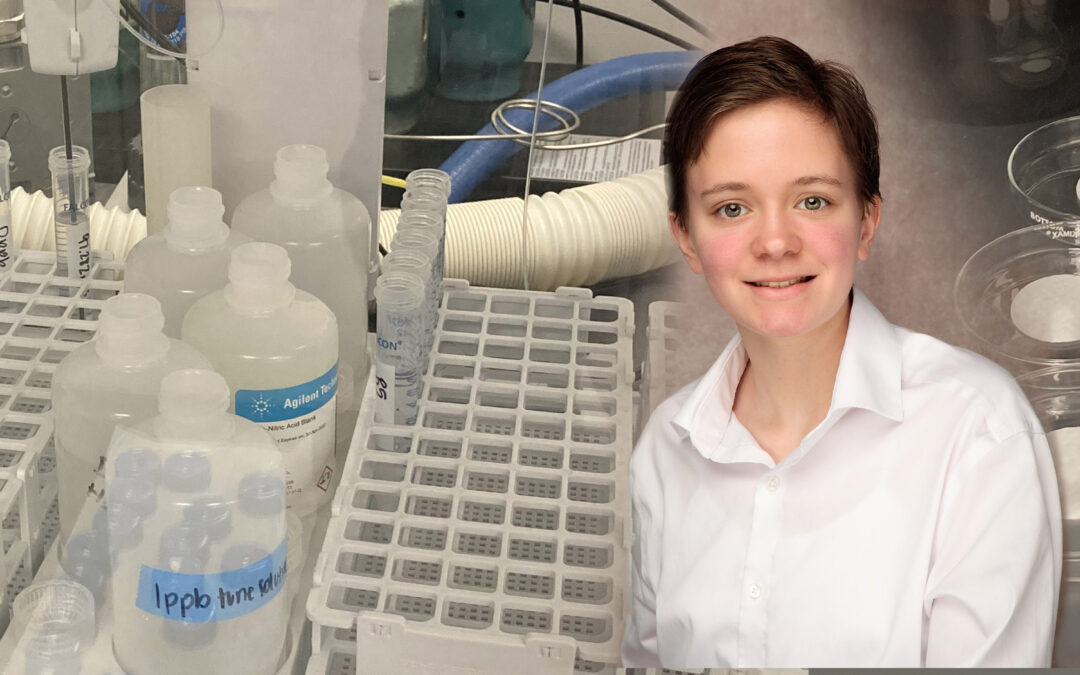
Mollie Mandell reports on her first week at Southern Illinois University in Carbondale, Illinois, as a summer Research Intern in the Mass Spectometry Laboratory.
“When I received an offer to work in the lab of Dr. Mary Kinsel at SIU, I could not refuse… What I wanted most out of this summer was an opportunity to explore my interests and clearly cement my plans for college. Last year, I learned that I enjoyed biology, but over the course of my sophomore year, I realized that I am also a big fan of chemistry. Thus, when I learned that the prospective area of study was mass spectrometry, I was more intrigued at the chance to delve deeper into chemistry than concerned that I would not be able to understand the topic. In between shifts at the library and musical rehearsals, I spent the first weeks of summer researching mass spectrometry, which was a field I had not known much about. I found that it was not as daunting as I originally thought, and my excitement to apply my newfound knowledge increased,” Molly explains.
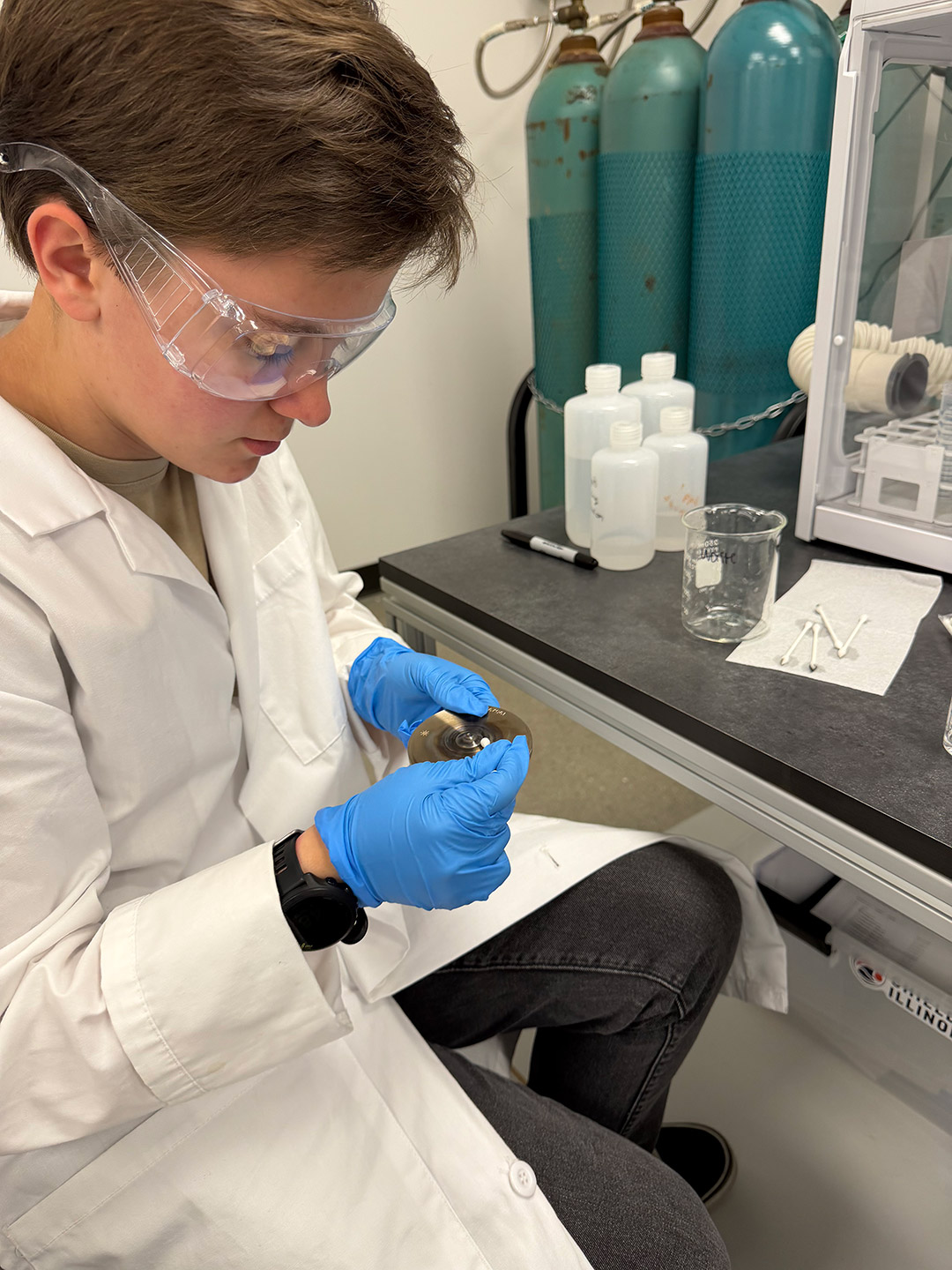
“It wasn’t my first time at the Gower Translational Research Center—I had toured it along with Drs. Mary and Gary Kinsel a few weeks before—but I had not yet met the graduate student whom I would be working under, Chloe Hillyer. When I walked into the lab and greeted her, I was relieved to find that she is a helpful, kind, and intelligent person, who has done much to make me feel comfortable despite not knowing anything about me,” Mollie adds.
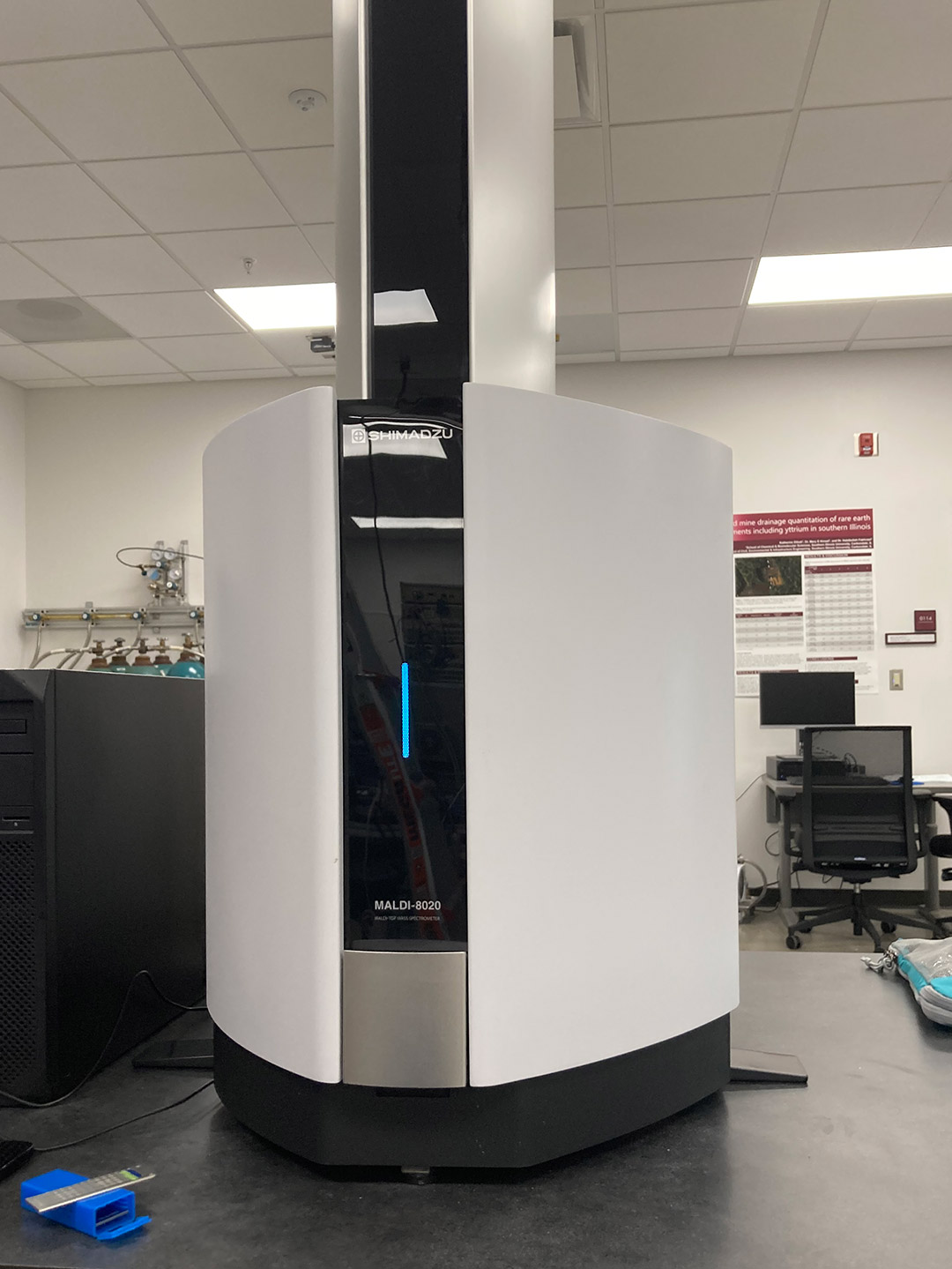
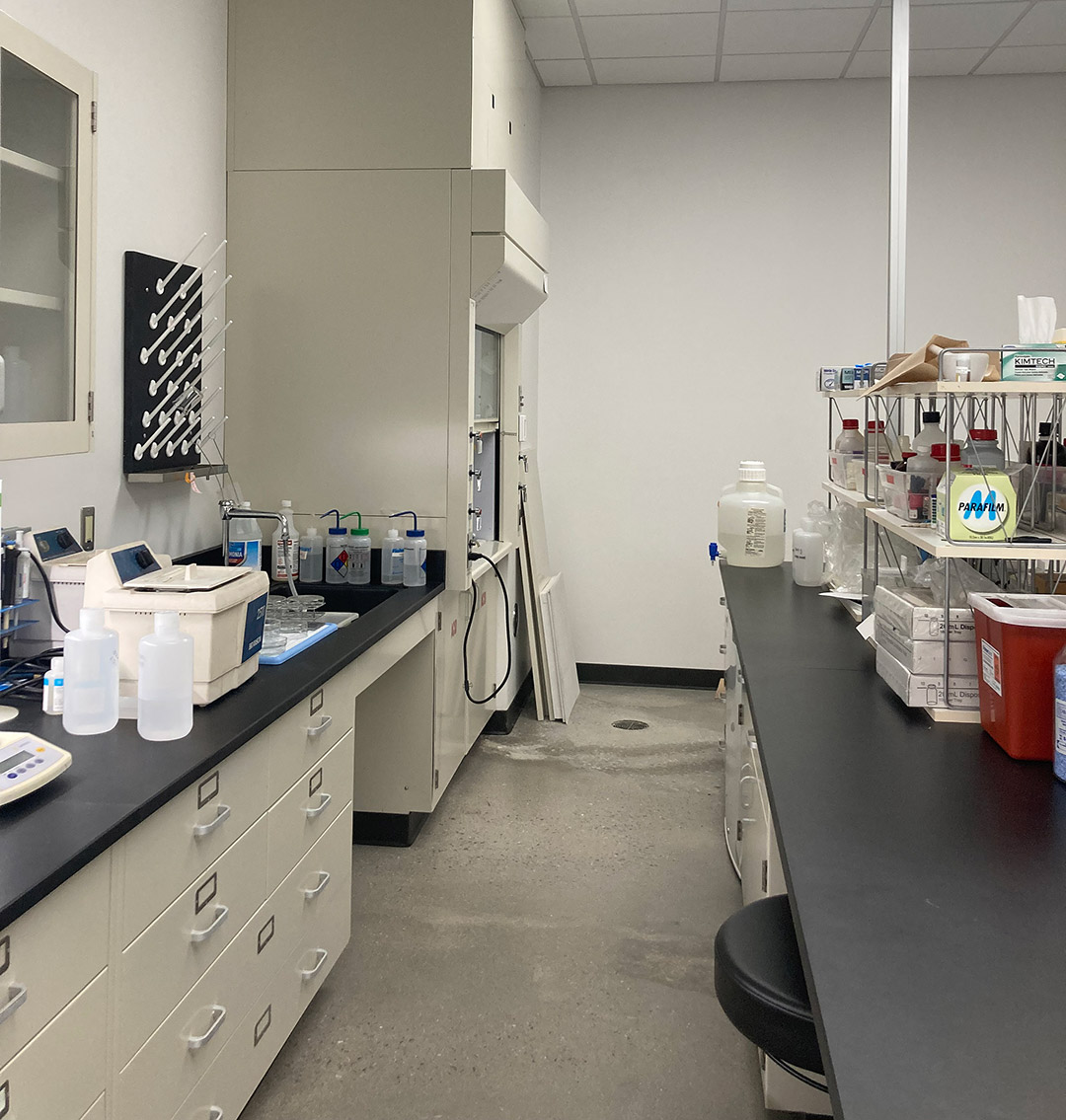
“Not many people work in the Mass Spectrometry Core, especially during the summer, so for the most part, it has just been me, Chloe, and Dr. Mary Kinsel in the lab. After I met Chloe, I was shown a new instrument that was being installed: the MALDI-TOF Mass Spectrometer. Chloe then showed the wet and dry labs, which I had not seen during the tour, as well as the Analytical Core (another lab within Gower). She explained her research project to me in more depth, which helped me to understand my position within the internship. She is studying heavy metals in hemp cigarettes and trying to see if these products have more harmful substances than Illinois regulations allow. I was initially skeptical when I heard about it, but I came to realize that she was genuine in her curiosity and was not just choosing a provocative topic,” Mollie reports.
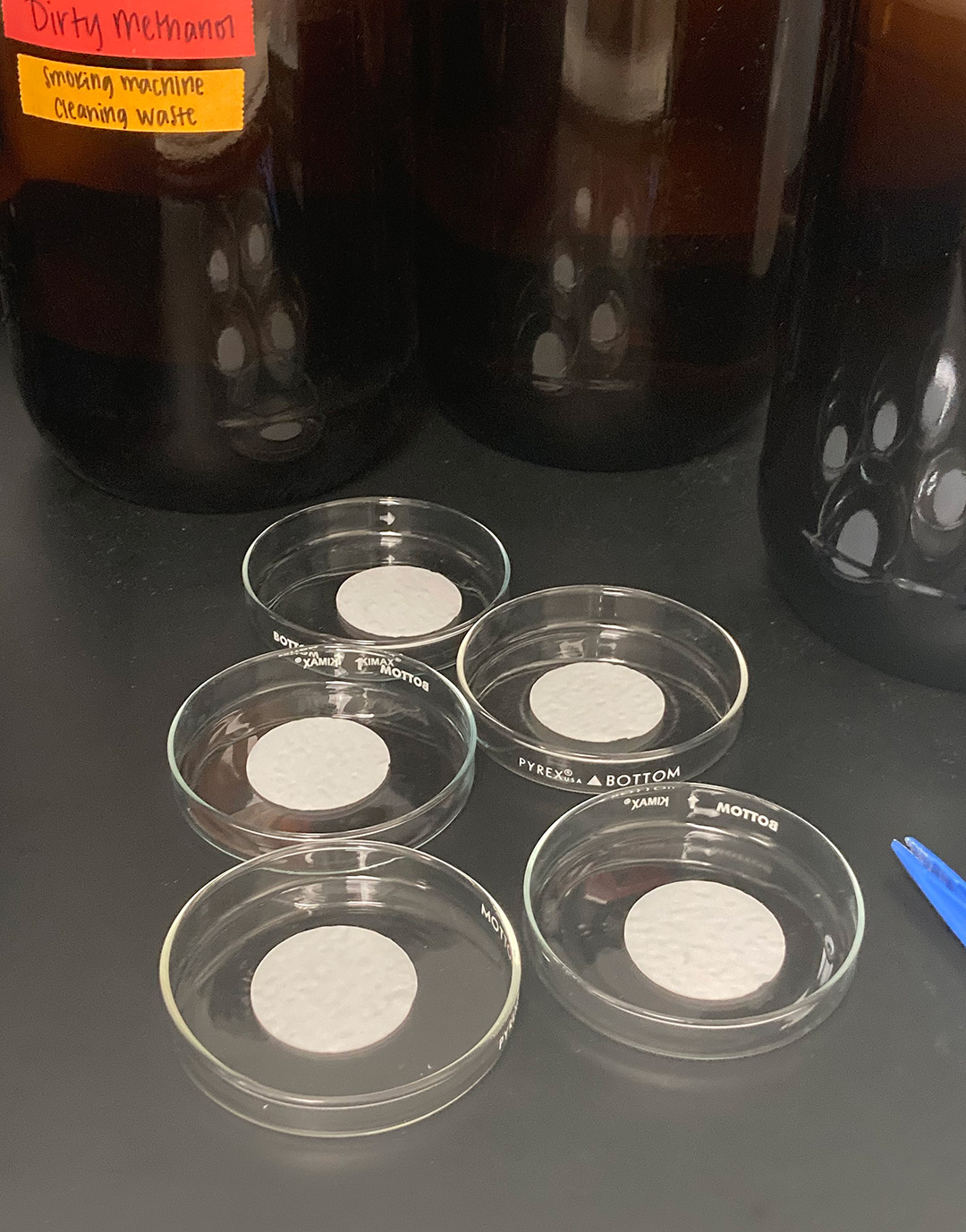
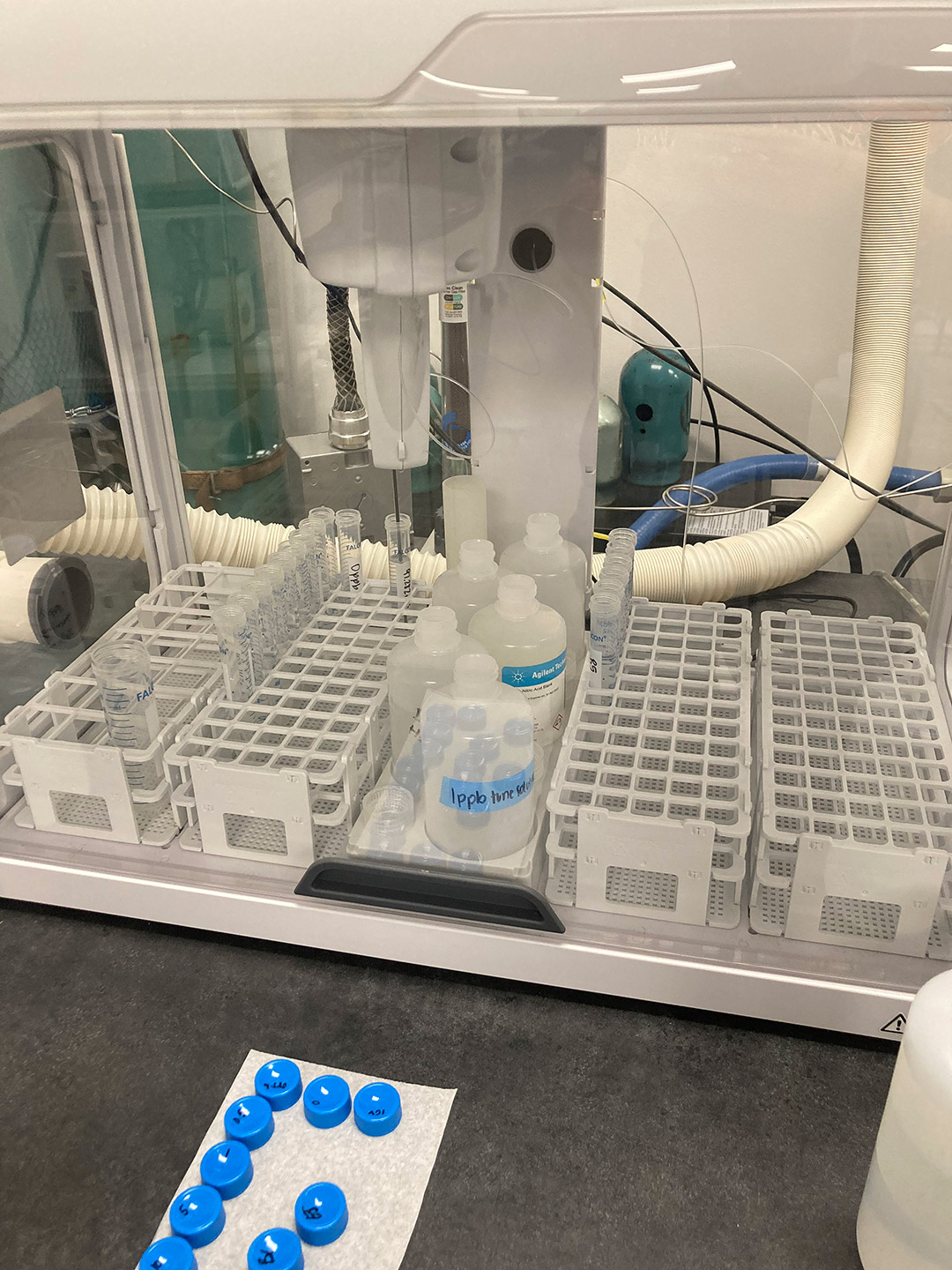
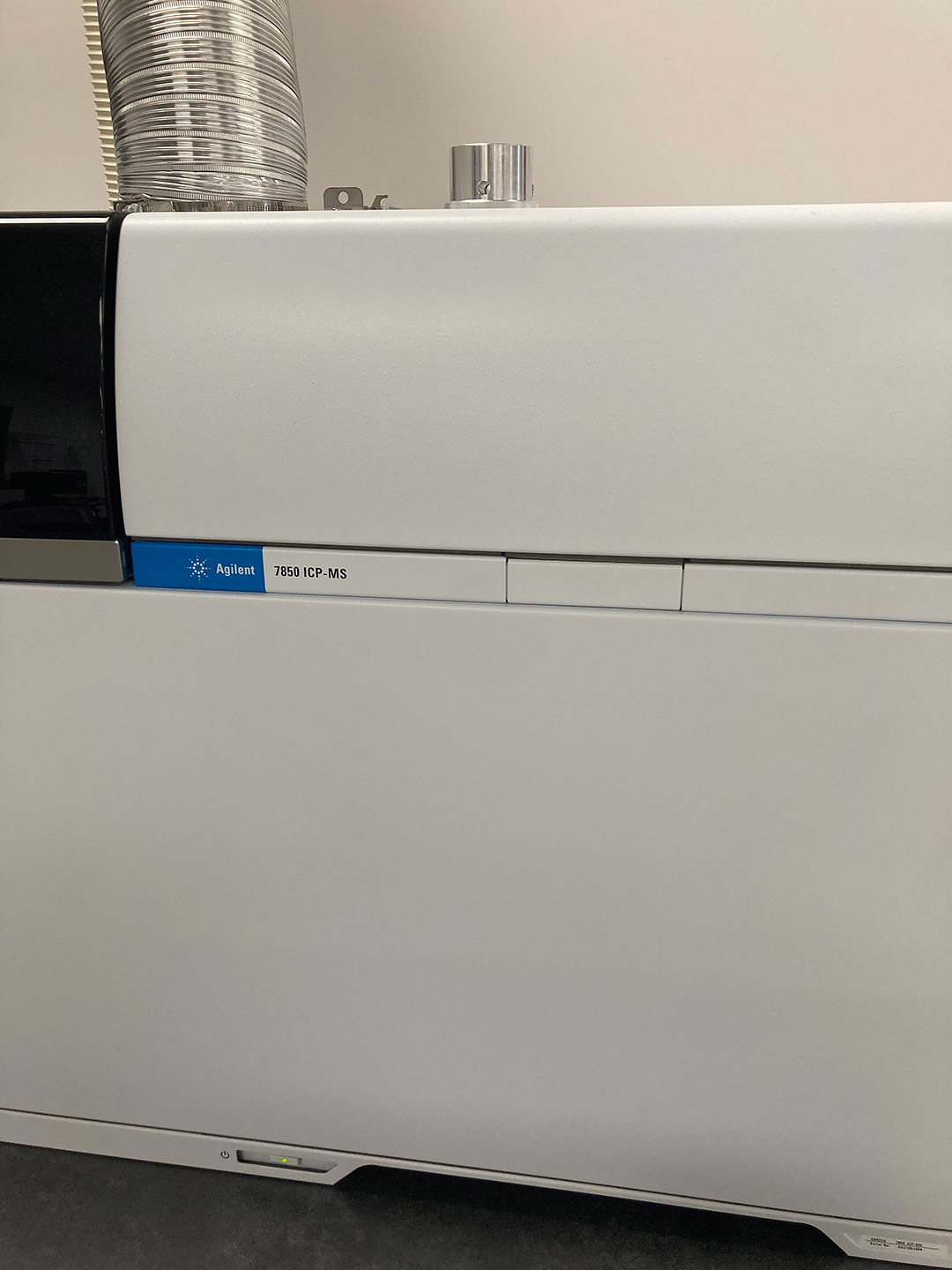
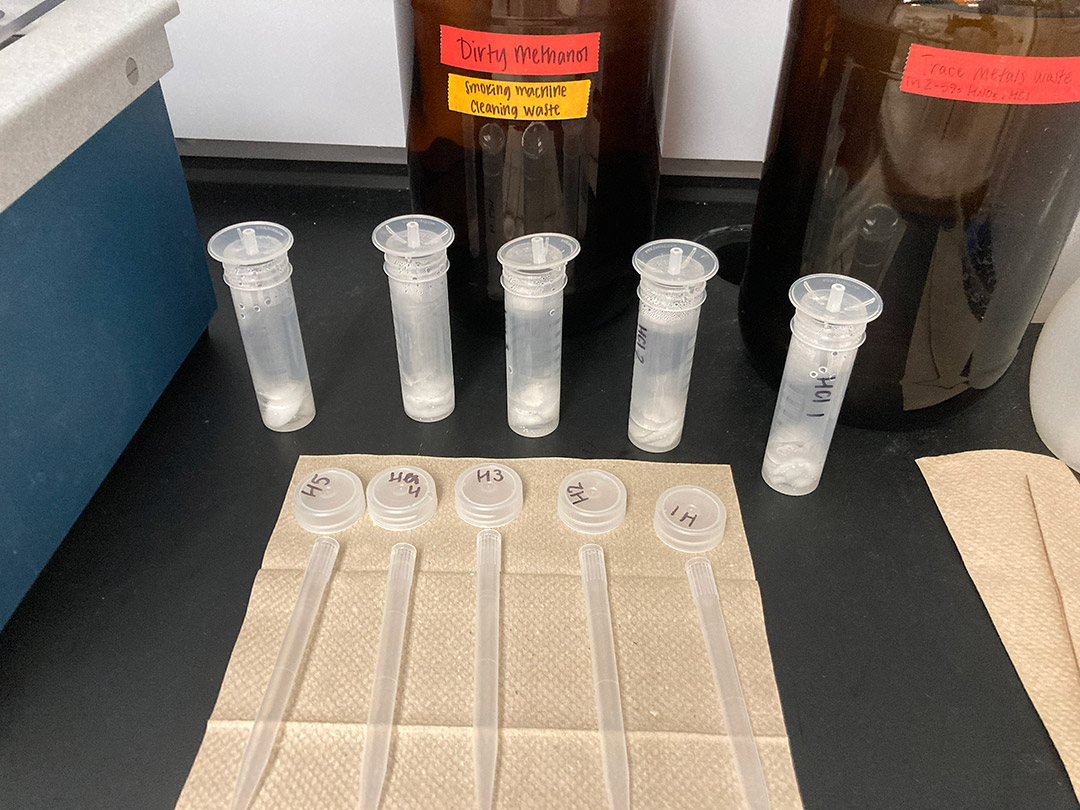
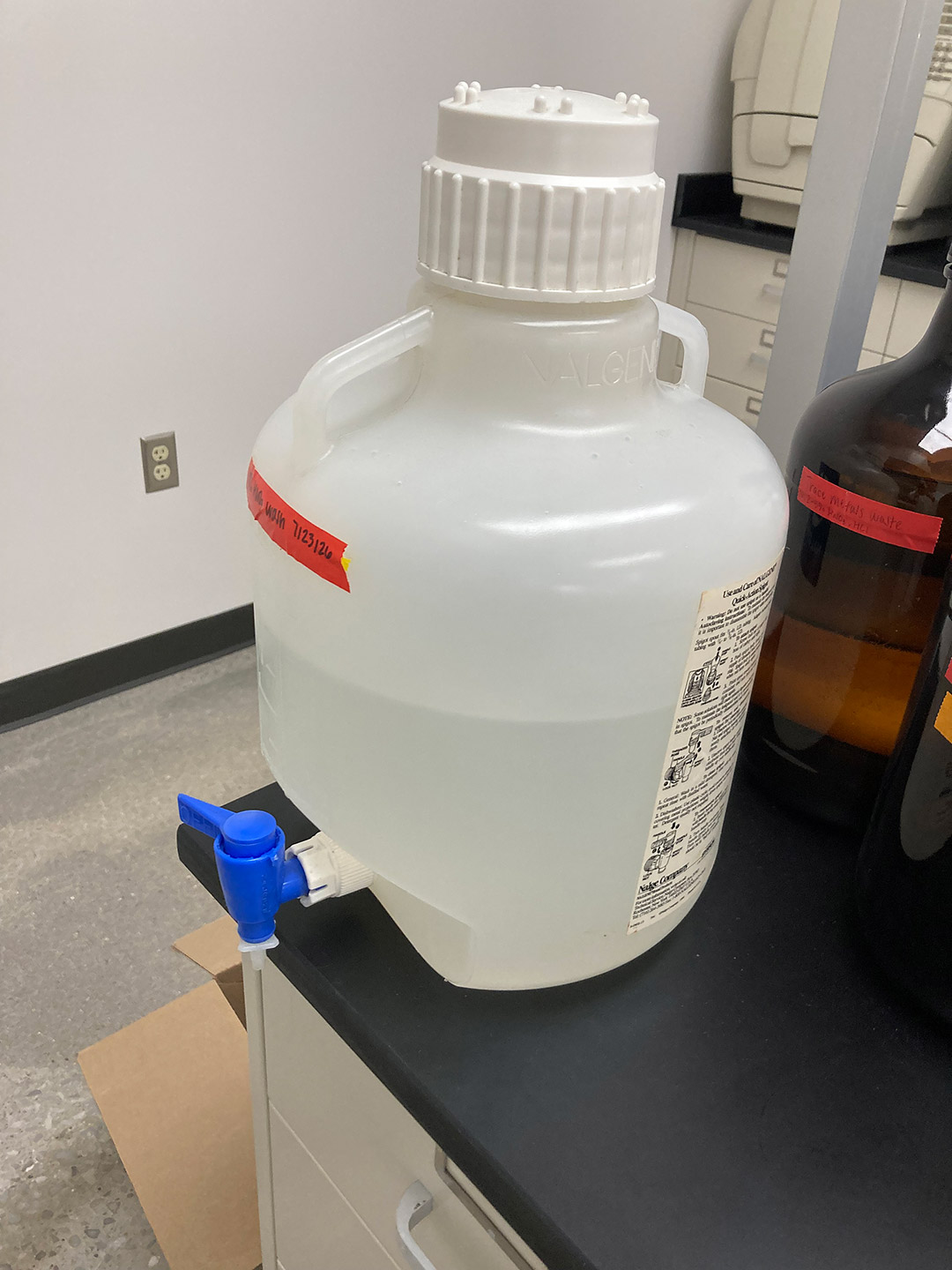
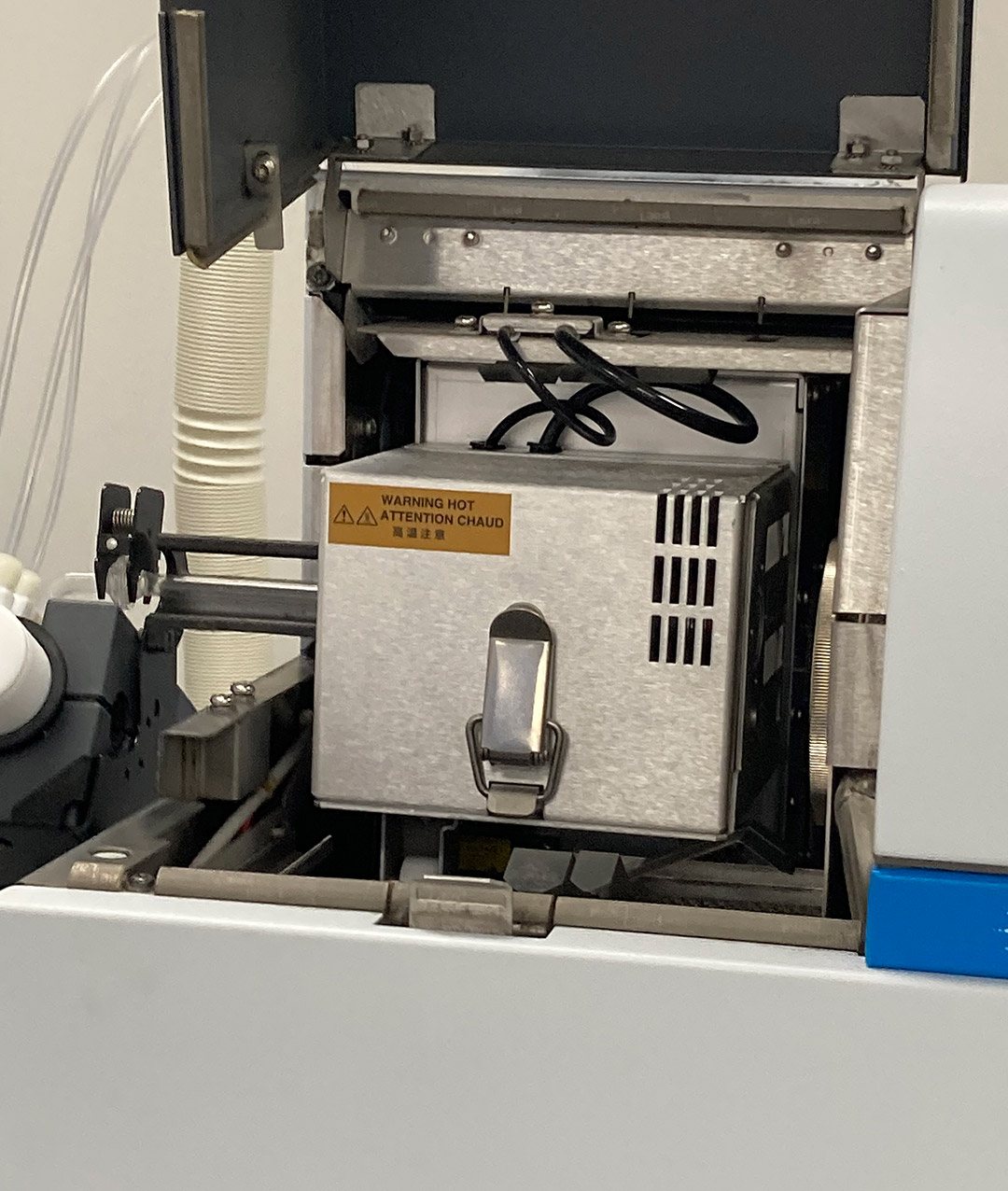
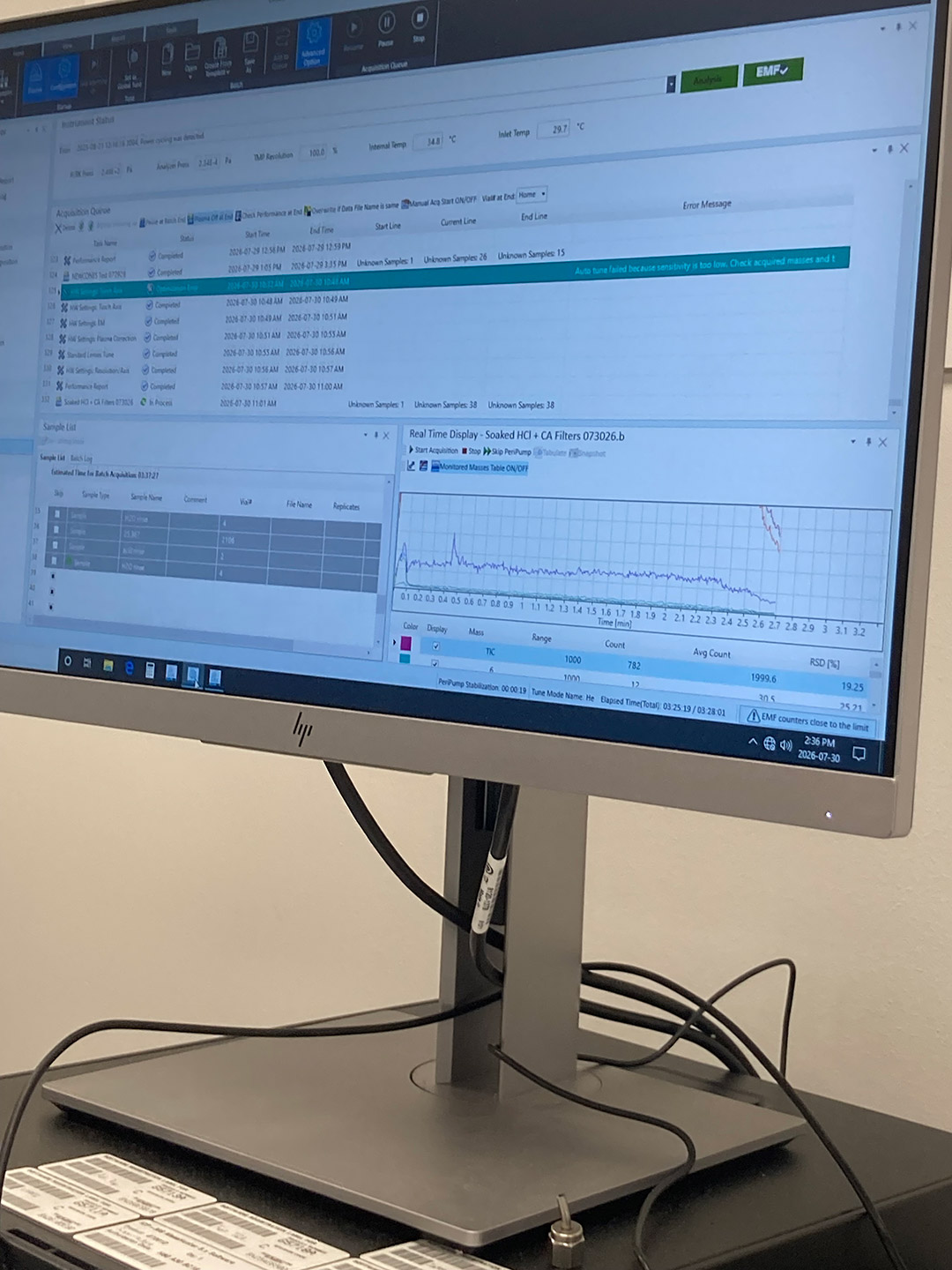
“Next, she taught me about the Inductively Coupled Plasma Mass Spectrometer (ICP-MS), which is the main instrument she uses on her project. It took me a few minutes to understand, but the process of ICP-MS is very interesting: a liquid sample is ionized by an extremely hot plasma, and the ions are moved into a vacuum (so that they do not collide), separated by their mass-to-charge ratio, and then organized into data by the detector. After that, the first activity I actually did to help in the lab was pouring nitric acid waste out of tubes into a container. As I was doing that, Chloe poured filtered water in the leftover tubes so that they can be stored without interruption. Chloe explained to me that the filters she uses in the smoking machine for her project produce readings of heavy metals, even while blank, which is skewing her results. She is attempting to stop this, so we placed the filters in a nitric acid solution to soak overnight in hopes of reducing the readings,” Mollie says.
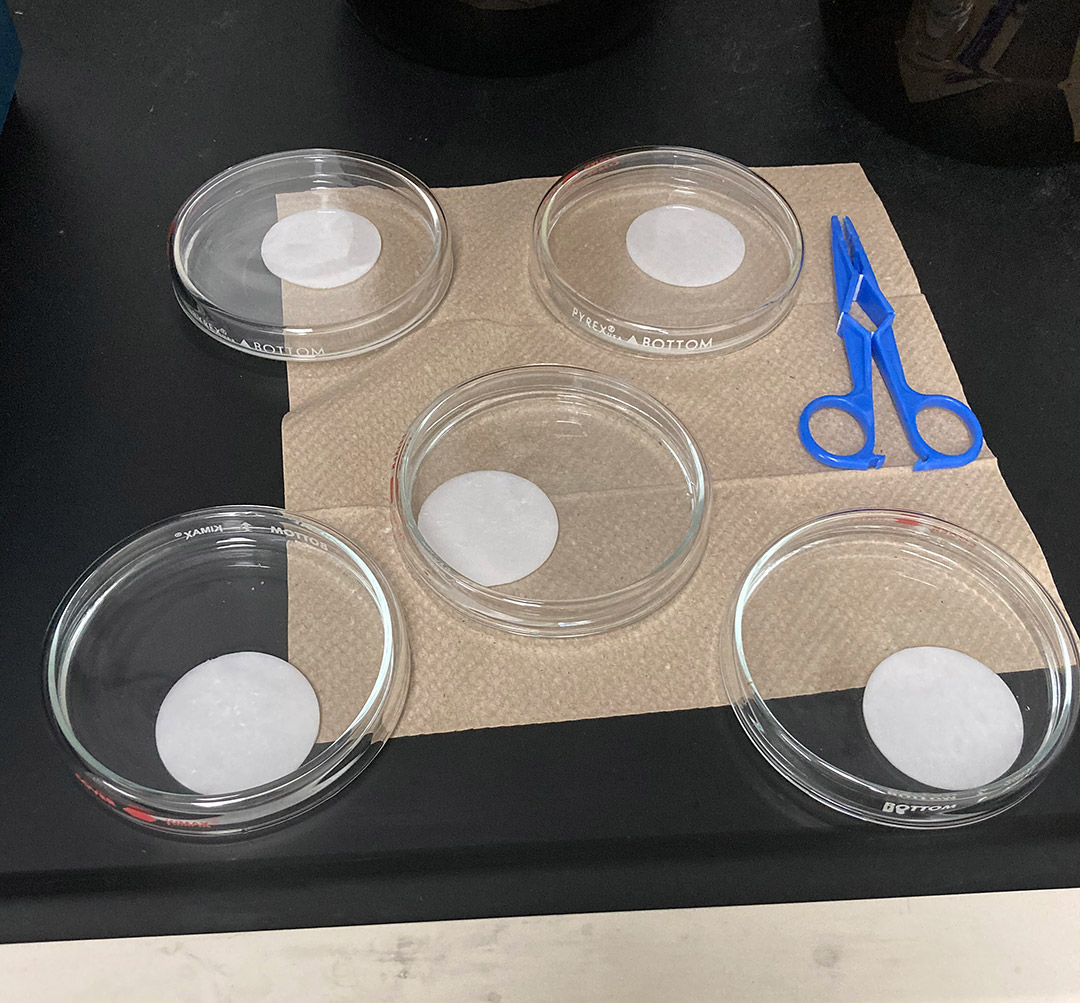
“The next day would be longer than the first, so I was prepared to learn more about my role for the summer. That morning, Chloe and I removed the blank filters from the nitric acid, rinsed them, and waited for them to dry, flipping them every 30 minutes. After that, I poured out more waste by myself, and then together we moved some trash from the MALDI-TOF MS install to a different part of the building,” Mollie reports.
“My favorite part of the day came next: we removed empty argon tanks from the ICP-MS and replaced them with new ones. The process of moving the tanks was slightly nerve-wracking, as Chloe kept reminding me of the possibility that they would blow up, but I learned a lot about the maintenance of the ICP-MS and the struggles that a small, rural university goes through with supplies. To kill more time, Dr. Kinsel gave me a reading on the MALDI-TOF MS while the filters were left to completely dry in the oven. Once they were dry, we placed them in Chloe’s digestion solution, heated them, and left them to sit, before removing the liquid and preparing them to run in the ICP-MS the next day,” Mollie adds.
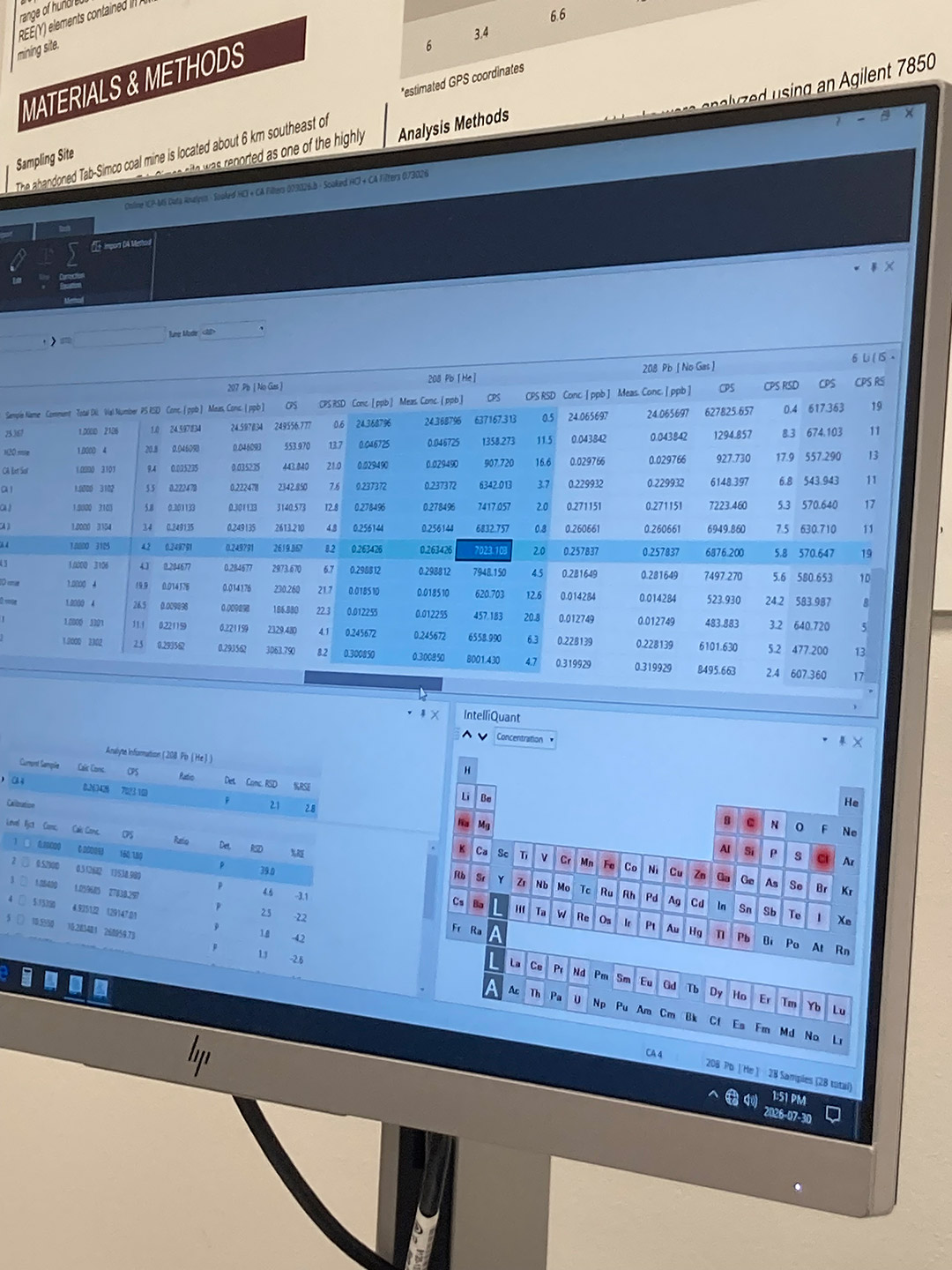
“Before we could run the samples, though, the engineer finally had the supplies to give us familiarization training on the MALDI. MALDI-TOF MS stands for “Matrix-Assisted Laser Desorption/Ionization Time of Flight Mass Spectrometer.” It is different to the ICP-MS and is mostly used to analyze larger biomolecules and synthetic polymers due to its unique ability to preserve those molecules’ size instead of fragmenting them. This instrument is especially interesting to me, as it has potential applications in cancer detection and other medicine. Afterwards, Chloe taught me the startup procedures for the ICP-MS before placing the samples inside of the machine and analyzing them. The whole process took about three hours, so later that afternoon, Chloe read the data and found that the soaking had worked, but only slightly,” Mollie explains.
“Overall, the first week was a success and a great opportunity for me to gain lab experience in a real-world setting. I am so grateful that I am able to have this internship over the summer, and I can never thank the Garwin Family Foundation enough. You have truly taught me what it means to be flexible and I know that I am going to have an amazing experience this year,” Mollie adds.
Week Two — Helping with more rigorous tasks
During the second week, Mollie continued with assisting Chloe on her research project.
“Due to the lack of research on hemp cigarettes, Chloe has not been able to find many sources for her thesis, so she enlisted me to help her in her search. She handed me a list of keywords, such as phrases like “trace metals” and “particulate matter,” which I used in combination with each other to find articles that I hoped would help her. I found some interesting ones, but because of the nature of her research, most of them related to tobacco and cannabis cigarettes. However, I was still able to glean useful information, including data about the filters we use, smoking machines, and heavy metal accumulation. At the end of the day, we soaked five filters in a nitric acid solution to leave overnight,” Mollie explains.
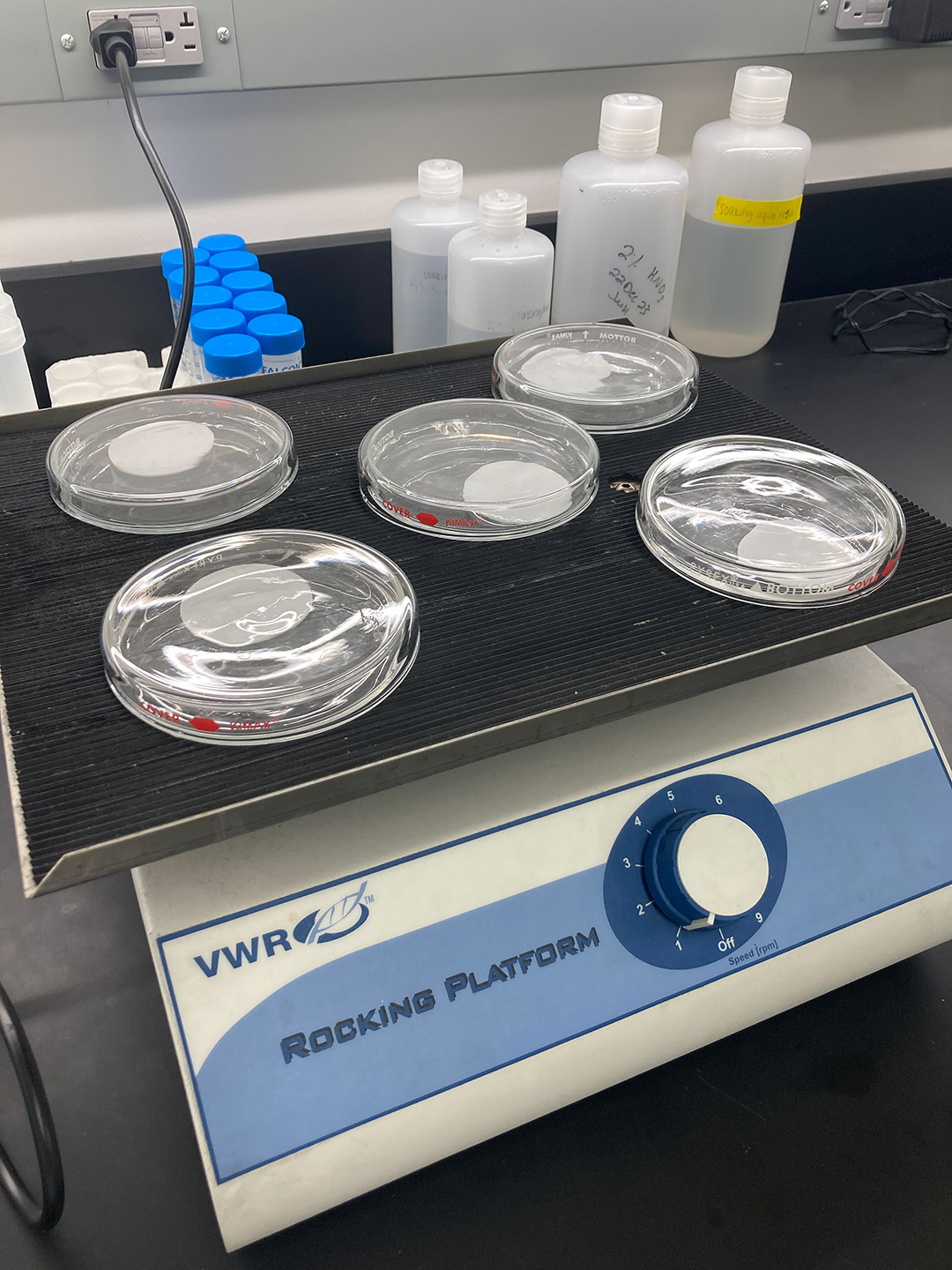
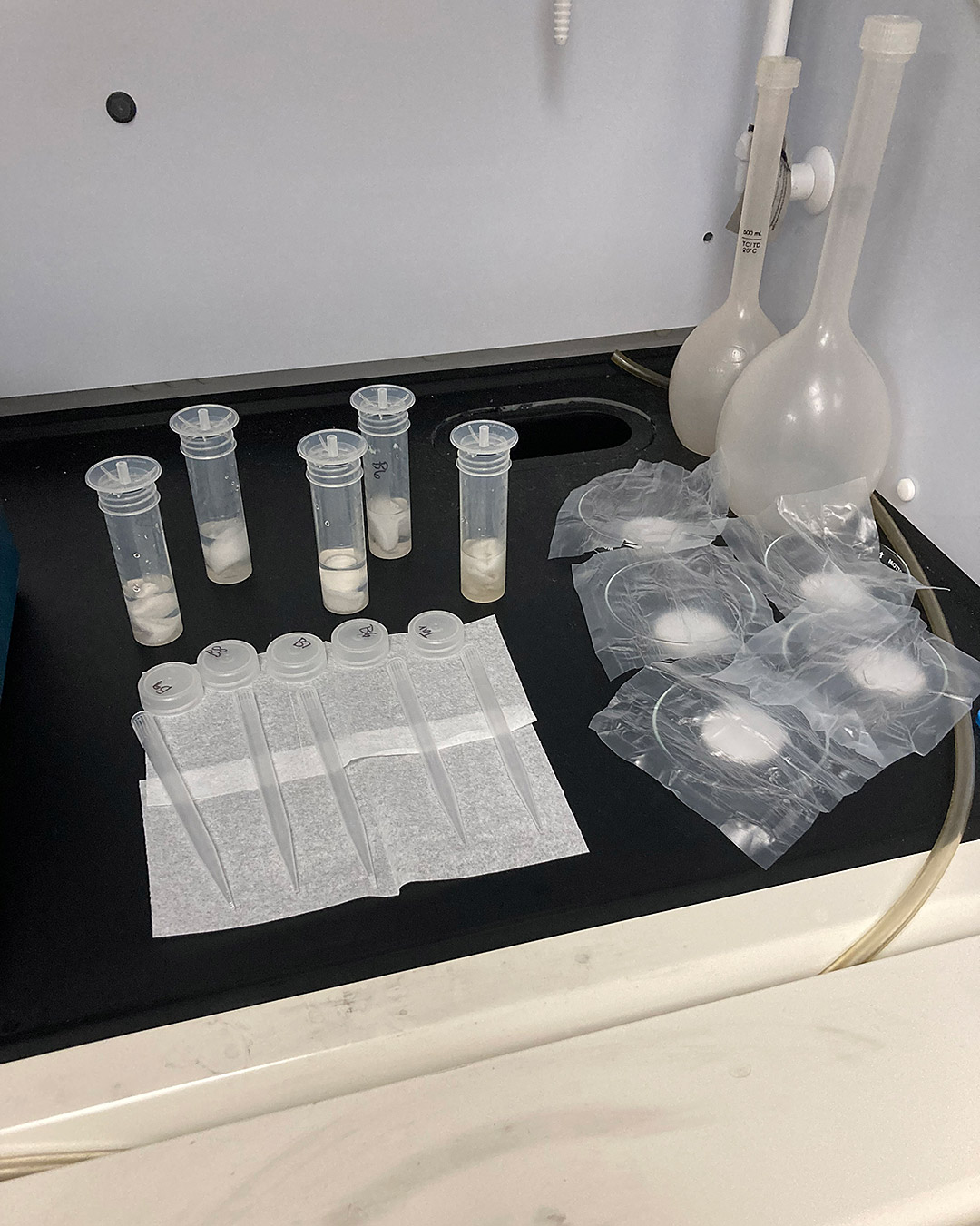
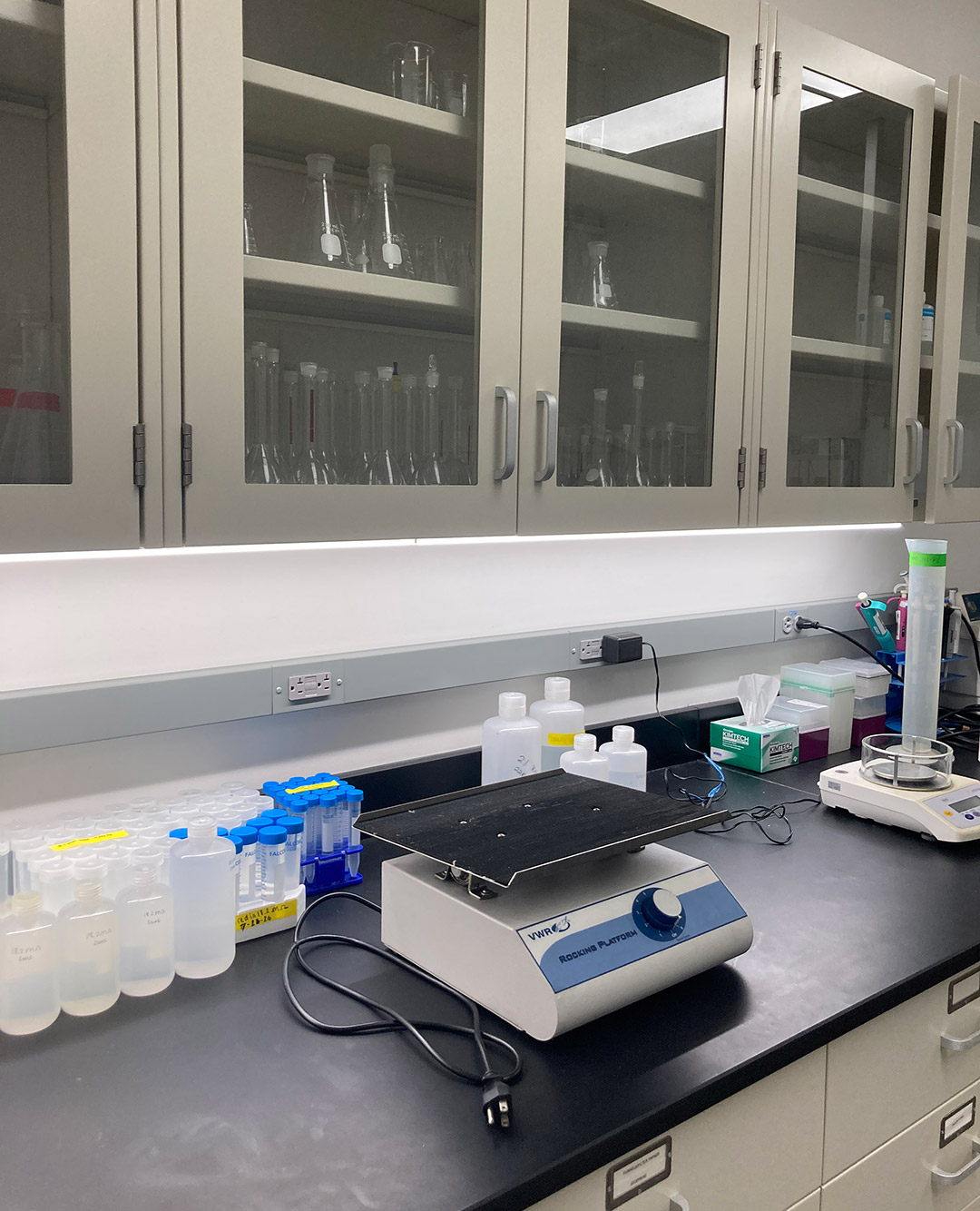
“When we came back the next morning, we removed the filters from the nitric acid and let them soak in water on the rocker, changing the water twice. Afterwards, we drained them and left the plates under the fume hood to dry, flipping the filters throughout. Chloe came in early the next morning to further dry the filters in the oven. Once they were done, I pipetted the digestion solution into tubes with the filters. This was a skill I was a bit rusty with, as I hadn’t used a pipettor since those few days in the lab at UChicago last year. I quickly got the hang of it again, though, and I felt nostalgic for my first days in a lab the year prior,” Mollie adds.
“The best part of this day was being more active in the project, as Chloe allowed me to completely prepare my own three samples with her guidance. We placed the tubes in a hot block to digest before letting them sit. While they did, Chloe directed me in the process of making a batch for the ICP-MS, which mostly included me clicking around blindly until I found the button she was guiding me to. Once I finished the batch, though, I found that the program was not too difficult to understand. Then, she let me do the starting procedures for the instrument, which included securing the peristaltic tubing and opening the gas canisters. We checked on our samples afterwards. I rinsed my batch of filters and poured their liquid into different tubes before adding water to dilute the acid,” Mollie reports.
“The next step was to filter the tubes so that no solid matter would be sampled by the ICP-MS, which would ruin the instrument. Once they were ready, we placed the samples into the mass spectrometer and hoped that what we had done would work. After the two hours that it took to run, I went through the ending procedures while Chloe pored over the data and converted it into a usable spreadsheet. From the results, we found that the soaking had worked slightly better than the rinsing, and we had more consistent numbers that will contribute to our background reading subtraction. Overall, it was a very successful day,” Mollie adds.
“What I enjoyed most about this week was being able to help more independently within the lab, which allowed me to learn much more about mass spectrometry and research in general. I am having a great time gaining responsibility, as I believe Chloe and Dr. Kinsel are beginning to trust me with more rigorous tasks. Outside of the lab, though, I am appreciative of being at home, as it gives me an opportunity to learn about accountability and balancing everything that is important to me: this internship, my job, my family, rehearsals, running, et cetera. At the same time, I am trying to enjoy this experience as much as possible, as my favorite memories from UChicago were outside of the classroom. So, I have been taking moments to explore Carbondale, check out shops, and get to know Dr. Kinsel and Chloe. I am very grateful to the Garwin Family Foundation for providing me with this opportunity,” Mollie says.
Week Three — A Structured Plan
During week three of her program, Mollie developed a structured plan for soaking filters in the lab.
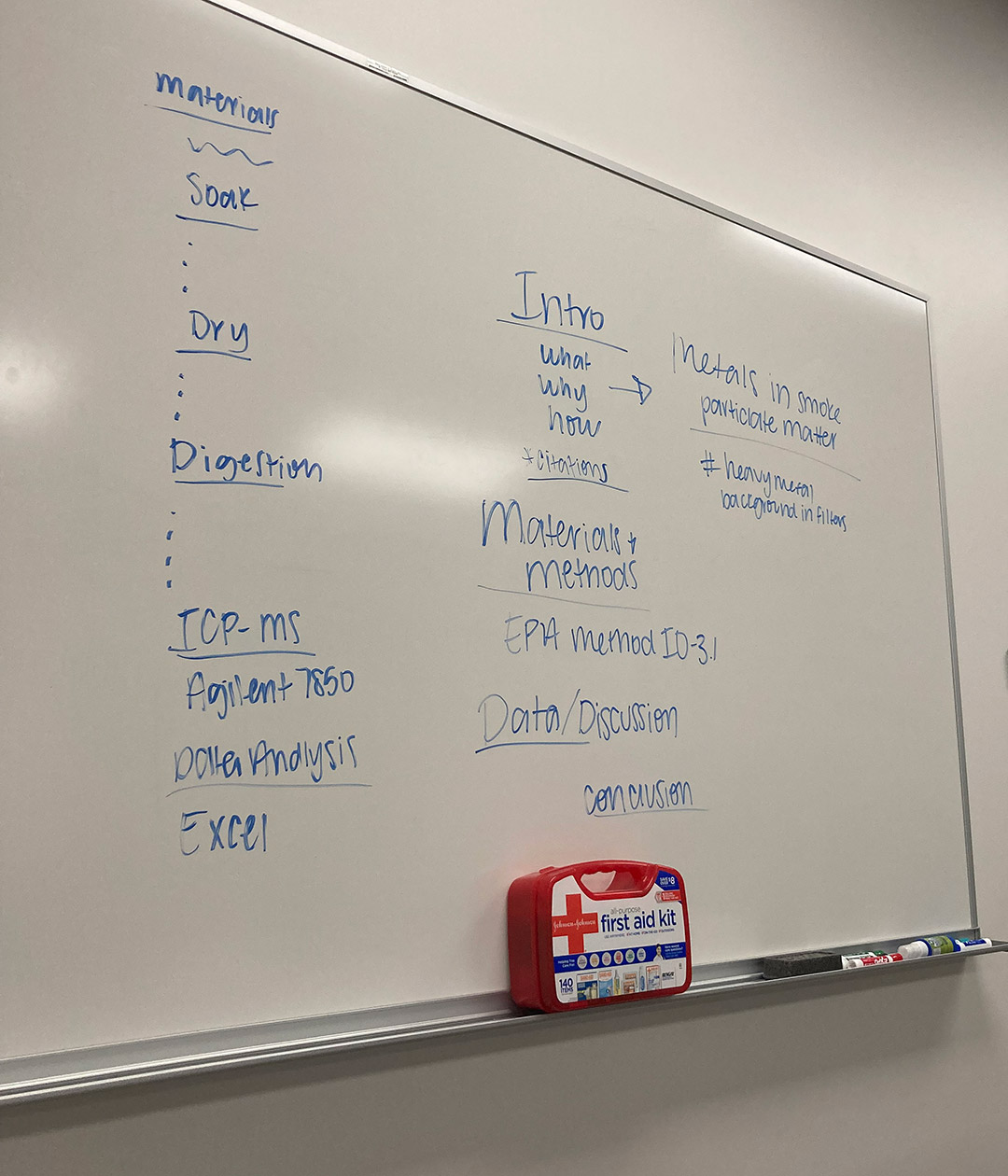
“This week, we finally had a structured plan to continue with the research. Chloe soaked a batch of filters the night before my first shift at the lab, so the waiting time decreased. The next day, we drained the dishes of nitric acid and replaced it with water. With that, we continued the rest of the protocol that we established in the weeks before. While we waited for the filters to dry, we planned out my role in the project and what we will need to do for the rest of the summer. Dr. Kinsel assigned me a scientific-style report that will detail our method for soaking the filters and how it fits into the rest of Chloe’s project, so throughout the week, I took notes on the protocol. Before we left that day, we soaked another batch of filters, as we needed 20 filters to make the calculations for their average background readings,” Mollie reports.
“On Wednesday, we soaked the second batch of filters in water and dried the first one in the oven. Dr. Kinsel told me that I needed to finish the draft of the method by the end of this week, so I continued to take notes on the protocol and researched sources. A wrench was thrown into our plans, though: Chloe is to make an oral presentation about her research at the American Chemical Society convention in August instead of a poster like she requested, so she needs more data sooner. She and Dr. Kinsel subscribe to a gradual philosophy of research, but after a bit of panic they were able to formulate a redirection,” Mollie explains.
During the week, Chloe introduced Mollie to the “infamous smoking machine that is the backbone of the project.”
“It was much less impressive than I thought it would be. It belongs to Dr. David Gilbert, a professor emeritus in the psychology department. Back in the day, when it was ethically sound, he would recruit SIU students to sit in the small cubicle with electrodes on as the machine puffed away in order to read their brainwaves in reaction to cigarettes. Now, though, it sits behind many doors in the basement, so he graciously allowed Chloe and Dr. Kinsel to use it for their project. It’s stories like this that allow me to understand what studying and researching at a small rural college is like: they work with what they have, because they cannot afford much else. So, despite the instrument’s unimpressive size, I appreciated it for its contribution to our project. Chloe swabbed the machine, expecting to find cigarette tar to test in the ICP-MS, but did not obtain much, as she had cleaned it recently. We hoped it would be enough,” Mollie adds.
“When we got back to Gower, we placed the second batch in the extraction solution, moved it to a hot block, rinsed it, and poured the liquid into new tubes before diluting and filtering it. The next day, we finished preparing the second batch, and were pretty much done, as Dr. Kinsel was in St. Louis and did not want us running the ICP-MS without her (for safety reasons). However, I decided to stay in the lab to work on my report, which was a good idea, as Chloe and I were able to discuss what my expectations were. This greatly helped me, as I am the kind of person to always ask a clarifying question,” Mollie reports.
“This week was great! I feel like I definitely understand my role in the lab now and what I need to do before my six weeks are over. I can’t believe I’m already halfway through. I would never have been able to experience this without the help of the Garwin Family Foundation, and I appreciate it so much,” Mollie says.
Week Four — Lead Reduction, Acid, and an Interview
During her fourth week in the lab, Mollie was able to finish soaking the blank filters in nitric acid. She also learned about a lead reduction technique using acids.
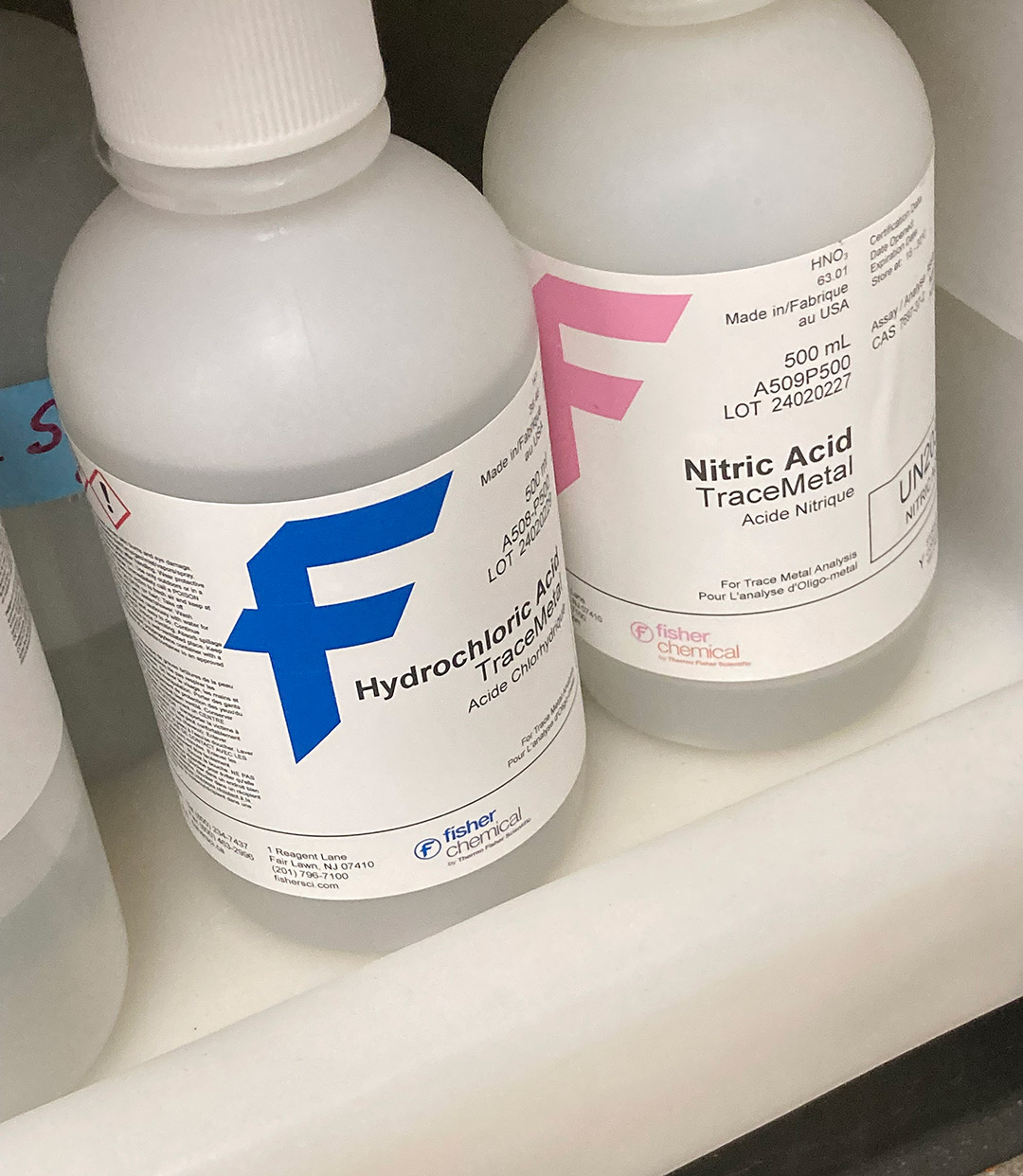
“Chloe came in on Monday to start the protocol, so when I was there on Tuesday, I soaked the filters in water. After their allotted hour, I moved them to the fume hood to dry. During the waiting period, Dr. Kinsel shared a paper with us in which the authors reduced lead leaching in dirt. She hoped that their methods could be applicable to our project, as the lead in the filters has been a problem for us. Instead of soaking the dirt in nitric acid, as we had been, the authors of the paper tested both hydrochloric acid (HCl) and citric acid. Their results showed a marked decrease in lead content, so we decided to use those acids to soak one batch each. Chloe and I made up the HCl solution that day, and in that process, I realized that it looks much less scary than one would think. I made a comment to that effect, and she remarked, “it’s always the colorless, odorless ones that get you.” Not terrifying at all. I also learned the proper method of adding acid to water, which will probably be helpful in the future,” Mollie explains.
“The next morning, Chloe had an appointment in Marion, so I worked on the first and second batches of filters on my own for about an hour until she arrived. When she did, we digested the nitric acid filters, and replaced the secondary containers (for measuring) for the acids. Those which had been sitting for a while had turned yellow, with white spots on their caps, which is not generally a good indication. After we finished, we remade the 0 ppb solution for the ICP-MS, which is part of the calibration curve that allows the instrument to detect different elements. Then, we finished the last nitric acid batch, and Chloe had me calculate how much citric acid we would need to make the dilution we were aiming for. It must have been a day of solutions, because we contemplated remaking the tune solution for the ICP-MS, but decided against it. I then worked on the intro for my report for the rest of the day, mainly focusing on finding sources,” Mollie adds.
“Thursday was a shorter session in the lab, as Chloe needed to leave early that day to travel back to Springfield. While she started up the ICP-MS to run the 20 nitric acid filters, I took the HCl batch out of the oven and digested them. As I worked, I worried over a situation I was unsure about: the week prior, Brooke Schlyer-Keltner had approached Dr. Kinsel about interviewing us, and I wasn’t sure I was ready. As she walked into the lab, I was preparing the last digestion tube, so I hurriedly added it to the hot block. Overall, though, the interview went mostly well. Dr. Kinsel and Chloe also answered a few questions. When my timer went off for the hot block, I asked Chloe if she could take care of it, but she told me that I had actually not turned the hot block on. Oops. Hopefully it didn’t affect anything; I was just so nervous about the interview that I was distracted and did not flip the switch,” Mollie explains.
“Next week is going to be interesting: Chloe is called for jury duty in Springfield and was not able to defer it, so I may have to work by myself for a few days. If this does happen, we have made plans so that I can continue the research, but it will throw a wrench in our pacing. It may be difficult to deal with, as next week will be my second-to-last week in the lab. However, she may not end up being needed, so we will just have to see what happens,” Mollie adds!
Week Five — Soaking Filters & Filming an SIU Ad
Mollie began her fifth week in the lab soaking filters in different acids and trying to finish the methods section of her report. The week included an SIU advertisement being filmed in Gower, and a few lab glitches.
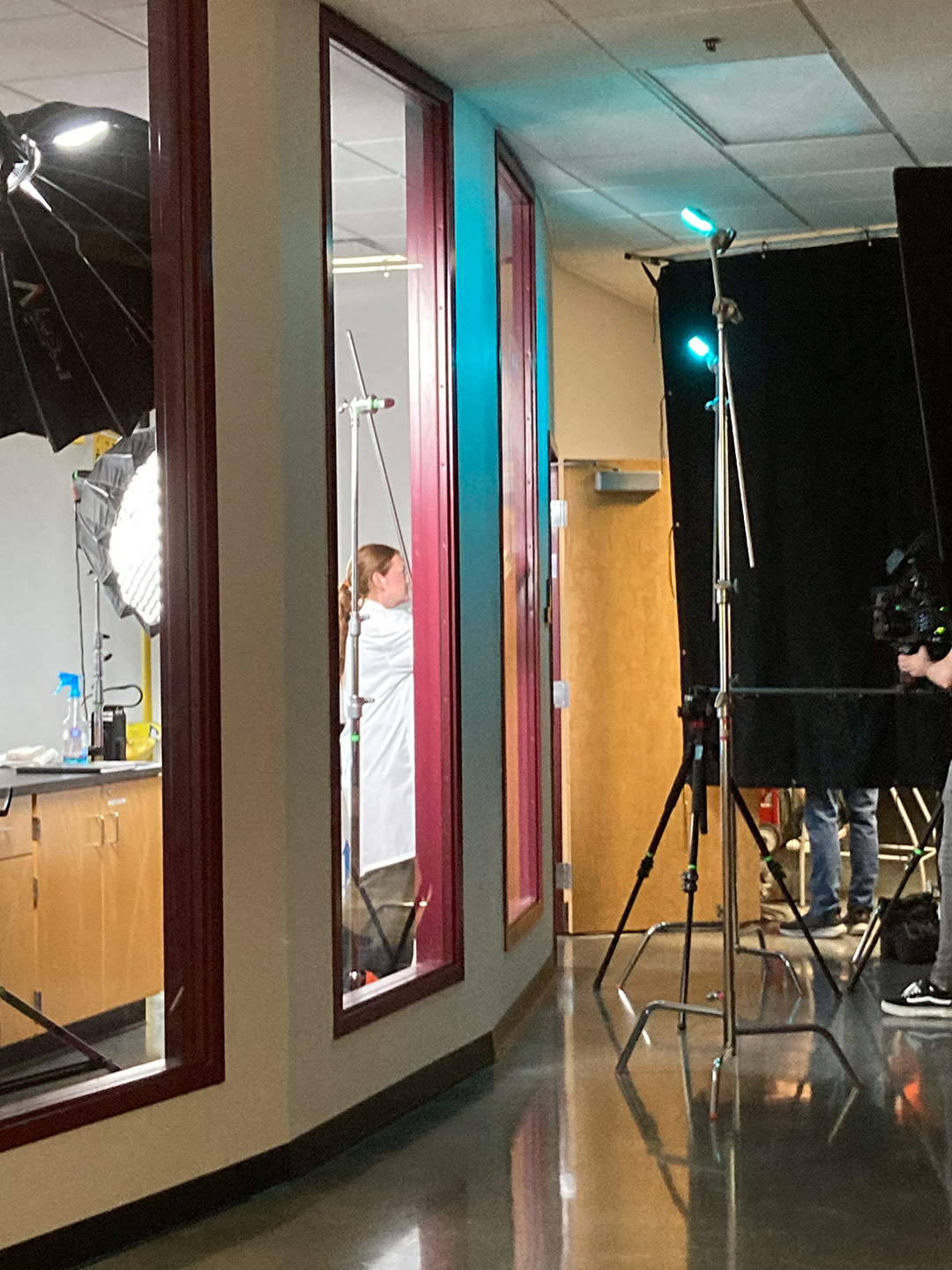
“We came in early, as SIU was filming an advertisement in Gower, and they potentially needed “actors.” They set up for a while before doing a headcount of who would be involved. Chloe and I volunteered, but weren’t needed for the first shot. While we waited, we rinsed and then dried the citric acid-soaked filters. Afterwards, we attempted to write our respective reports, but did not end up getting much done, as the filming was rather distracting (even from the next lab over). There were many more people than I had ever seen in the building: undergraduates, graduate researchers, professors, camerapeople, producers, and administrators. Usually, it is only me, Chloe, Dr. Kinsel, Ken Stoner, and occasionally a few others when I am there. When I was finally called to be in a shot for the ad, I was glad for the distraction from (not) working,” Mollie says.
“The idea went like this: an airplane with an SIU logo superimposed onto it flies across the screen and transitions to a microscope with the same logo being set down. It turned out to be a fun day. I realized that through my short six-week internship, I would impact the future of SIU and be promoted as a student. What a funny situation to be in. I also thought it hilarious how much the professors made fun of the producers’ idea of science—they derided the lack of PPE, the use of food coloring to make the beakers look science-y, and the activities that a researcher would not do at Gower. Good times were had by all, and we decided to go home early that day, as we knew we would not be getting much more done,” Mollie adds.
“Thursday, we decided, would be our productive day. When we arrived at the lab, Chloe and I turned on the ICP-MS and went through its starting procedure before putting the citric acid-soaked filters in the oven. We were ready to run the instrument and finally get data when it failed its performance report. It wasn’t anything we weren’t used to; the oxide ratio had been slightly high recently, but not enough to stop us from running it. However, that wasn’t the problem this time. Instead, the counts from the internal standard were way too low, so we switched it out for a different version. That did not fix the problem, though: this time, the counts were slightly too high, and the oxide ratio was well above normal. We tried again with the previous internal standard, but found the same issues as before. Finally, we attempted to use her tried-and-true solution, but there wasn’t enough left in the bottle. That inspired Chloe to think over her options: we could either shut the instrument off and clean its cones, or remake the internal standard. She decided on the former, so, with regret, we went through the shutdown procedures and waited for it to cool off,” Mollie reports.
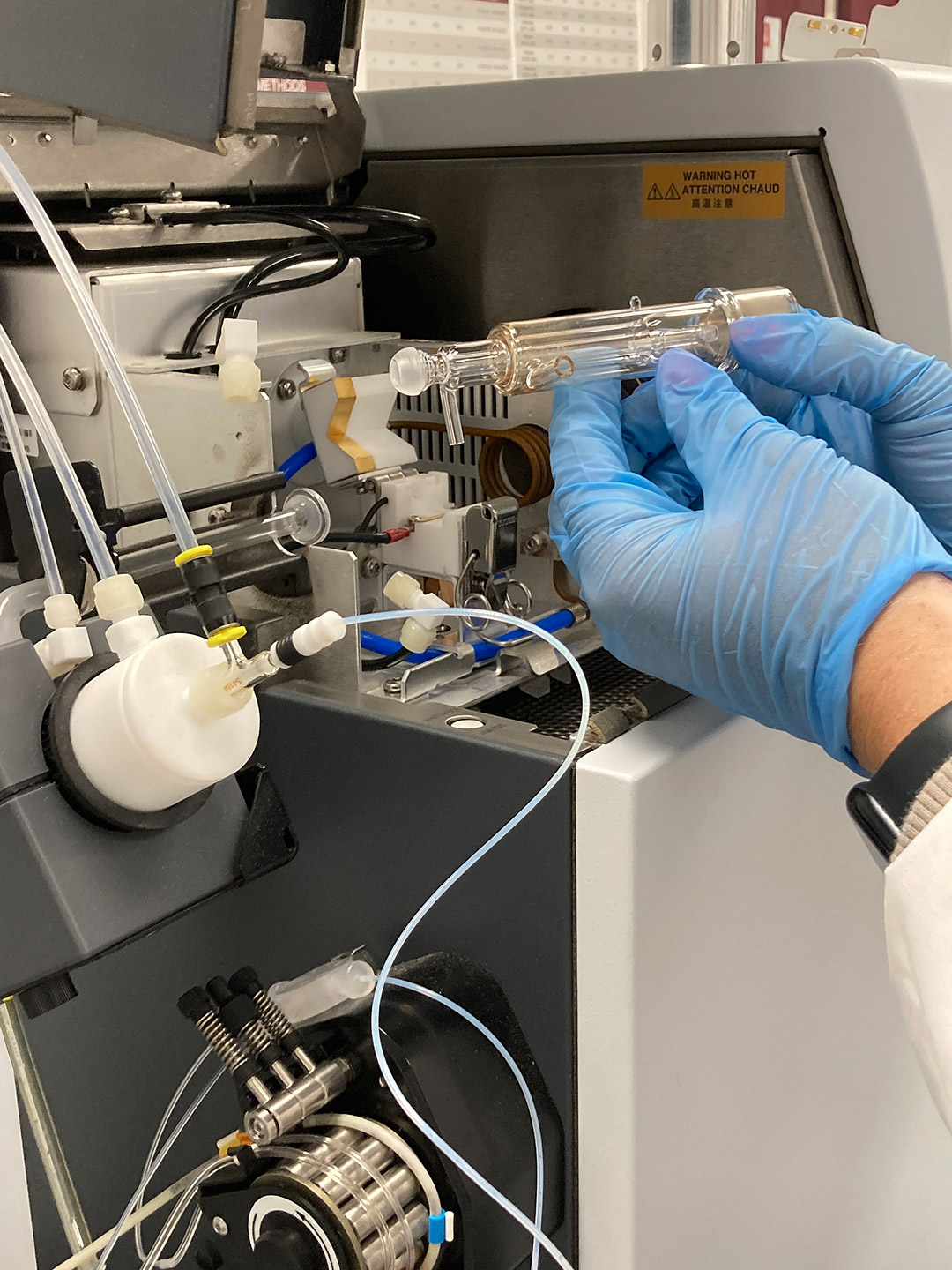
“While we stood by for that, we started to digest the citric acid filters by placing them in the hot block with the extraction solution. Then, after eating lunch, I transferred, diluted, and filtered their liquid. With that, they were done, so me and Chloe soaked some digestion tubes in nitric acid wash and refilled pipette tip containers to kill time. We ended up running out of the acid solution, so we had the opportunity to refill the container. It was a process that required a bit of waiting, but it was very cool to see the exothermic reaction in process and feel the heat emitted. By that point, the ICP-MS was cool enough, so we opened it up and removed the cones. It was very interesting to see the inside of the instrument—even if it was only a small section—and I felt honored that Chloe would allow me to handle parts of the machine that is the backbone of her work. She told me that there are four steps to washing the cones, but we would probably only need the first two—lightly scrubbing with water and Citranox—unless they were very dirty. After she cleaned the smaller and more delicate skimmer cone, I repeated the process for the sampler cone, which is the first obstacle for particles to pass through. It was a little nervewracking—I had been strictly warned to avoid the orifice—but it was neat to see all of the residue from running the instrument. When we finished, we reinstalled the cones before checking on the plasma torch. It seemed to be alright, so after that, we packed up for the day. We hadn’t accomplished all that we had wanted to, but we had definitely not sat around,” Mollie adds.
“Though this week didn’t go in the direction I had initially hoped, it turned out to be a lot of fun. I got to have new experiences, from acting on screen to gaining greater responsibilities in the lab. I have been working on the introduction for my report, and Chloe went in on Friday to run the ICP-MS and hopefully gather data so that I can finish the discussion and conclusion sections by the end of next week. I will be so sad to leave this experience, and I hope that the skills I’ve learned here will help me throughout the rest of my high school and college careers. I appreciate the Garwin Family Foundation so much for giving me this opportunity,” Mollie says.
Week Six — ICP-MS Reports and
During her last week in the lab at SIU, Mollie says that she and Chloe focused on solving issues they had been having with the ICP-MS reports. They needed to run new samples so that Mollie could finish her report and Chloe could continue with her research. After trying several fixes with no success, they contacted tech support.
“By the end of the day, we had two obvious options left: wash the torch, or replace the cones. Replacing parts had always been a possibility; as far as Chloe knew, the cones were the same as when SIU bought the instrument. However, in a rural public university, it is always difficult to justify using ~$2000 of parts when it might not be needed. We decided to do both: we soaked the torch in 5% nitric acid, and resolved that if it didn’t work, we would change out the cones. Before we left, Chloe sent off an email to Agilent’s tech support-adjacent service, in hopes that someone would know what we needed to do, : Mollie reports.
“When we arrived the next day, Chloe received a response from Josh, an Agilent employee, who asked for her to send him every performance report from the ICP-MS’s entire life at SIU. We sent it over, and almost immediately, he knew what our issue was: the cones needed to be replaced. That whole time, we had tried every possible solution, but the problem was the last-resort replacement that had been staring us in the face,” Mollie adds.
“It finally ran the report, and we crossed our fingers as it turned…green! It was in idle mode! It was the first performance report that had passed since April—the oxide ratio had been too high for months. We looked at the report, and everything was perfect. The counts, ratio, and pressure were exactly where they needed to be. To test it and see if Chloe’s previous data was discounted, we decided to do a small run of just the calibration curve. As it ran, everything looked great! So good, in fact, that we decided to add the samples from the last batch of nitric acid-soaked filters to see if those numbers were different. Once the run was done, Chloe did the math and found that everything was alright,” Mollie says.
After solving the lab report issues, suddenly it was Mollie’s last day in the lab.
“Everything kind of came up on me quickly; we had been scrambling to fix the ICP-MS, and suddenly, it was time to finish up my report and say goodbye to the group that I had been working with all summer. It was sort of melancholy, and not just because it was the end of my internship. That day also marked one week until the beginning of my junior year, and I had spent all summer working hard to prepare myself,” Mollie says.
“We started the ICP-MS for my last time and ran the samples from the citric acid and hydrochloric acid filters. When the ICP-MS was done, we checked the data and were surprised to find that the citric acid, a late and very diluted addition to the experiment, had worked the best to mitigate the background metals of the filters. That was it, the conclusion to my report. We had found what we needed to find, and I was done,” Mollie reports.
“As Chloe packed up to go to a concert, we discussed my future after the internship. She said she would credit me in her acknowledgements, and that Dr. Kinsel might bring me back to present someday. I’ve only known those two for such a short time, but they have had a profound impact on me and my confidence in a lab setting,” Mollie adds.
“When I look back on this summer, I’ll remember working at Gower the most. Even though it only took up six weeks, I feel like I’ve been doing it forever. I’ve learned so much from my internship that I never would’ve been able to had I given up on doing anything this summer. Of course, it wasn’t the only thing I’ve been doing: between helping with Summer Reading at the library, rehearsing for a musical, preparing for difficult classes, and taking care of my new puppy, it’s been a long summer. However, I know that I’ll always remember it fondly as I take my newfound skills with me into the rest of my life. Thank you, GFF, for giving me this opportunity and always supporting me when I need it,” Mollies says.
We are happy to hear that your internship in the lab was such a valuable learning experience. Great work, Mollie!
>> Read Mollie Mandell’s Final Report (PDF File, 125 KB).
>> Learn about the other students’ experiences in the GFF Scholarship Program.