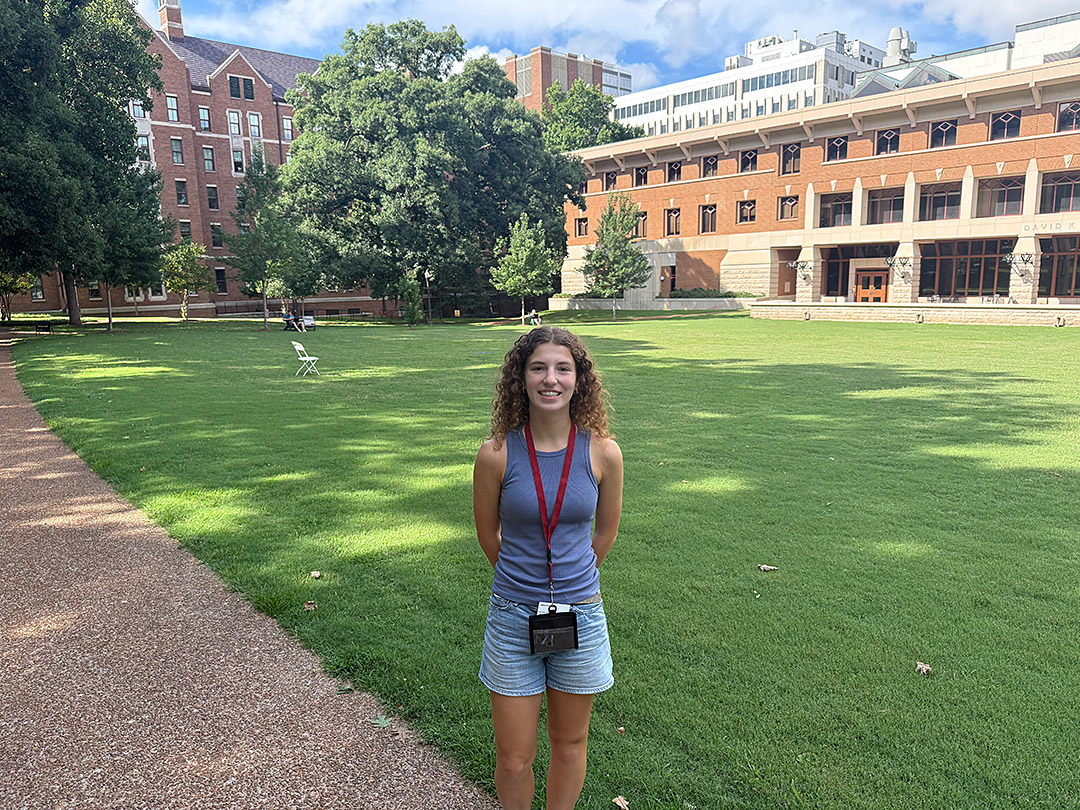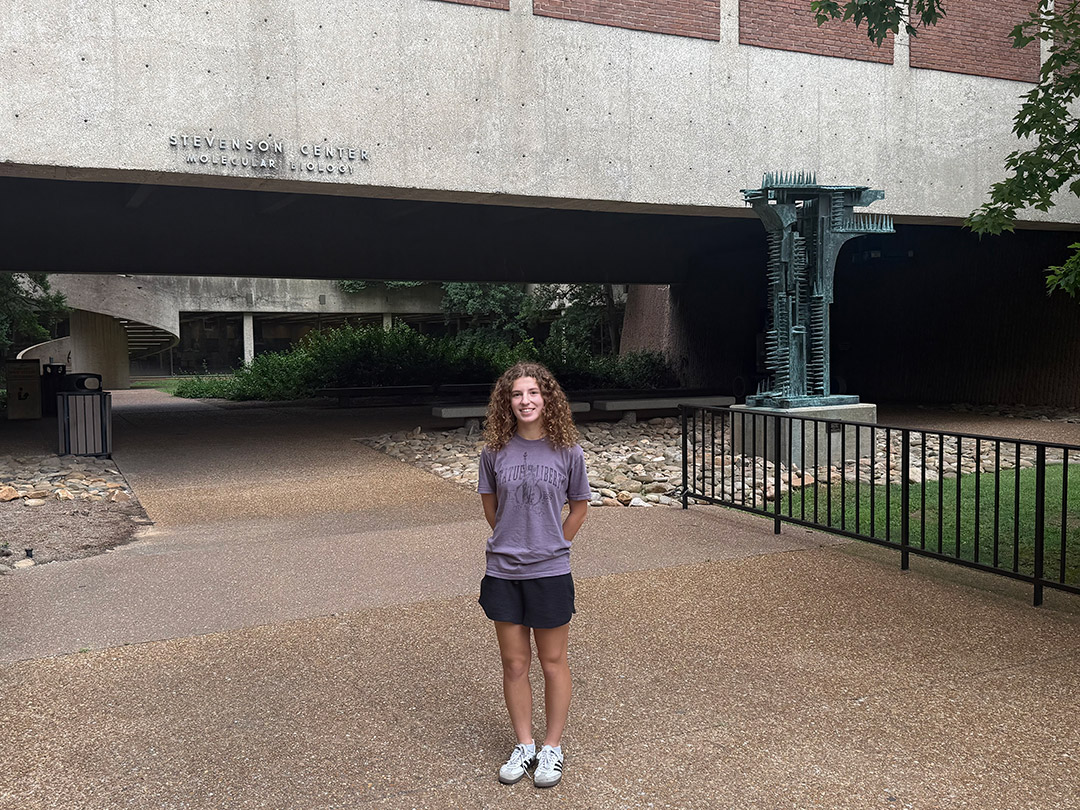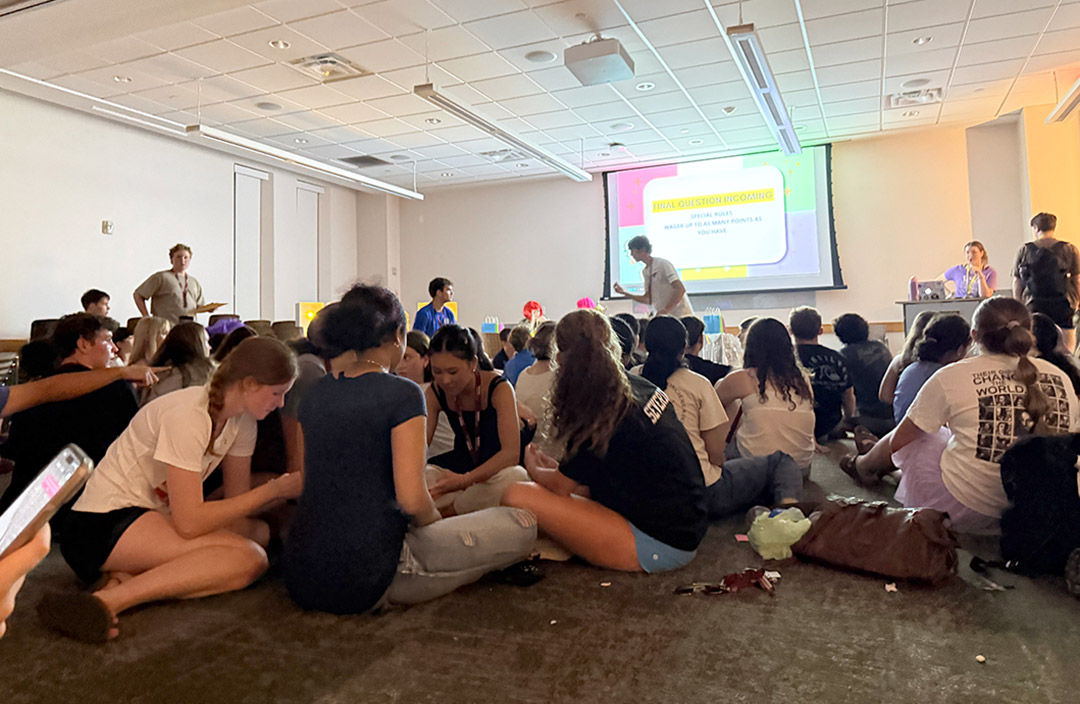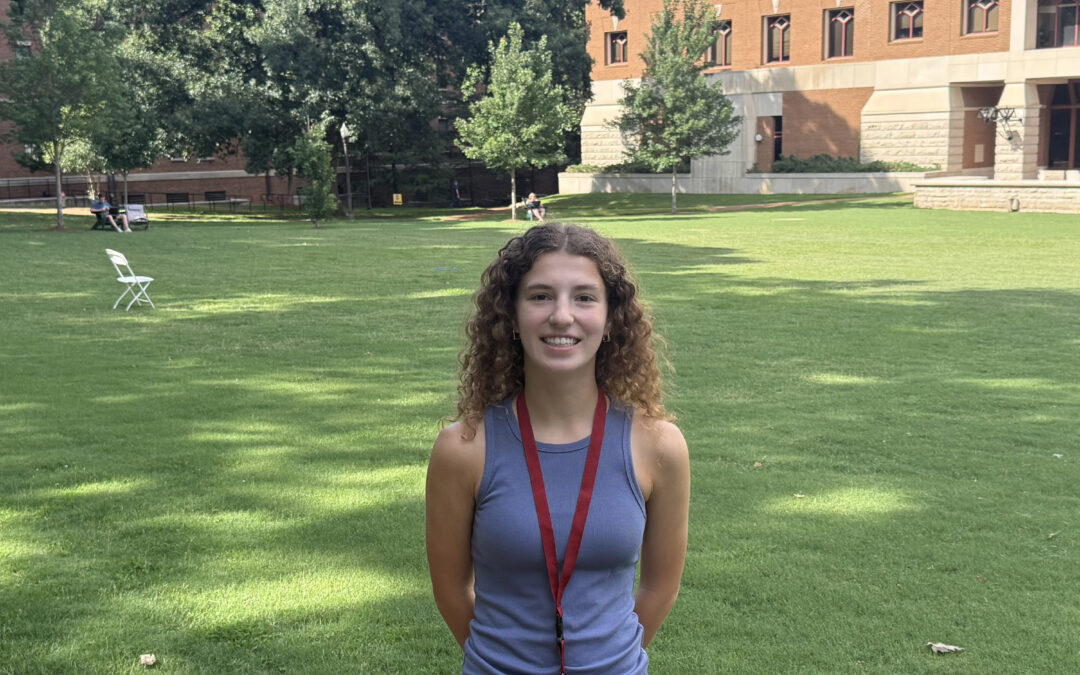
Katya Chyzhyk reports on her experiences at the Vanderbilt University Summer Institute, where she is studying “Genetic Detectives: Stray Cats Paternity and Predator Trails.” After settling in in at her dorm, Katya met with the other students over dinner and a series of ice breakers including an orientation presentation. On the first day of class, Katya met her academic proctor Caleb, a Junior at Vanderbilt University, her Professor Dr. Thomas Clements, his wife, Dr. Katie Clements, and her TA, Aiyana Cyr.
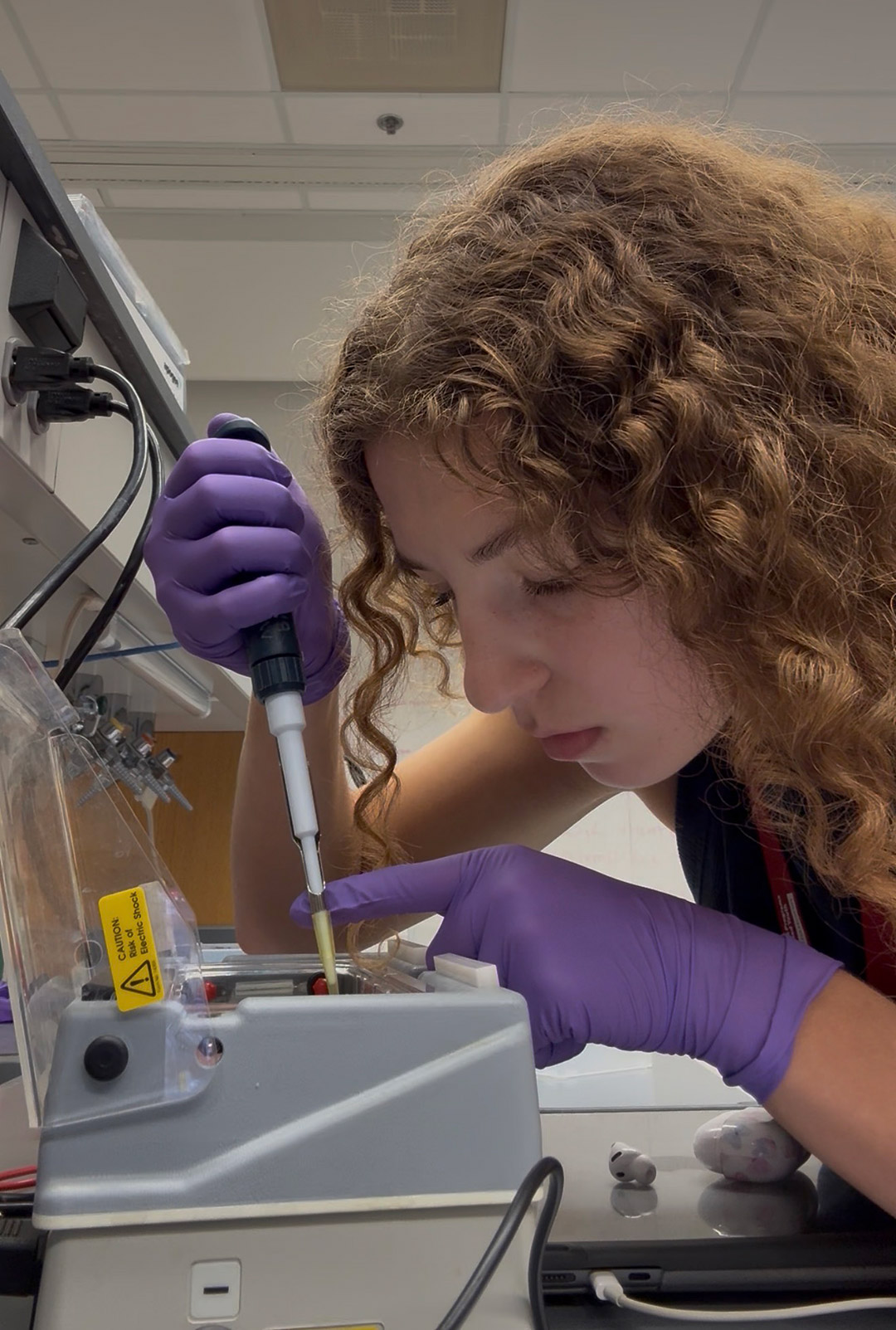
“We began with some lab basics and learned how to use micropipettes—specifically how to set them to draw different amounts of liquid and convert between microliters and milliliters. I started keeping notes in my lab notebook and downloaded the app and Chrome extension for a scientific article management platform called Zotero. It was very convenient to use for saving scientific articles, and I am sure that I will use it after this program ends,” Katya explains.
“Caleb led us to lunch at Rand, and after we got back, we started with some statistical analysis and probability work to model some of the principles of genetics. Our worksheet explained random assortment during meiosis as flipping a coin, and the law of segregation as the coin landing on only one side. Although I have had plenty of experience with these laws during Advanced Biology and AP Bio, I had never had them explained to me like this, which was an interesting perspective to consider. We then continued with some probability problems and began chi-square analysis, which I had thankfully just reviewed in my BIO 102 class at John A. We finished with goodness-of-fit and t-tests in Google Sheets, and analyzed Mendelian inheritance patterns in corn,” Katya adds.
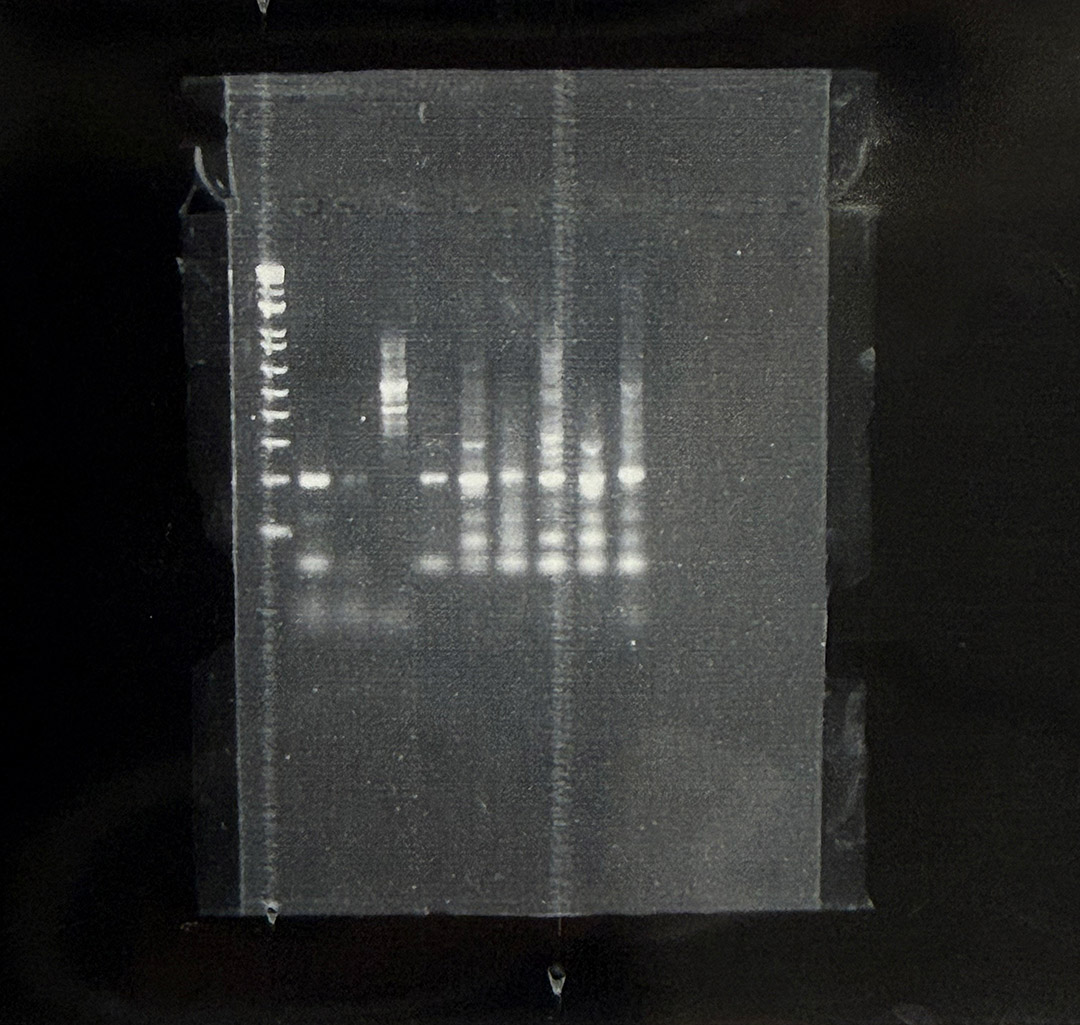
“I knew that we would be doing some lab work in class, but I was not expecting to begin PCR (polymerase chain reaction) on the second day of class. Dr. Clements and Aiyana immediately began “PCR Boot Camp” to teach us how to compare the lengths of different DNA segments. Some DNA sequences can be different lengths, but family members would have strands of similar lengths because they are obviously related. True to half of our program name of Stray Cat Paternity, we would begin testing the lengths of DNA sequences of potentially related cats to determine paternity. Our first PCR reaction didn’t work that well since we had too much indicator in our gel solution, but the bands were visible enough that we could understand the gel electrophoresis. The PCR tubes took 2 hours to incubate and the gel electrophoresis took half an hour to run, so my class had ample downtime to play impostor and get to know each other better. We ran a second PCR/gel electrophoresis reaction after we returned from class, and that reaction was vastly more successful,” Katya reports.
“Dr. Clements introduced us to another technique on the third day: DNA extraction. This lab was essentially the common and simple strawberry DNA extraction lab, but with harsher chemicals and the possibility of extracting DNA from anything. We practiced extracting DNA from Aiyana’s dog Pipette, which involved a lot of pipetting and incubating again. However, this time something unfortunate happened: I got burnt by phenol! The DNA extraction used the chemical phenol to separate DNA from lipids and proteins. Unfortunately, the pipette had a few drops of phenol on it when I picked it up, which sprayed on my arm and lightly burned me. Although I was fine after a couple seconds, the PTY nurse was very worried and asked Vanderbilt Student Support to take me to the Vanderbilt walk-in clinic after lunch to make sure I was really okay. I ended up having to miss most of the second block of class for the clinic visit, and had to finish my DNA extraction the next morning,” Catherine explains.
When not in class, Katya and friends spent time exploring the city of Nashville, and its many restaurants. “The bus drove through Broadway on the way back to campus, and seeing that iconic part of Nashville lit up and crowded with people at night was a highlight of my evening. That night’s Community Hour activity with students from VSI and VSA (Vanderbilt’s one-week program) was tote bag decorating, so I stayed out a little later than usual to decorate a super cute tote bag with jellyfish to bring to the farmer’s market on Saturday,” Katya says.
“I finished my DNA extraction the next morning, which involved some ethanol precipitation, and then we began the actual cat paternity testing. Dr. Clements provided us a master worksheet guide of how genes influence cat fur coat patterns, which was very extensive and took multiple note-taking sessions for me to digest. However, I feel like identifying cat fur pattern genes is a pretty unique party trick that I will be using in the near future. This worksheet included a cat family tree of Dr. Clements’ friends’ stray cats, who we were were analzying for familial connections. We had to figure out if Midnight the cat was really the father of all of Fertile Myrtle’s 6 kittens by using fur pattern possibility analysis as well as paternity PCR testing. My group began PCR testing on Midnight, Winkin the kitten, and Dr. Clements’ late cat Kevin to act as a control. Class was filled with more class bonding as our PCR reactions ran,” Katya adds.
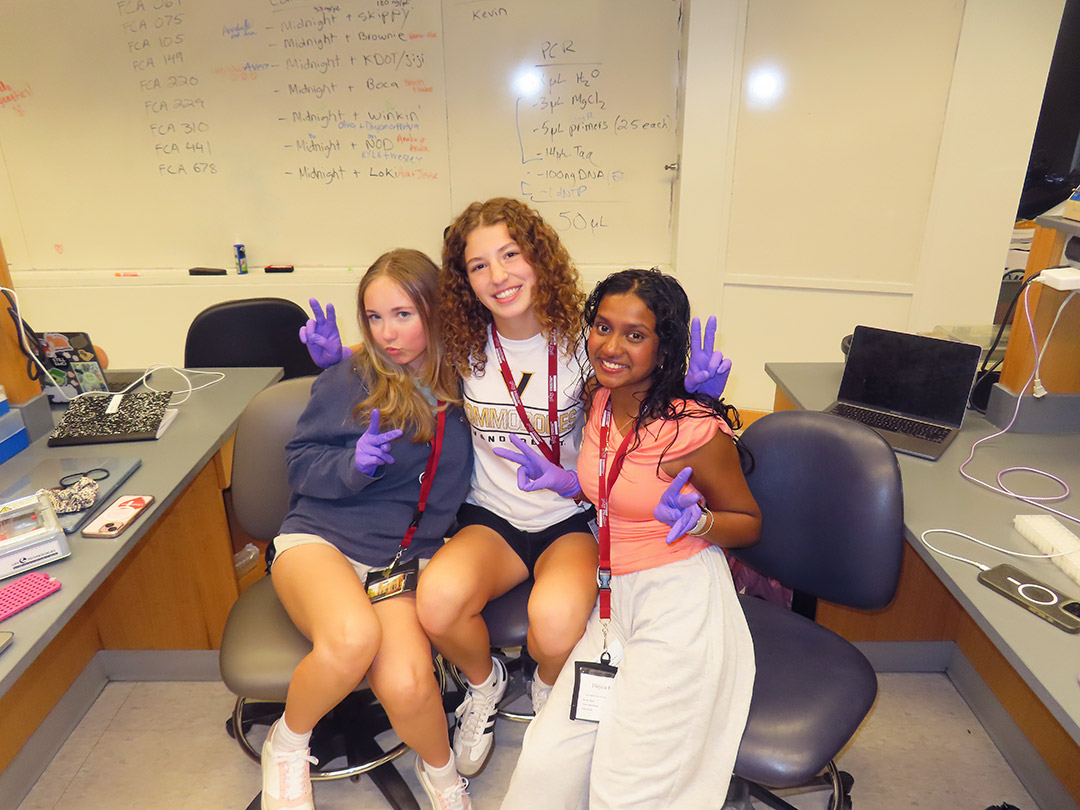
“Our final day of class this week was when I finalized my cat paternity predictions and realized that Boca and Brownie definitely couldn’t be Midnight’s children, as they had tortoiseshell fur patterns, which required at least one orange cat parents. Midnight was a black cat and Fertile Myrtle was a grey van cat, which meant that Boca and Brownie’s tortoiseshell pattern genes must have come from a different father. Our last reactions were PCR-based familial exclusion, where DNA sequences that are repeated several times are amplified and their length is noted and compared to potential familial matches. We ran 2 PCR reactions that day, each with different primers that amplified different DNA sequences, but we noted that Midnight and Winkin were very likely a genetic match because of how similar the lengths of their specific DNA sequences were. I definitely felt more comfortable pipetting into the gel wells for electrophoresis, and our PCR reaction was the most successful it ever was. We celebrated our extremely clear PCR photos by taking pictures on my friend Dhiyana’s digital camera when we had downtime during class,” Katya explains.
Weekend activities included a late breakfast and a trip to the Nashville Farmer’s Market, followed by a clay watercolor activity, and a group “lip sync battle” competition.
“This week has been exhausting but very fun and engaging—Vanderbilt PTY has definitely met and possibly exceeded my expectations for a summer program set in place by UChicago! Overall, I’ve felt very welcomed and supported by every staff member at PTY. All of the residential and academic proctors are very serious about ensuring our comfort and safety, while my professor and TA are real experts in their field and are always eager to share their knowledge and hold enriching conversations with us students. Although I do not have a lot of work outside of class, my class itself is very engaging and has a lot more hands-on lab work compared to other classes such as Physics or Neuroscience which are more demonstration and lecture-heavy,” Katya reports.
“Outside of class I’ve made great friends with almost all of the girls in my proctor group, and appreciate their constant support whenever I see them around campus and at meals. Vanderbilt PTY have done an excellent job of simulating the college experience, creating opportunities for us to connect with people during class (our academic groups), as well as connecting with people at our dorm (our residential proctor groups).I am never bored at VSI; I’m always connecting with new people and strengthening my connections with familiar friends through engaging in-class and recreational activities, and can’t wait to see how the camp continues next week!
Week Two — PCRs and DNA Sequencing
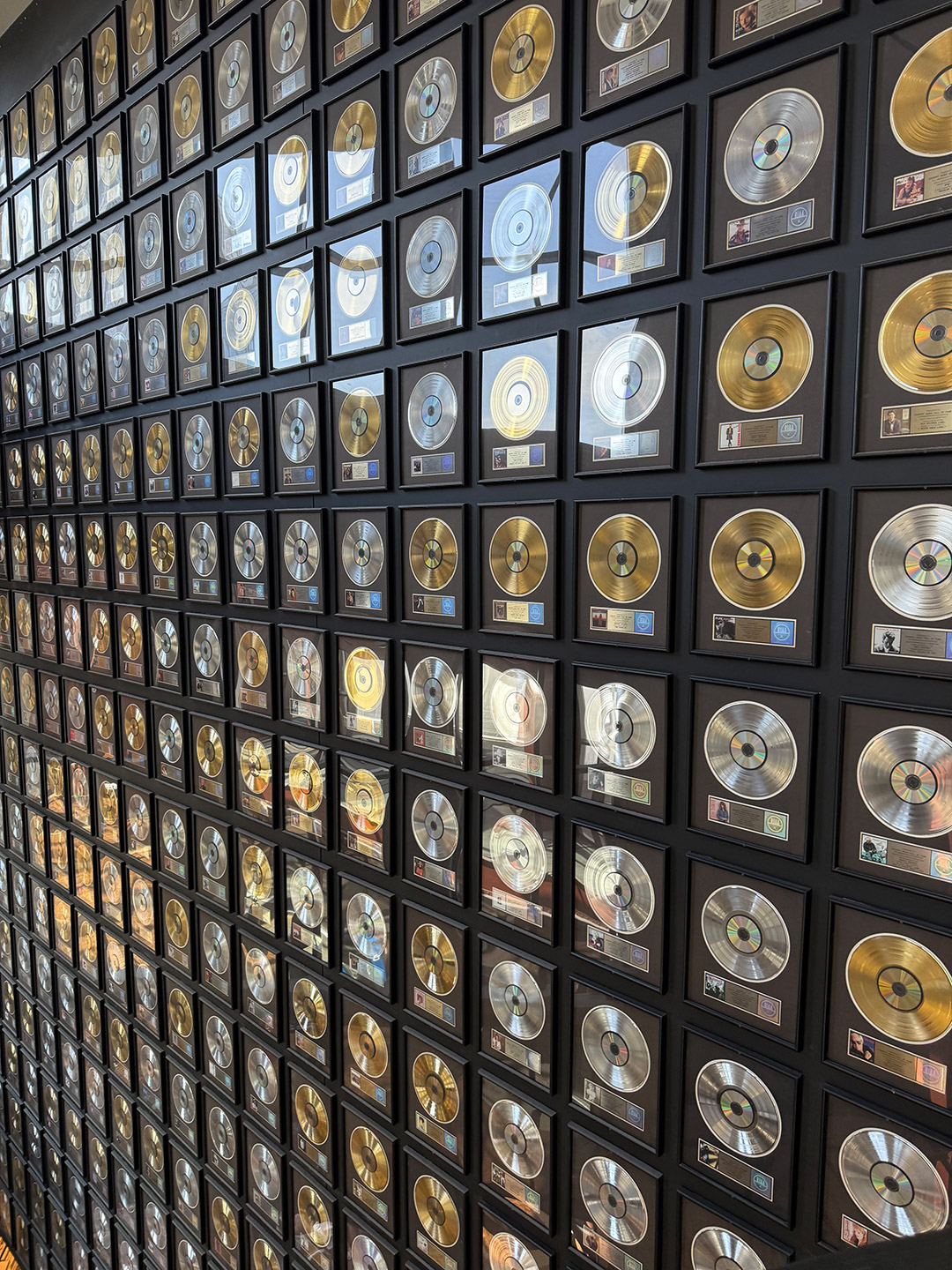
Katya had a full weekend with activities that included visiting a farmer’s market, the Country Music Hall of Fame and the National Museum of African American Music in downtown Nashville. She ended the weekend by playing racquetball, attending a World Cup watch party, and a lip sync battle. After the weekend fun, it was back to class and more PCRs.
“On Monday, we ran some more PCRs in class; we were comparing the DNA sequence length with Midnight, the potential father cat, Winkin, his potential son, and Kevin, the control. Our PCR showed that Winkin actually had a more similar base pair length to Kevin than Midnight for the primer we are using, but that doesn’t really mean anything in terms of paternity. It’s completely possible that Kevin and Winkin could have one similar sequence length while Midnight and Kevin match closer for the rest– true paternity is determined by running PCRs on all possible primers, not just one. Our gel for that PCR was also contaminated and had some weird flecks, so it was less clear. However, we also started the Predator Trails portion of our course. Dr. Clements brought in environmental DNA (eDNA) samples from potential cougar locations in Maine, and we started the DNA extraction process from these samples,” Katya explains.
When not in class, Katya attended Trivia Night, played Gartic Phone games, participated in a Proctor Group Night activity, and began preparing for her final presentation.
“The final presentation was basically just a summary of all that we had learned in class, and it wasn’t that intense, especially compared to other classes. We continued with our DNA extraction, which was very tedious and involved a lot of vortexing buffers. After we extracted the DNA, we performed an ethanol precipitation to hopefully increase the concentration of DNA in our sample. Annabelle and I were able to get a small pellet of DNA to show up in our precipitation tube, so our precipitation did work,” Katya reports.
“Wednesday was the second to last day of camp, and I really began to feel it as soon as I walked into class. I began to realize that I’ll never have an experience quite like VSI ever again, even in college, and began mourning my time at Vanderbilt in advance. Dr. Clements didn’t let us slow down, though. We ran a modified PCR using our extracted DNA, this time with the addition of a second forward primer to specifically target potential cougar DNA. If there was cougar DNA in the isolated eDNA, the cougar primer would amplify the cougar DNA in addition to the rest of the DNA, creating a second band visible on the PCR. Unfortunately, none of our class’s reactions showed cougar DNA in their sample. Even more unfortunately, Annabelle and I pipetted too much DNA into our PCR reaction because Annabelle thought that she had messed up pipetting. Our next procedure was to clean up our amplified DNA to send for sequencing, but we barely had enough DNA to clean and there definitely wasn’t enough to sequence. That was probably my biggest regret during camp– I was really excited to use the fancy BLAST tool to sequence the DNA I had personally worked on. Not every reaction can work, though, so I accepted our failure. Dr. Clements announced that we would be using PCR to determine our blood types for our last class periods, so I was very excited for the last day of class,” Katya says.
“The last day of class was possibly our busiest day of class. We began by extracting DNA from our saliva, which involved rinsing saline and spitting it into a test tube. We then extracted the DNA and set up for a PCR reaction before lunch, all while finishing up our final presentations. If there’s one thing I learned from this course, it’s that work in the lab includes a lot of downtime while reactions are running, so it’s good to have extra work to keep yourself busy. The PCR reaction for our blood type required us to make 3 test tubes, since each tube would have a primer that corresponded to each of 3 alleles that determine blood type (A, B, and O). However, the thermocycler only had enough spaces for each of us to determine 2 of 3 alleles, so Dr. Clements had us run the PCR for the A and B alleles. Two bands for each lane on the PCR meant that we had the allele, so if we didn’t have either A or B allele, that would mean that we had the O allele. Dr. Clements also showed me some mutated zebrafish he encountered while researching them, which I shared with my John A. professor once I got home,” Katya explains.
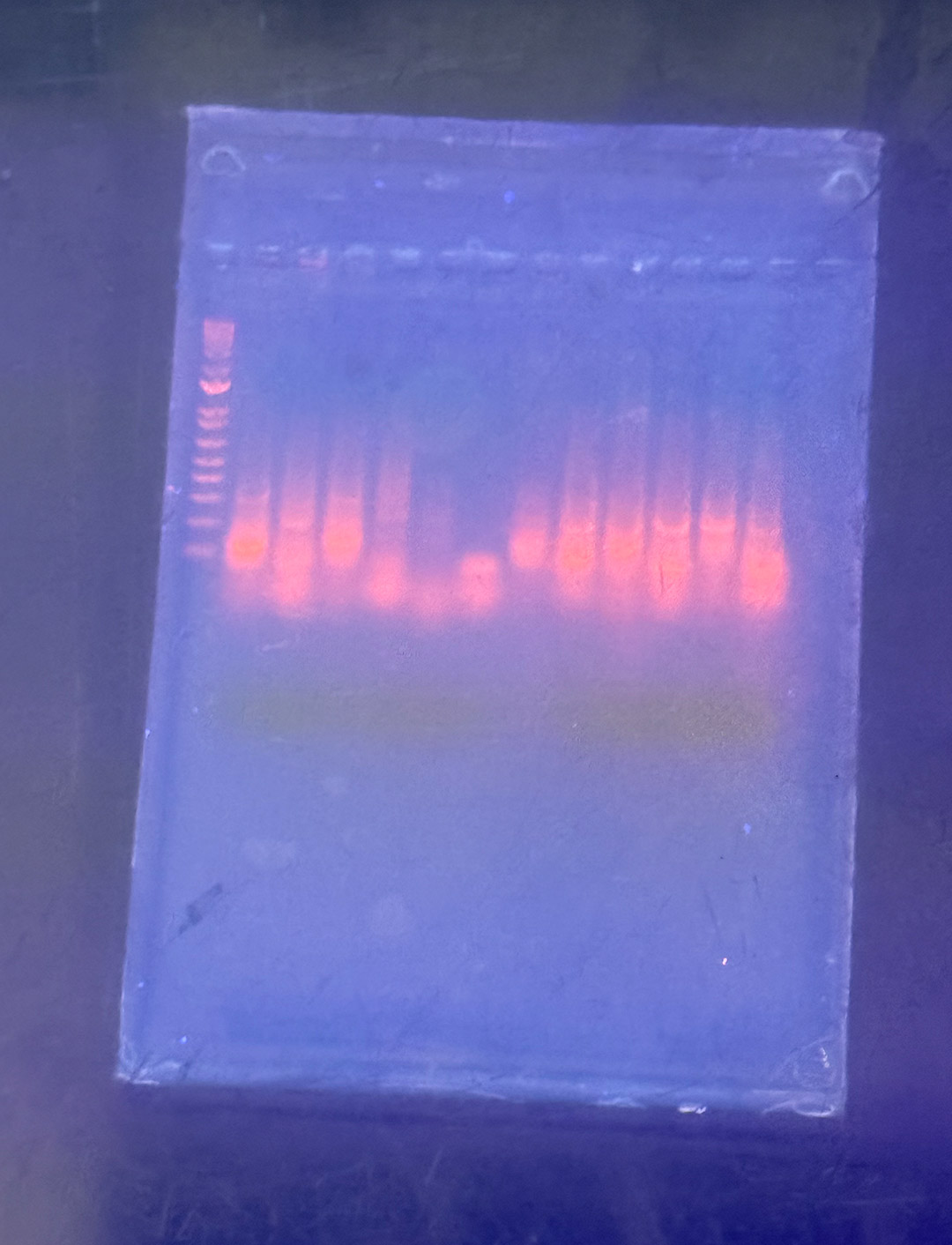
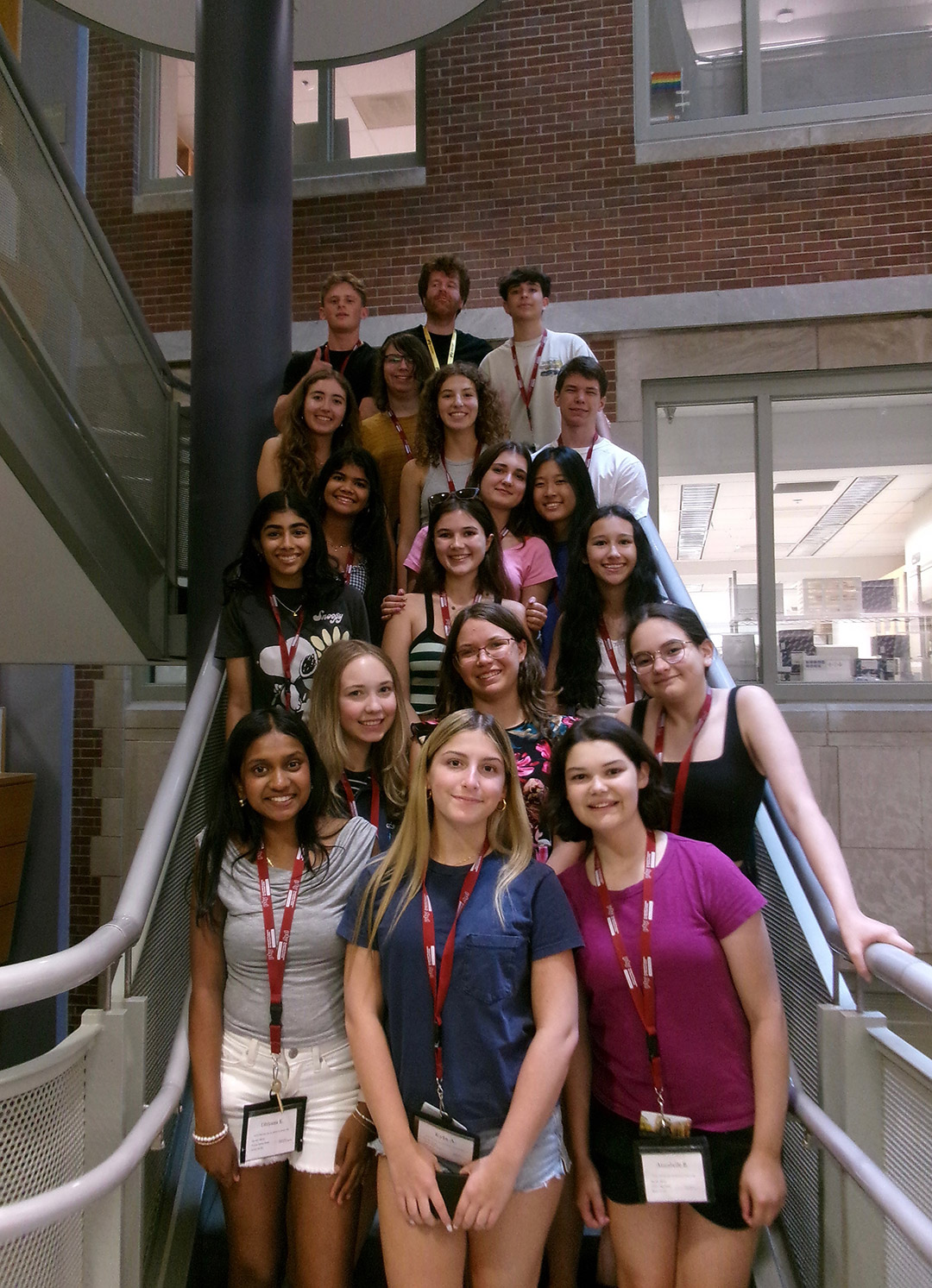
“The exciting part began after we came back from lunch, when we actually began running the PCR for our blood types. The first gel my group pipetted into was faulty, so we had to try again with a gel that actually worked. While that was running, we cleaned up our saliva DNA, just to give us something to do. This meant that we never actually presented our final presentations, which I honestly didn’t mind—I’m very glad that I made mine even if I didn’t present it, since now it’s easier to explain and record what we did in class. Furthermore, Dr. Clements and Aiyana evidently began to trust us more after two weeks in the lab together, so Dr. Clements let a few other classmates and me into a second, smaller lab with very expensive equipment, where we took pictures of our gels. Olivia got to work with some of this equipment to measure the concentrations of our DNA spit samples, which I’m pretty sure I got the third highest of. Our final gel picture revealed that I definitely have a B allele in my blood type, so I guess I have to get tested now to make sure. Figuring out my blood type using PCR was one of my favorite parts of the course; I loved working on the more real-world application of PCR and learning something new about myself. We ended class with a class picture, and Olivia, Dhiyana, and I had a mini photoshoot with a bright red wig Olivia had somehow acquired on the way back to the dorms,” Katya adds.
The second week definitely passed by a lot faster than the first, especially since we didn’t have class on Friday or the long weekend to keep us busy. I think my best memories were made during my second week, as I felt a lot more comfortable around my classmates and had actually gotten to know them. We had actual inside jokes instead of awkward icebreakers and stilted small talk, and they really felt like people I would have enjoyed having as my actual college classmates. I definitely enjoyed my second week more in terms of classwork as well– Dr. Clements realized that we had too much free time that we couldn’t be trusted with, so he gave us more procedures to complete for our cougar eDNA extraction, as well as adding on the blood typing PCR for the last day. Genetic Detectives as a whole was less academic-based and more experience-based as well, especially compared to other VSI courses; we didn’t have a lot of lecturing, but Dr. Clements was ready to discuss literally any genetics-related question we had, making the class feel more personal. I greatly appreciated all of the lab work we did as well, which is something that I severely lack in school. Now, though, I feel like I could do a PCR in my sleep. Spending two weeks at a professional research lab at a top-tier university may have been the best two weeks of my summer,” Katya says.
We are happy to hear that your experience at Vanderbilt University has been both fun and engaging, ending with new PCR skills and great memories. Great work, Katya!
>> Read Katya Chychyz’s Final Report (PDF File, 101 KB).
>> Learn about the other students’ experiences in the GFF Scholarship Program.