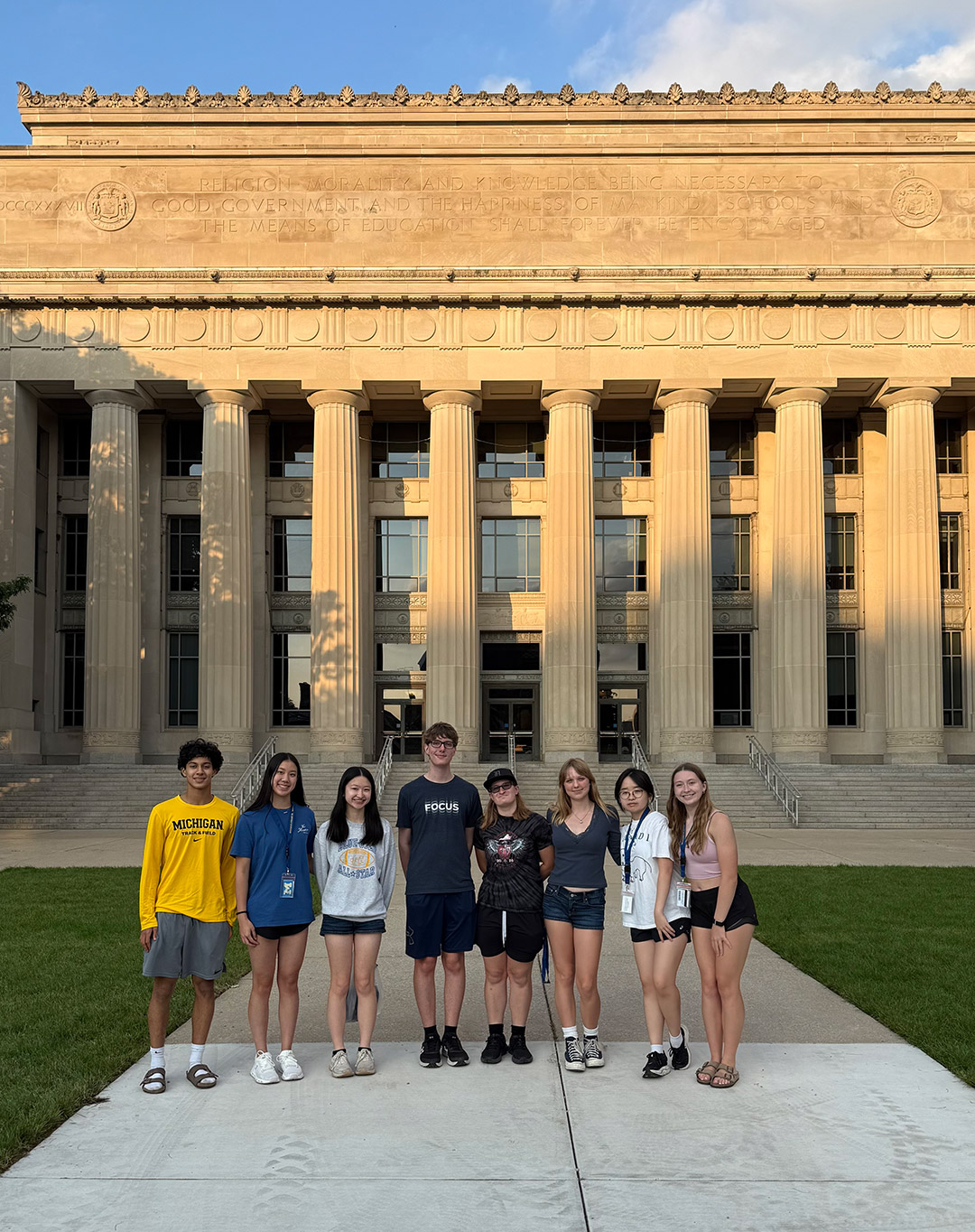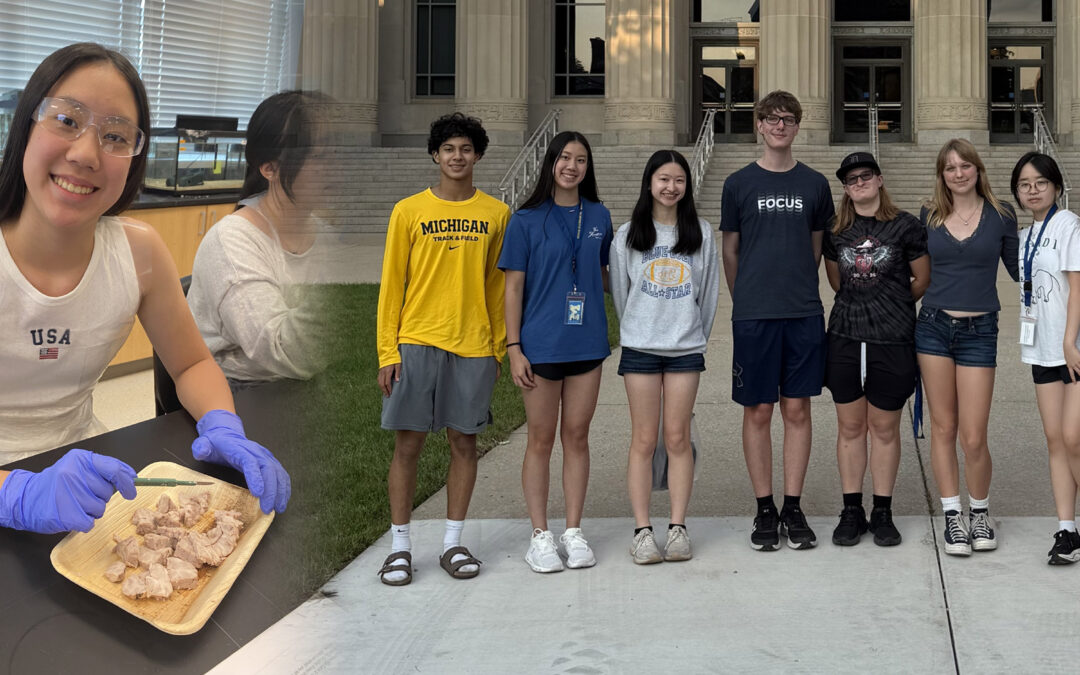
Isabella Dai reports on her first week at the Michigan Math and Science Scholars program, where she is studying ” Neuroimaging: Seeing the Brain in Action.”
“During my first week at the University of Michigan’s Neuroscience course, I had the opportunity to explore the fundamentals of the brain through both classroom learning and hands-on activities. We learned about the structure and functions of different parts of the brain, various neuroimaging techniques used to diagnose and study neurological conditions, and looked into several brain disorders. Each day, the class was broken into two sessions: one in the morning and one in the afternoon. During the morning sessions, we explored many concepts, such as the advantages and disadvantages of structural MRIs versus fMRIs, and how certain conditions can affect a person’s perception of reality. After lunch, we applied what we had learned that morning to hands-on tasks,” Isabella explains.
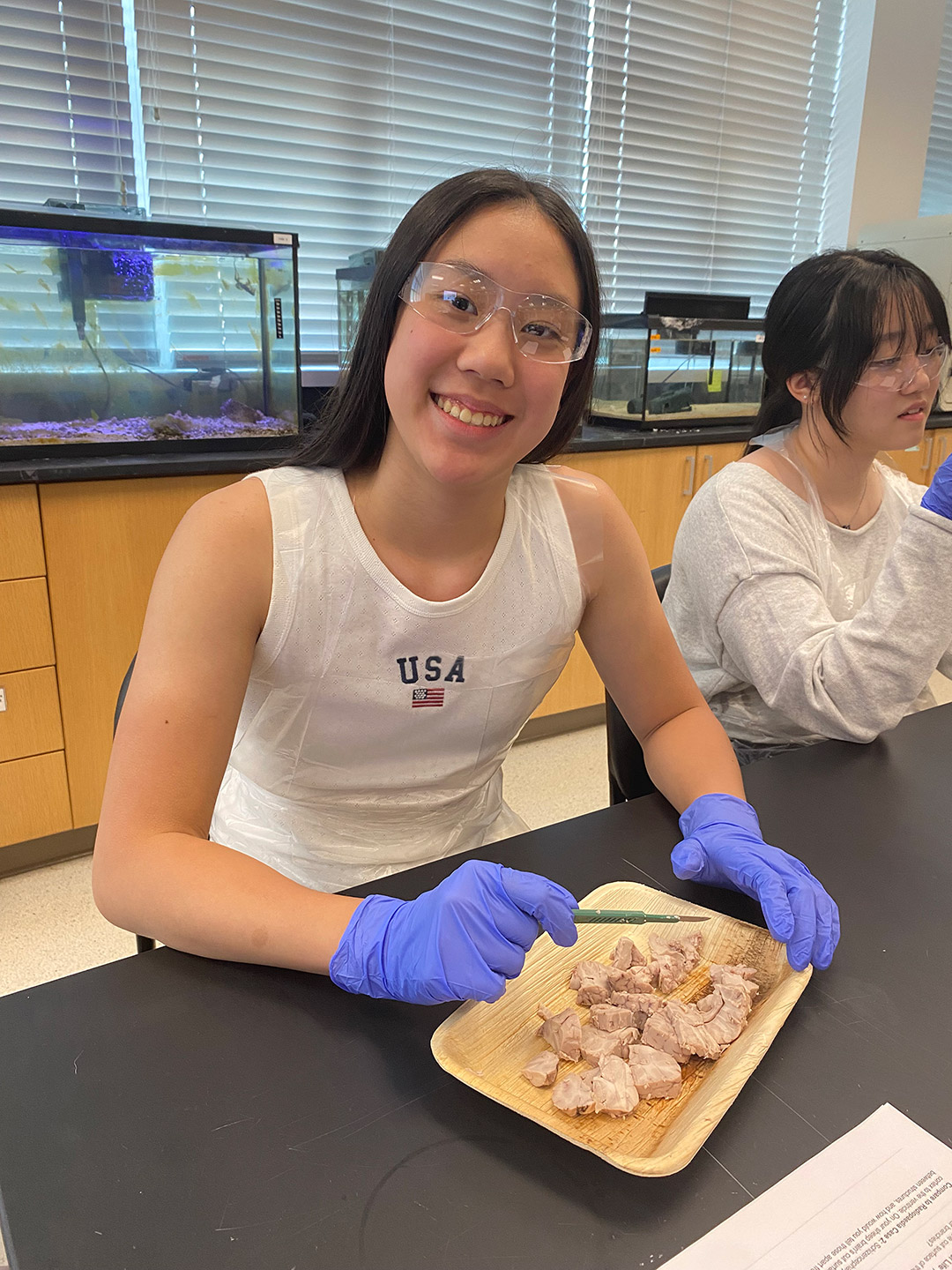
“To help us better understand the anatomy of the brain, we had the opportunity to dissect a sheep’s brain. This was my first time dissecting part of an animal, and it gave me a visual representation of the human brain. We were able to identify the different regions and their functions. Next, we examined various types of brain scans and what they are used for. We also got to use EEG caps to analyze our own brain activity. We ended the week by exploring different brain disorders, such as disorders of reality perception. We looked into first-hand accounts from people who struggled with these conditions, and compared their brain scans to those of a healthy individual. Through the first week of this course, I have learned many new concepts about the brain and was able to apply this knowledge towards real-life situations,” Isabella adds.
When not in class, Isabella was able to work on her swimming skills, and participate in activities with classmates.
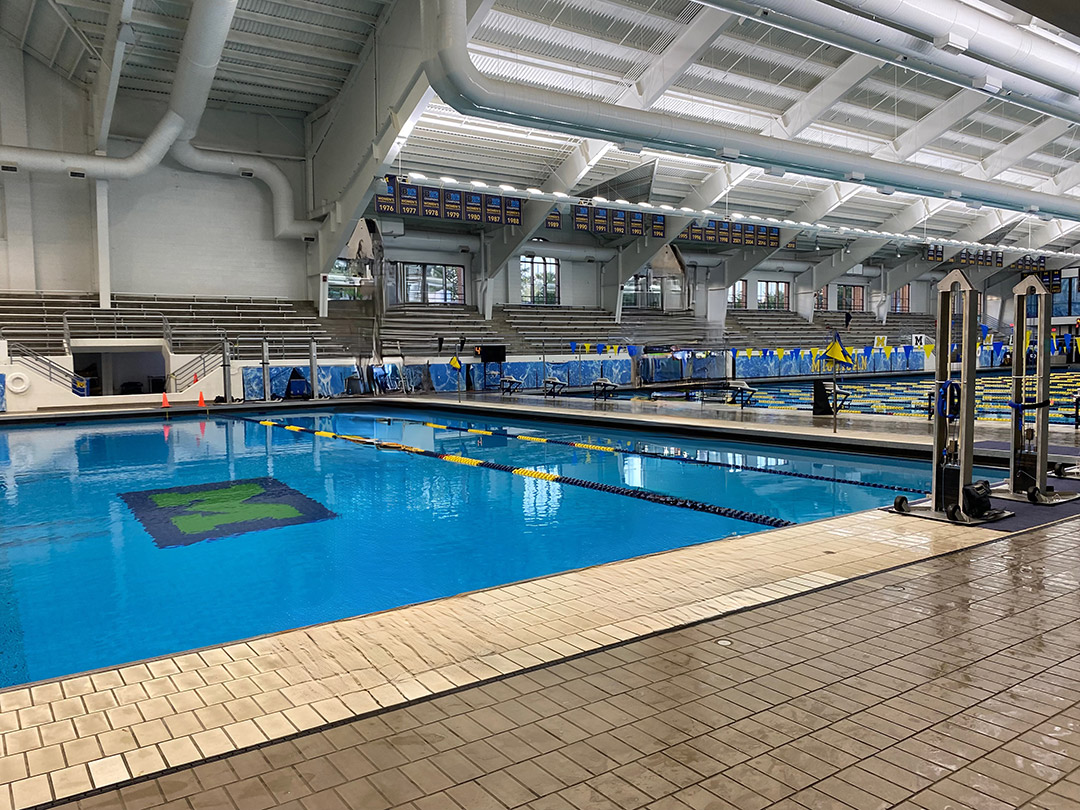
“Apart from the course, I also had the opportunity to train with a local swim team at the university’s pool. This allowed me to continue developing as a competitive swimmer alongside my studies. I was able to participate in the workouts of a different team, meet new swimmers, and familiarize myself with the community,” Isabella says.
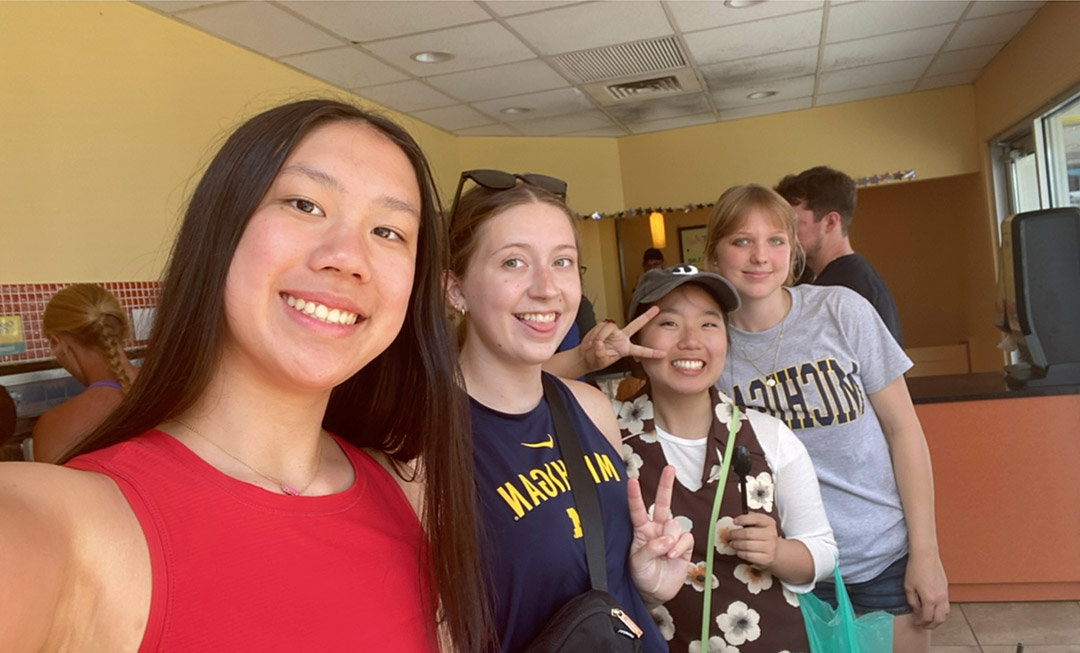
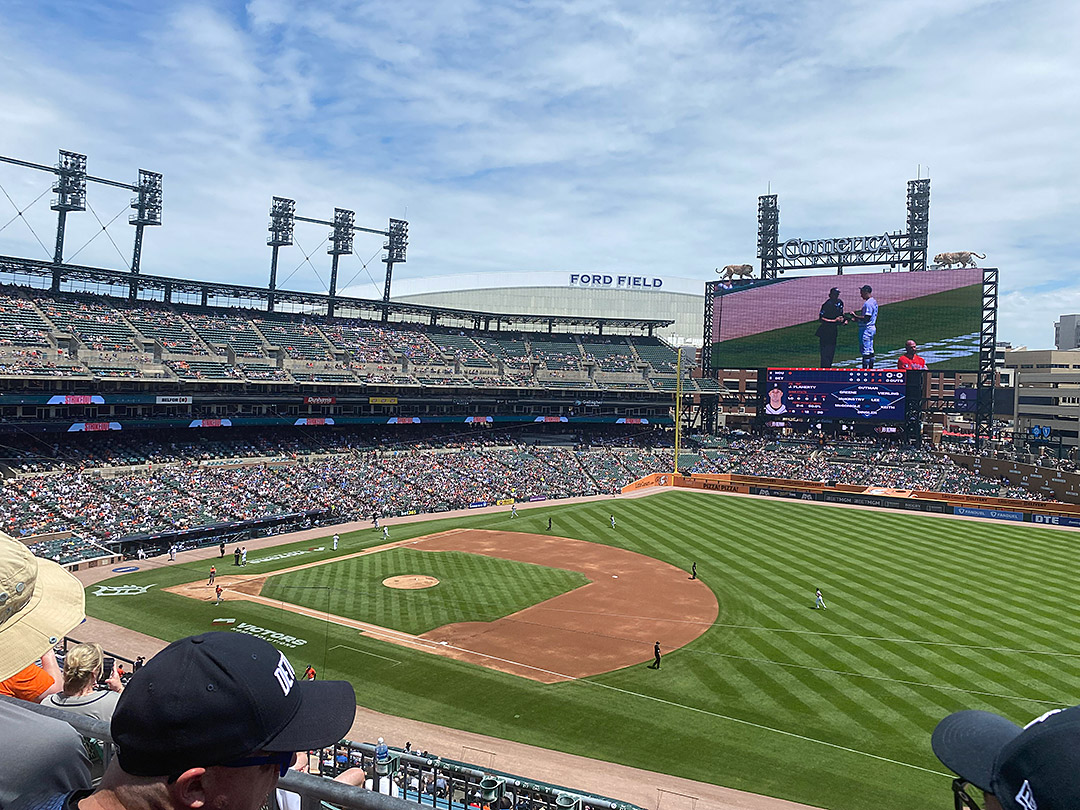
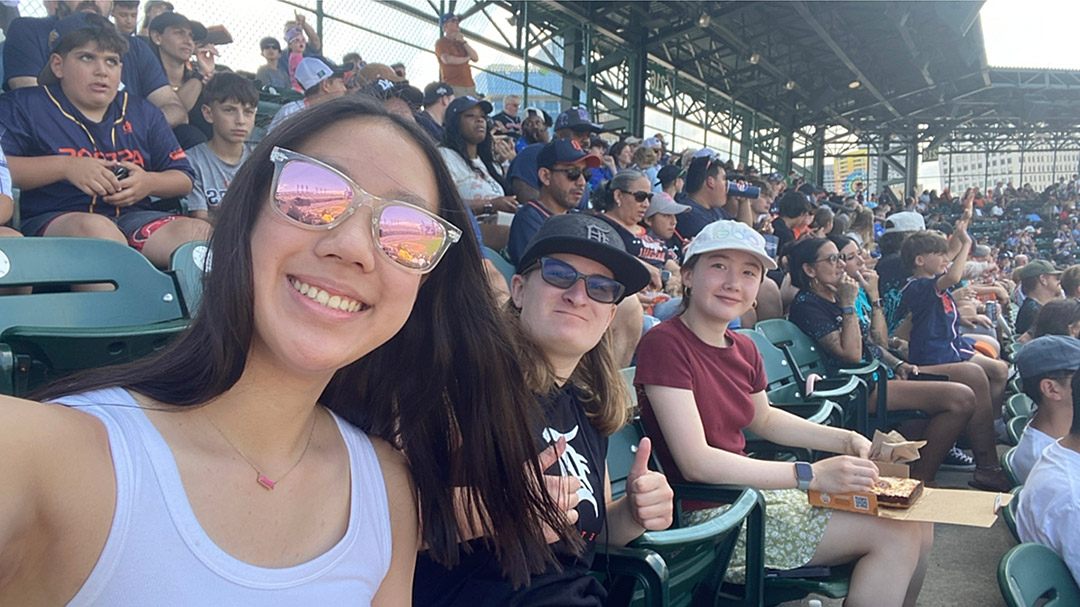
“Over the weekend, we went to Cedar Point and a Detroit Tigers game. I had a great time at both and was able to make some more friends while we were there,” Isabella adds.
“Overall, my first week at UMichigan has been full of new opportunities and experiences. I learned a lot about the structure and function of the brain and participated in activities that deepened my understanding. I am excited for this next week and looking forward to exploring more about our minds,” Isabella says.
Week Two — Scientific Research and AI
Isabella reports that during her second week, the class focused on learning neuroscience concepts to the scientific research process and had a discussion on artificial intelligence and its effects on the brain.
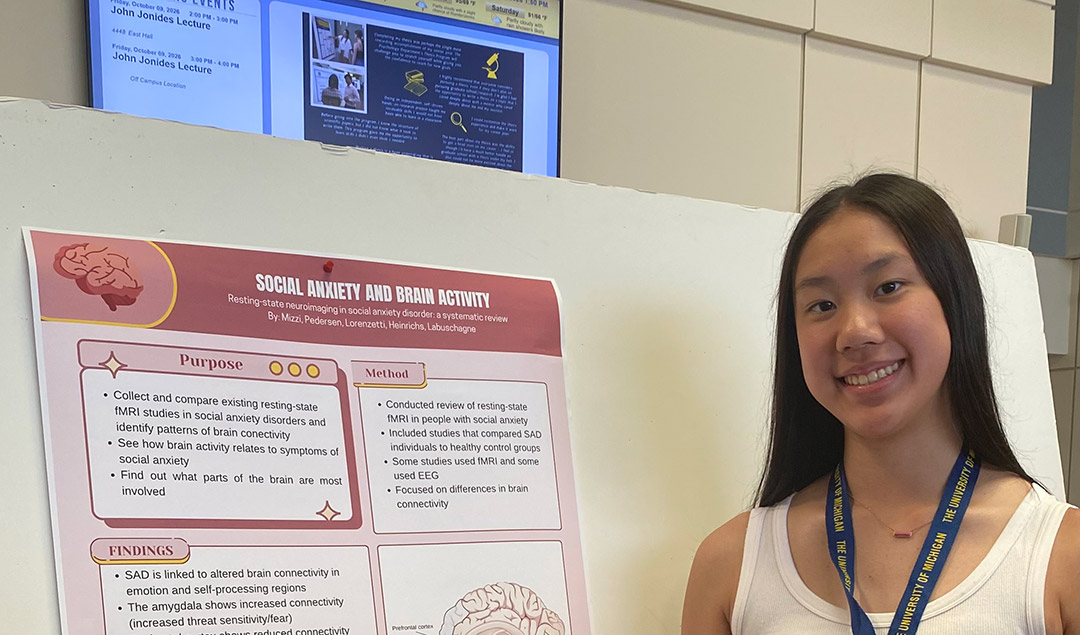
“We learned what makes a strong research study, including how to develop a research question, identify gaps in existing experiments, and design a study to address those gaps. Additionally, we made informational videos on neurological topics, analyzed research papers, came up with follow-up studies based on unanswered questions, and designed posters about our findings. The next day, we had a poster session and were able to present our research. These experiences really helped deepen my understanding of both neuroscience research and how to conduct and present scientific studies,” Isabella reports.
“We explored some studies on AI’s cognitive impact and examined both the benefits and potential drawbacks of these technologies. For example, we talked about ChatGPT and how conversational AI can sometimes be overly agreeable or validating instead of challenging certain ideas. We also learned about reported cases in which excessive use of AI or interactions with chatbots have been associated with mental health crises, showing the importance of using these tools responsibly. That afternoon, we had a class debate on whether or not brain scans can be used as evidence in court cases. Those who were on the pro side argued that brain scans can prove a person’s mental state and identify hidden brain injuries, while the cons argued that a scan taken weeks or months after a crime cannot be used to prove someone’s mental state when the crime occurred,” Isabella explains.
“On our last full day of class, we explored different careers in science and learned how a background in neuroscience can lead to opportunities in many different industries, such as medicine, research, and technology. We also had a college student panel where we heard about the students’ experiences at the University of Michigan. It was interesting to learn about their academic paths and the advice they had for people who are interested in pursuing science in college,” Isabella reports.
After class, Isabella continued to train with Club Wolverine at the University of Michigan pool.
“I loved practicing with them and being able to experience their workouts. After a long day of class, getting back in the pool was a great way to relax and clear my mind. I also had the opportunity to build many meaningful relationships with both the swimmers and the coaches, and I am very grateful to have gotten this opportunity, Isabella says..
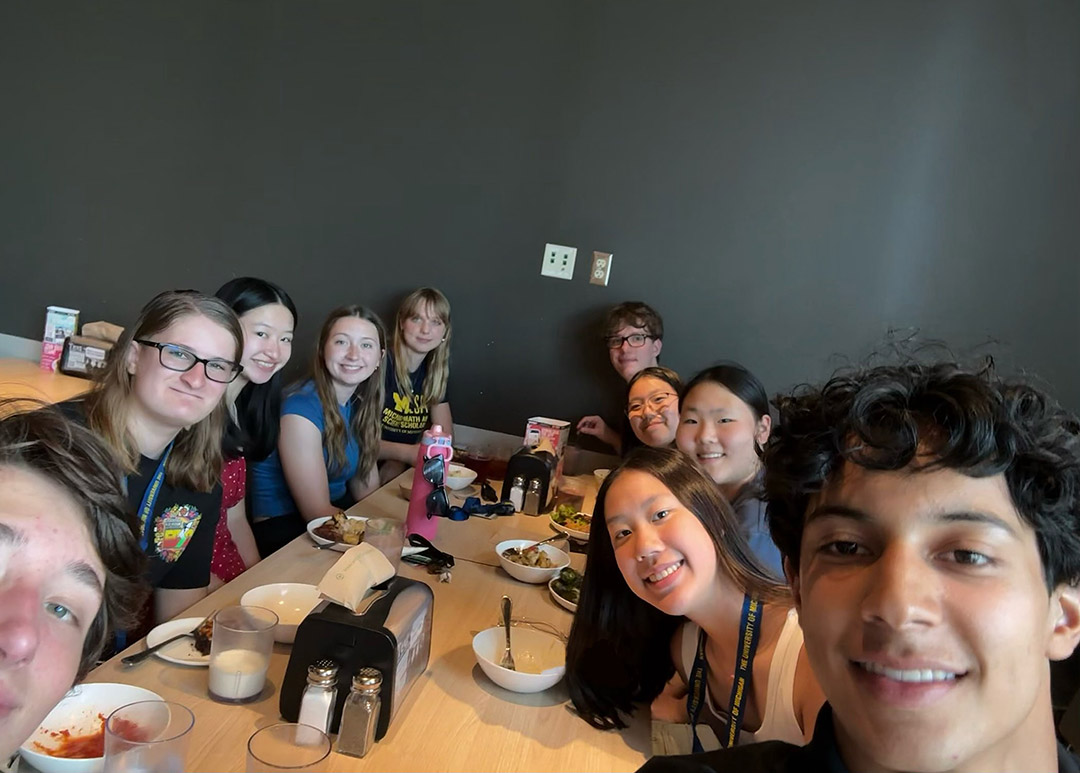
“As this program comes to an end, I know I will miss being part of this camp and community. Over the past two weeks, I have learned so much, not just about neuroscience and research, but also about teamwork and the importance of building connections with others. I have made many new friendships and really got to familiarize myself with the community. I am very grateful to have had the opportunity to be a part of this program and experience college life, explore the campus, and get an idea of what it is like to learn in a college environment. These past two weeks have been an unforgettable experience, and I will always be thankful for everything I learned and everyone I met,” Isabella says.
We are happy to hear that you enjoyed your time at MMSS. Great work, Isabella!
>> Read Isabella Dai’s final report (PDF File, 30 KB).
>> Learn about the other students’ experiences in the GFF Scholarship Program.