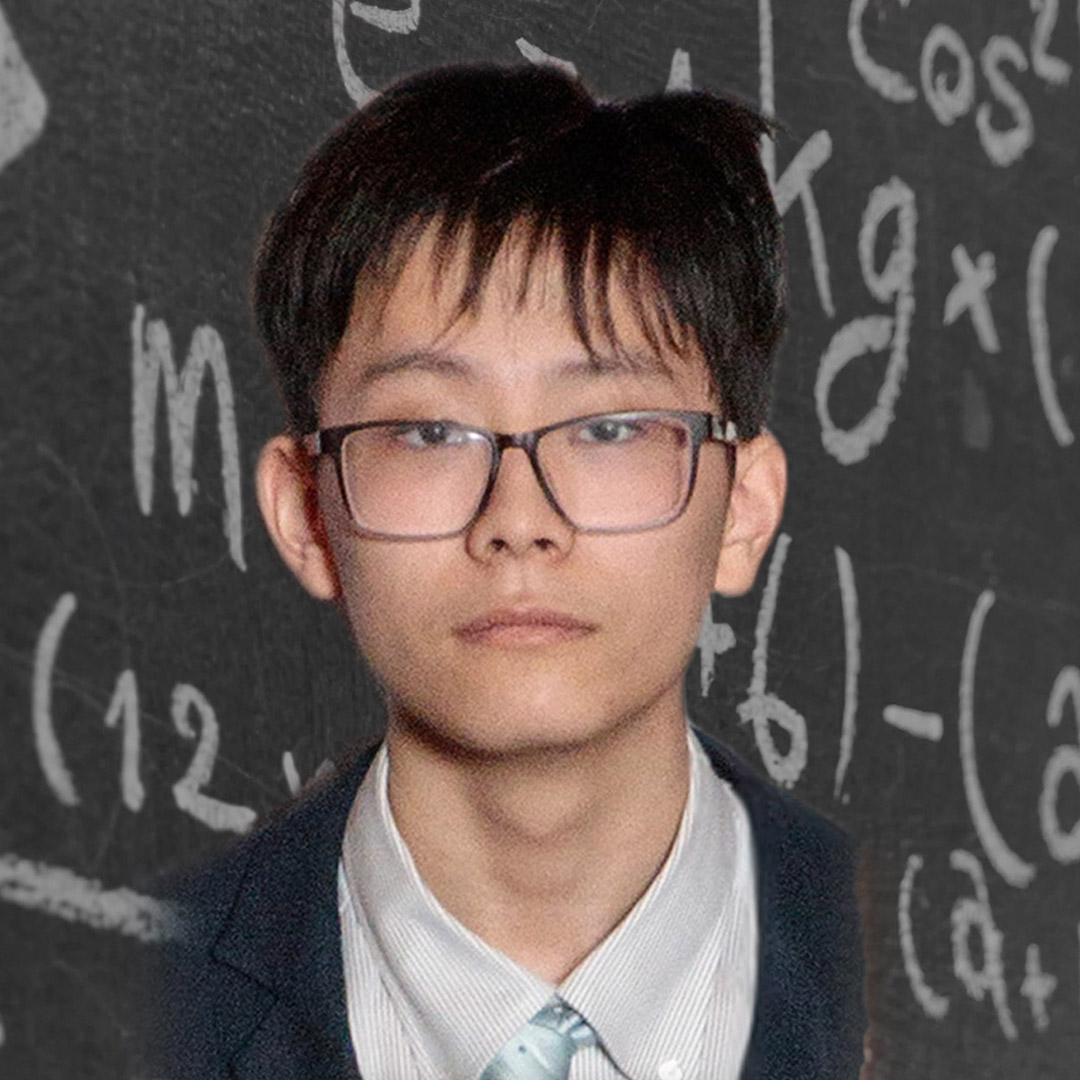
Takamichi Miyoshi reports on his experiences studying Algebra 1.5, an online course through AwesomeMath.
“The first week started with factoring. We went much deeper into factoring than I had before, and worked on problems that could only be solved by finding the right way to factor them. We learned different patterns and shortcuts that made factoring much faster. I think these techniques will be useful for math competitions because recognizing the right factorization quickly can save a lot of time. We also learned how to find the coefficient of a specific term in an expression, such as the coefficient of (x^2y), without expanding the entire expression,” Takamichi says.
“Another method we learned was replacement, where we could let one variable equal another expression, such as letting (x=y+2) to make a problem easier to factor. We also learned synthetic division and how to use it to work with polynomials more efficiently,” Takamichi adds.
“The first week’s homework usually took me around 15 minutes, with about three or four problems each day. Even though it did not take very long, the problems still made me think because I could not always solve them by simply following a familiar set of steps. Since most of the material was connected to things I had already learned, I felt pretty comfortable during the first week,” Takamichi says.
Week Two — Sine, cosine, and more advanced techniques
Takamichi says that during the second week, he became more comfortable with the pace and expectations of the coursework.
“Compared to the first week, I was able to focus more on understanding the mathematical ideas and applying them to more challenging problems. The topics we covered became more advanced and required a deeper understanding rather than simply knowing formulas or procedures,” Takamichi explains.
“This week, we studied several topics including more advanced applications of sine and cosine, deeper methods for solving telescoping sums, advanced factoring techniques, and proof-based approaches involving the AM-GM inequality, contradiction, and Vieta’s formulas. One aspect I found especially interesting was learning how to use the AM-GM inequality in proofs. Instead of only applying it as a formula, we explored how it could be used as a tool to build logical arguments and prove mathematical statements,” Takamichi adds.
The week also included challenging homework problems and tests that helped Takamichi develop his math skills.
“The homework continued to challenge me because the problems were based on the material covered during lectures but often required applying the ideas in less direct ways. Each homework assignment contained around four problems and usually took about 30 to 45 minutes to complete. Although the number of problems was not very large, each problem required careful thinking and understanding of the concepts. Since there were no hints provided, I had to rely on my own reasoning and try different approaches before finding a solution,” Takamichi explains.
“One of the biggest improvements I noticed this week was my speed in solving problems. As I became more familiar with the style of problems in the program, I was able to approach them more efficiently and spend more time focusing on the deeper parts of each solution. The program continued to be challenging, but I felt that I was adapting to the difficulty level and improving my problem-solving skills,” Takamichi says.
“Overall, the second week allowed me to explore more advanced mathematical concepts and become more comfortable with proof-based problem solving. The combination of lectures, homework, and tests helped me strengthen my understanding and continue developing my ability to approach unfamiliar problems,” Takamichi adds.
Week Three — Logarithms, norms & imaginary numbers
Takamichi says his third week of Algebra 1.5 focused on several advanced topics that he found interesting.
“We learned about logarithms, norms, and imaginary numbers. These topics were more challenging than some of the material from the previous weeks, but they were also interesting because they introduced concepts that I had not worked with as much before. Some of the in-class activities were difficult and required me to think carefully about how to solve the problems,” Takamichi says.
Although the homework was more challenging, Takamichi found it manageable, and was able to keep up with the material. When not in class, Takamichi was able to get to know the other students through online activities.
“On the last day of the week, we reviewed many of the topics we had learned throughout the week. We also played games such as Skribbl.io, which gave us an opportunity to get to know the other students better. Since the program is online, I enjoyed having an activity where we could interact with each other outside of the normal classwork,” Takamichi says.
“I have also enjoyed interacting with my instructor throughout the course. He has been helpful when we have questions, and he told us that we could message him even after the course is finished if we ever need help. I thought this was nice because it showed that he cares about helping us continue learning even after the program ends,” Takamichi adds.
“Overall, Week 3 was one of the more challenging weeks of the program so far. The topics, homework, and some of the in-class activities were difficult, but they were still doable. I feel like the difficulty of the course is helping me improve my problem-solving skills and become more comfortable with advanced mathematical ideas. I am very thankful to the Garwin Family Foundation for giving me the opportunity to participate in this program and supporting my interest in mathematics,” Takamichi says.
We are happy to hear that this course has improved your math skills and helped you become more comfortable with advanced mathematical concepts. Good job, Takamichi!
>> Read Takamichi Miyoshi’s Final Report (PDF File, 53 KB).
>> Learn about the other students’ experiences in the GFF Scholarship Program.