Anne Popit reports that her first week at the Summer Scholar’s Program where she is studying “Neuroscience: Understanding the Human Body’s Command Center” has been “incredible.”
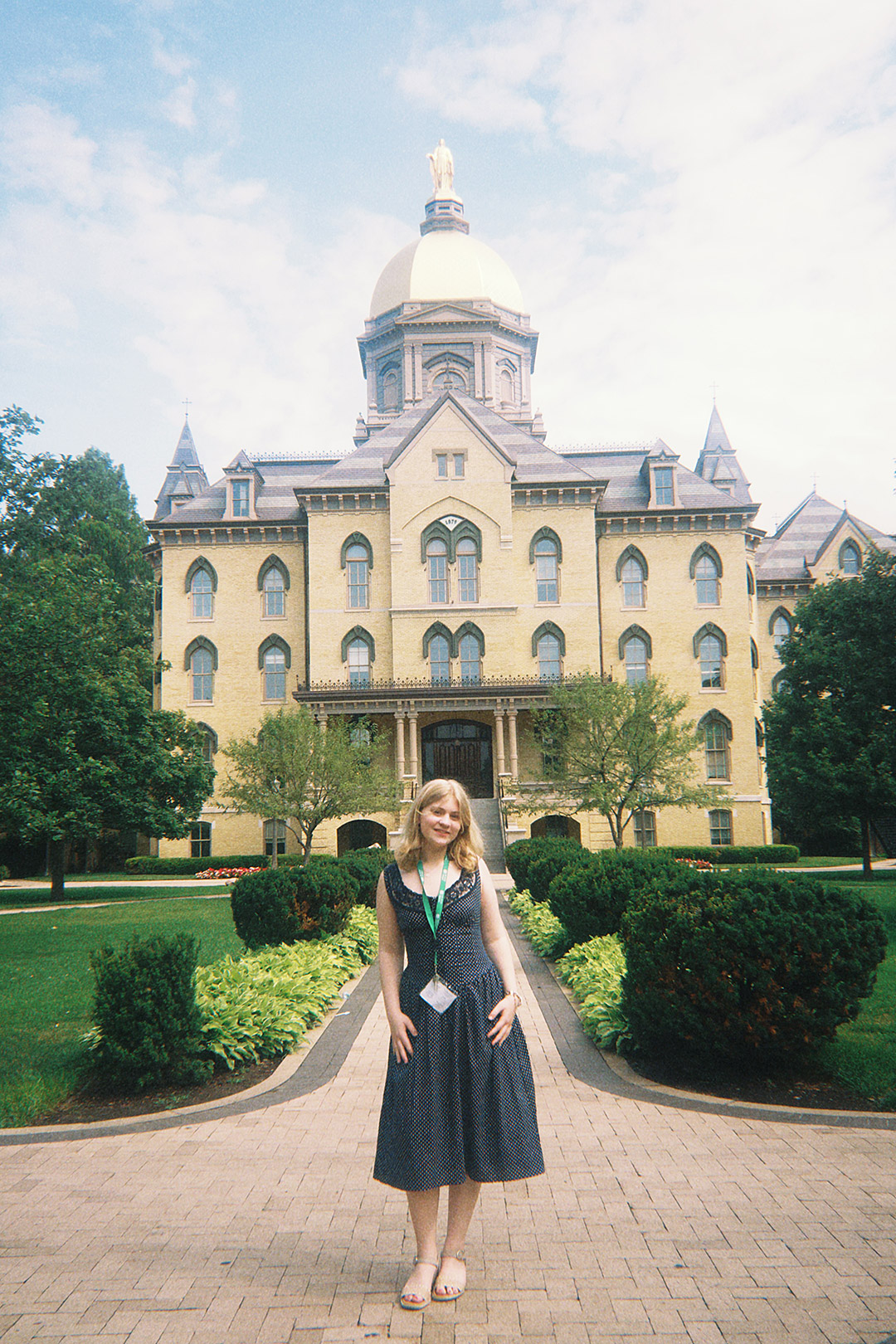
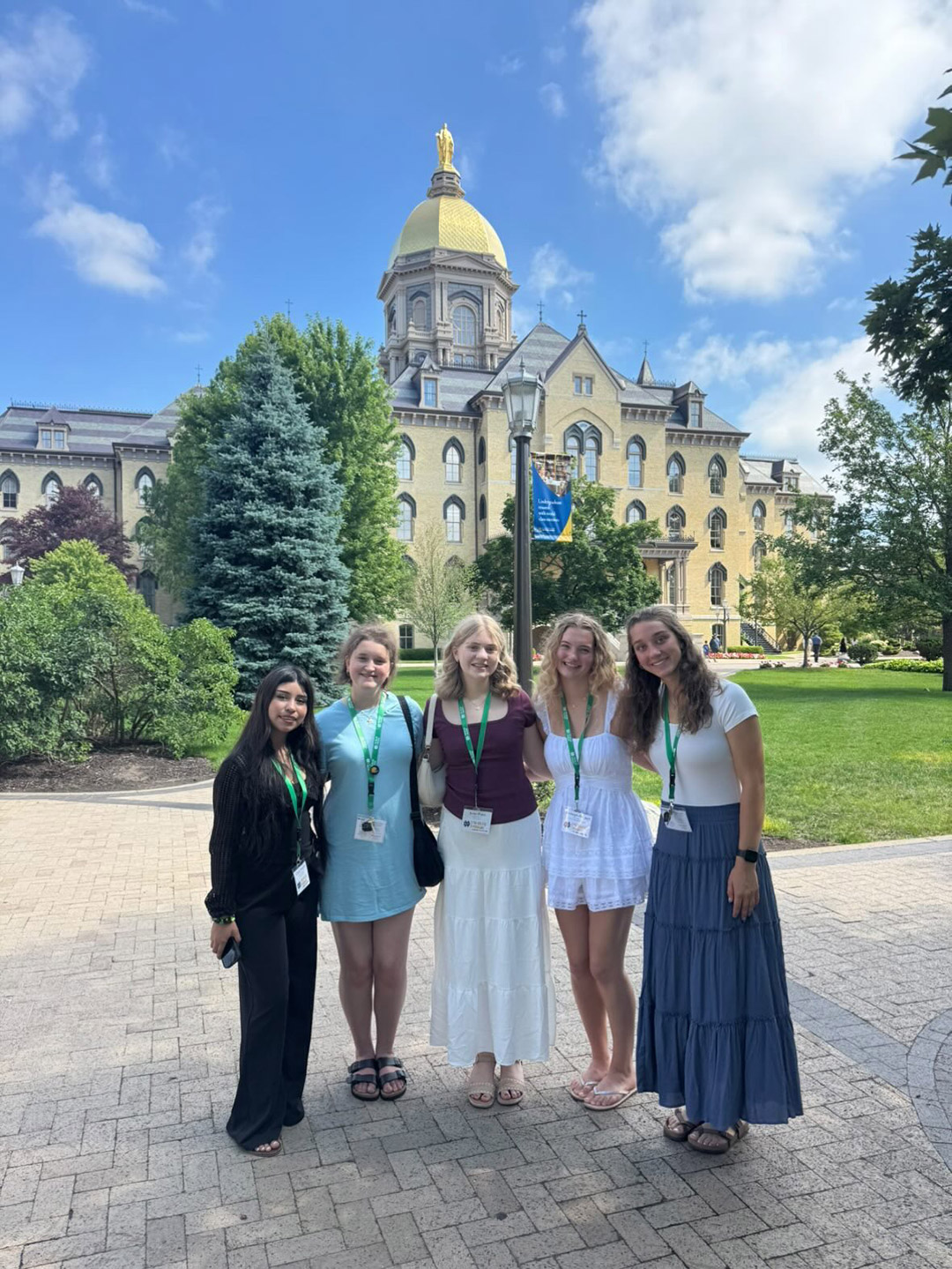
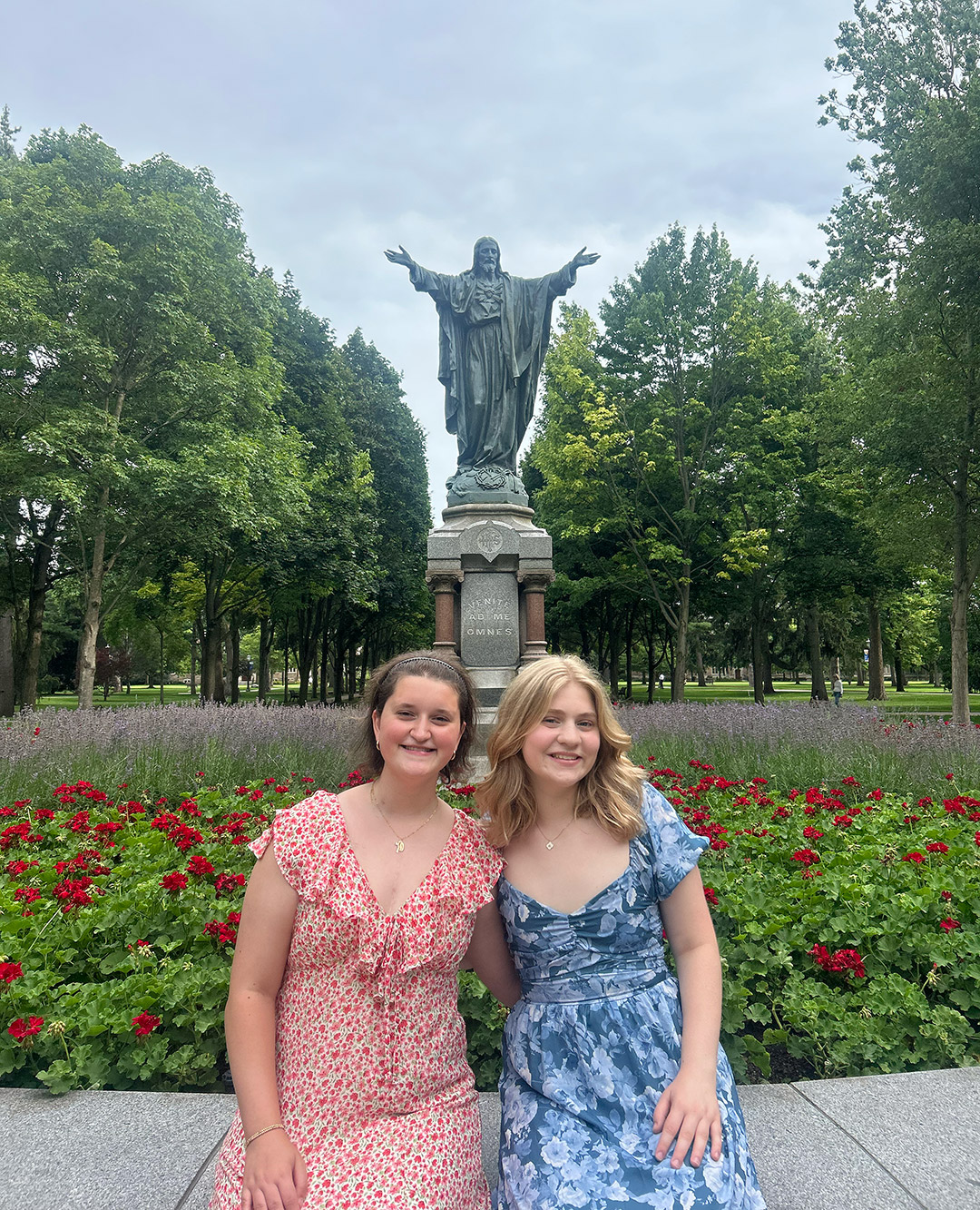
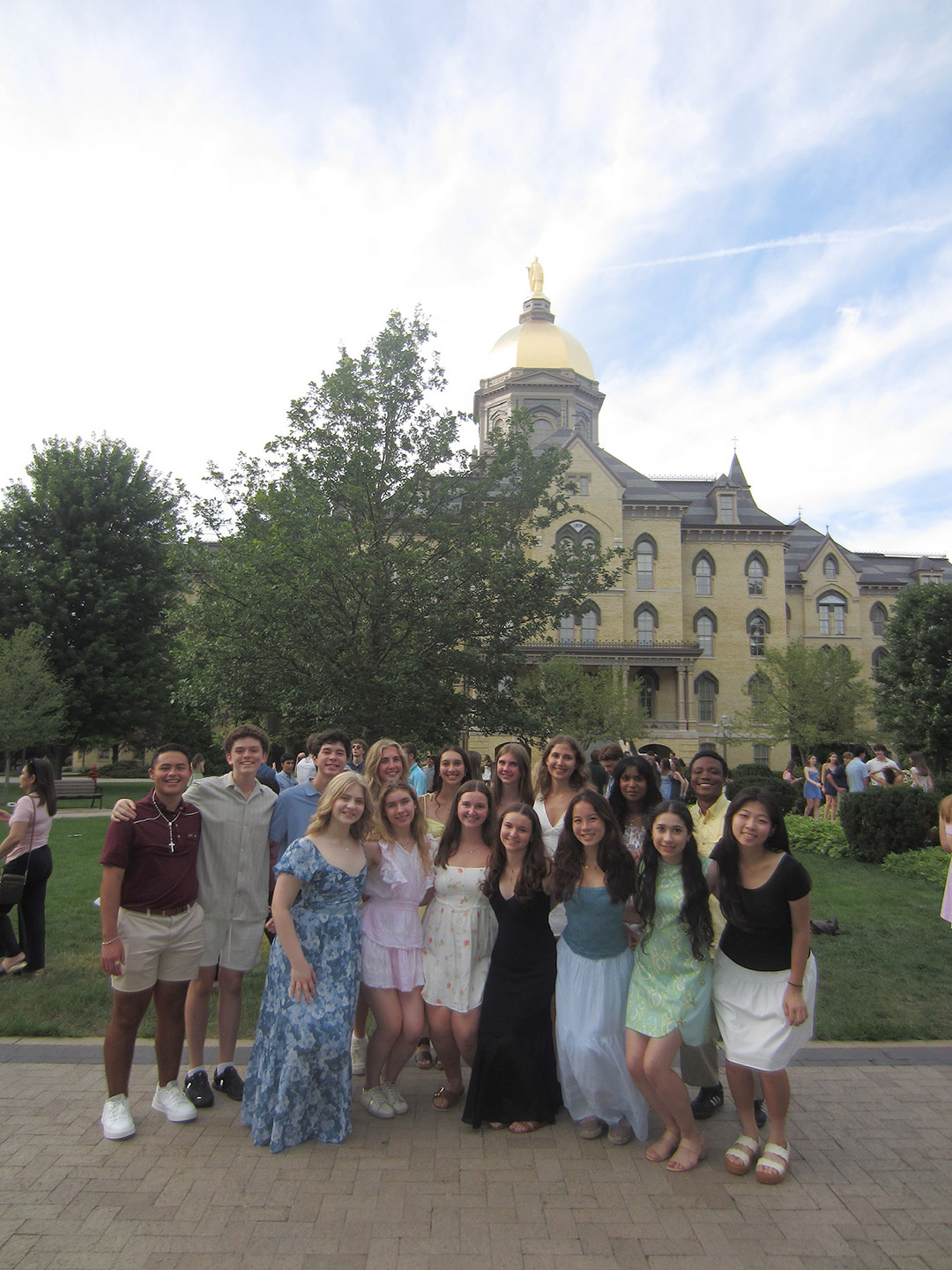
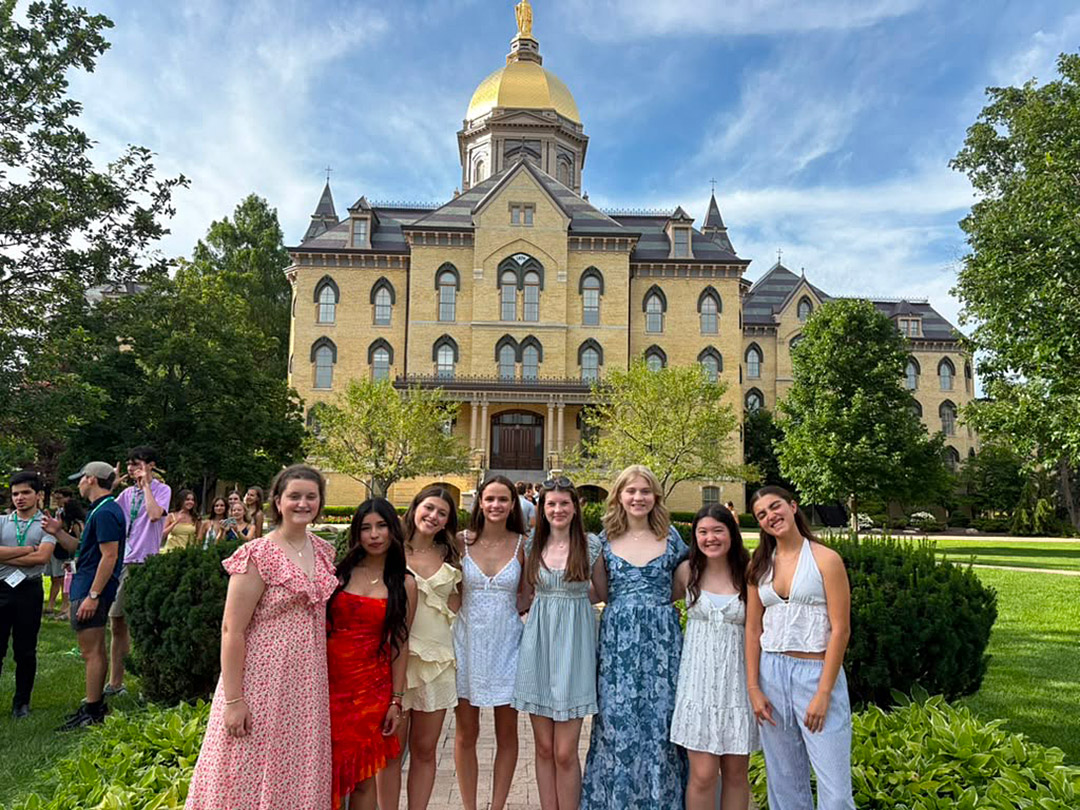
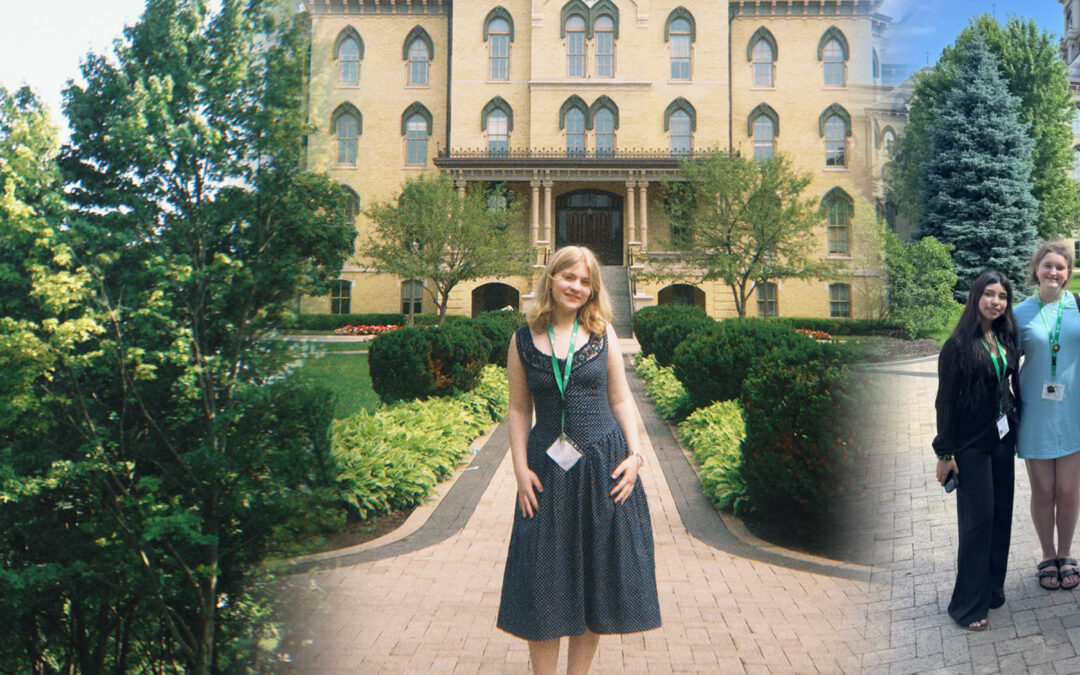
“Whether in the classroom, on the volleyball courts, or in the dorm, I feel that I have not stopped learning since the moment I arrived on campus. My residence hall is situated right behind the Golden Dome, which is one of the most iconic landmarks at the university. Exploring campus itself has been one of my favorite aspects of the experience thus far; Notre Dame is almost like its own bubble, and though that may seem isolating, it is, in reality, connecting. Being in a relatively small yet warm environment has made me feel very secure, and it’s been extremely helpful when getting to know my classmates, as our propinquity to virtually every major building on campus allows us to walk most places together. We have access to an off-campus area called Eddy Street Commons, and we often walk there to get ice cream, dinner, or to make a Trader Joes run. I really enjoy the independence this provides,” Anne explains.
Anne has enjoyed meeting the other students on campus and has become “fast friends” with her roommate.
“Prior to moving in, I was worried that I would have a roommate who would think I am too loud, or who wouldn’t want to talk to me, or with whom I would simply not click, but my experience has been the complete opposite of this. She and I have become fast friends, and we regularly get meals together, go for walks with our other dorm members, and stay up late talking. Learning about the relationship dynamics that come with dorm life, specifically at Notre Dame, has been very informative,” Anne says.
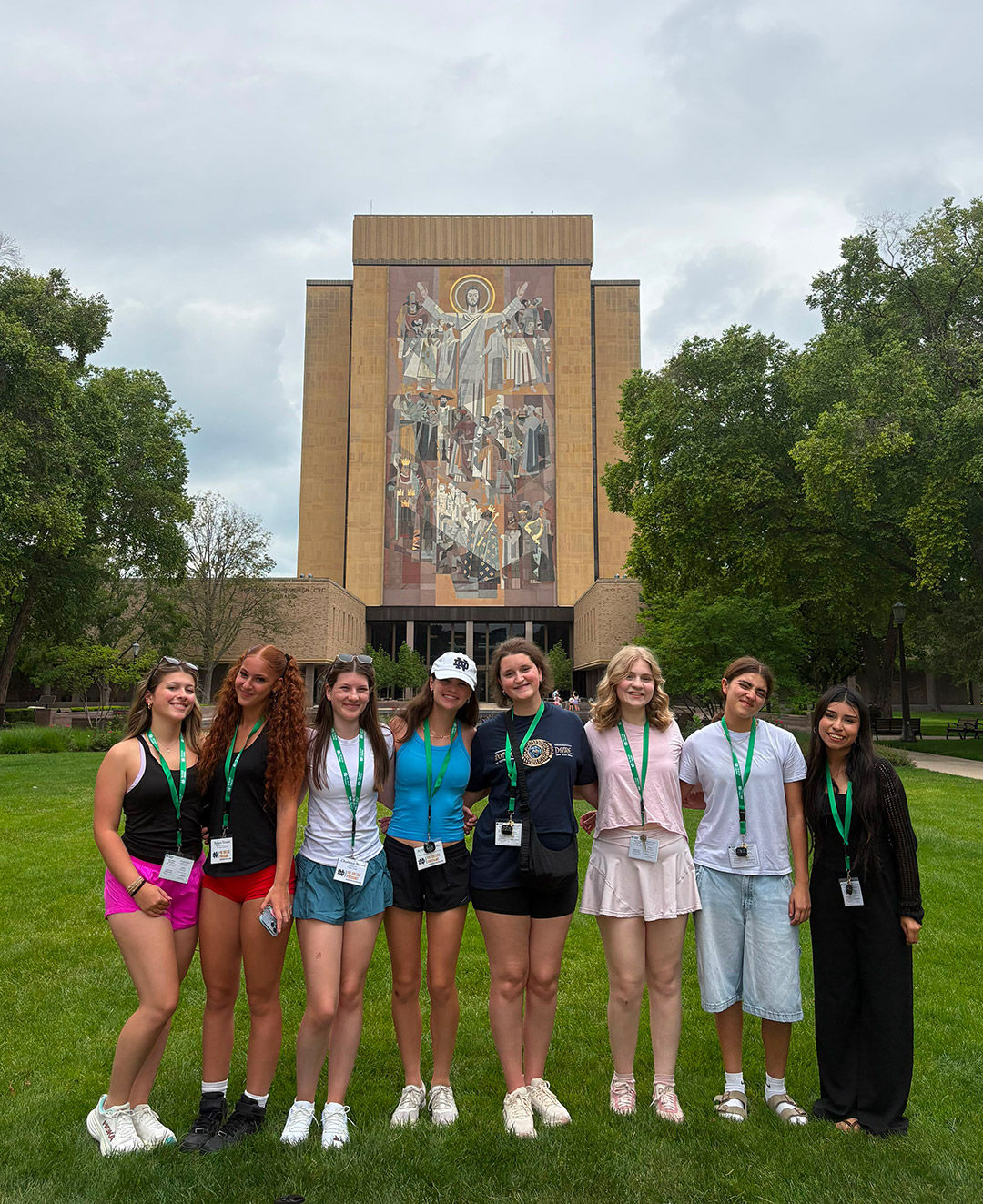
“My resident counselors were all very welcoming, and they have all articulated that the community at Notre Dame was a vital part of their decision to choose the school. This is evident in the way they work to foster friendships and nurture that community in their dorm sections. I have become friends with many of the girls in my dorm section, as well as with many of my classmates,” Anne adds.
“On our first day, we analyzed neuroscience in an abstract fashion, discussing the history of the relatively young field, as well as all of its unique microcosms. My professors informed us that it adding the prefix neuro to any existing word could create a new, intricate branch. For instance, often I thought of neuroscience in the cognitive, behavioral, and psychiatric context, but it turns out that there are also members of the field devoted to neuroaesthetics, neuroeconomics, and neurolaw, each acting as parts of a distinctive, self-contained universe,” Anne explains.
“Additionally, we took time to examine case studies that related to our prerequisite reading, An Anthropologist on Mars, which is a novel by neurologist Oliver Sacks that highlights seven “paradoxical” cases in a deeply profound and human manner. The case we focused on in class concerned an individual diagnosed with prosopagnosia: a condition characterized by an inability to recognize and process faces, usually as a result of damage to the fusiform face area, which is the part of the brain responsible for neurological processes concerning the perception, recognition, and memorization of faces. I was intensely intrigued by the case studies, and discovering various diagnoses I had never heard of before felt fascinating rather than overwhelming,” Anne adds.
“Similarly, when we spent the rest of the day learning about neurons, axons, glia, neuroanatomy, and the chemical processes behind electrical activity in the brain, I found myself absorbing the complex information rather quickly. It was reminiscent of my advanced biology class, and given that I enjoyed that course immensely, digesting familiar lecture styles and chemical behaviors was manageable,” Anne says.
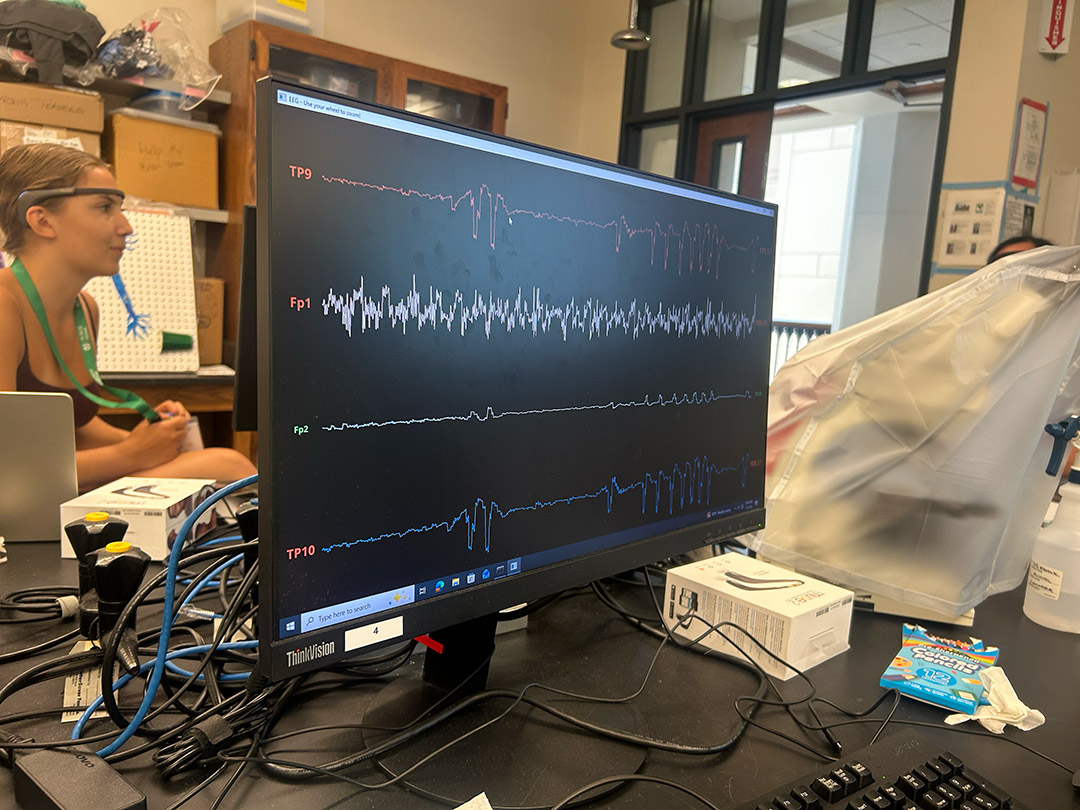
“The feeling of being thrown into the course headfirst did not come until the following day when we continued our unit on neurological electrical communication through synapses. We modeled the process of an action potential moving down an axon intracellularly and extracellularly as the driving stimulus for the depolarization, repolarization, and hyperpolarization cycle of the neuron with circuit boards, taking to account resistance elements. Sometimes, aspects of science take a lunch period to grapple with, and for me, that aspect may be neurophysics; though having to spend more time on a topic than I am used to was challenging in the moment, I am pleased to report that after my brief bewilderment, the lesson flowed quite smoothly, and I have immensely enjoyed the course. We’ve discussed various neurotransmitters, neuroanatomy, and neuroimaging through performing gross dissection of sheep brains, measuring brain electrical activity with EEG headbands, and analyzing research papers,” Anne reports.
I was assigned to a research paper about the NI70, a component of an event-related potential triggered by a sudden onset facial stimulus that peaks at 170ms. Most prominent over the occipitotemporal cortex (where the fusiform face area is located), the N170 marks the point where a stimulus is interpreted as a face, and it carries a specific signature when presented with face-related stimuli that has a high amplitude. The paper focused on how, in experimental settings, the N170 is activated by images of faces to a much greater degree than it is by objects, and it seems that it is not triggered by characteristics, but rather by our own prior knowledge and perception of faces. The paper also delved into whether or not we process faces holistically or by individual features. By displaying images of the right and left sides of the face at different frequencies, researchers were able to determine that facial perception is likely holistic, as the subjects showed new intermodulation responses that can only arise when neurons are processing everything nonlinearly and together. I found it fascinating, and I was eager to relay all the technical terms I learned to family and friends. Currently, my classmates and I are working on a research project that examines the neurological impact of our preconceived ideas or expectations of people and items not matching up with reality on our P300, an event-related potential that peaks after a person comes into contact with an unexpected or disrupting stimulus. We are utilizing EEG technology, and it’s incredibly cool,” Anne says.
When not studying, Anne has been able to enjoy after-class activities with her classmates.
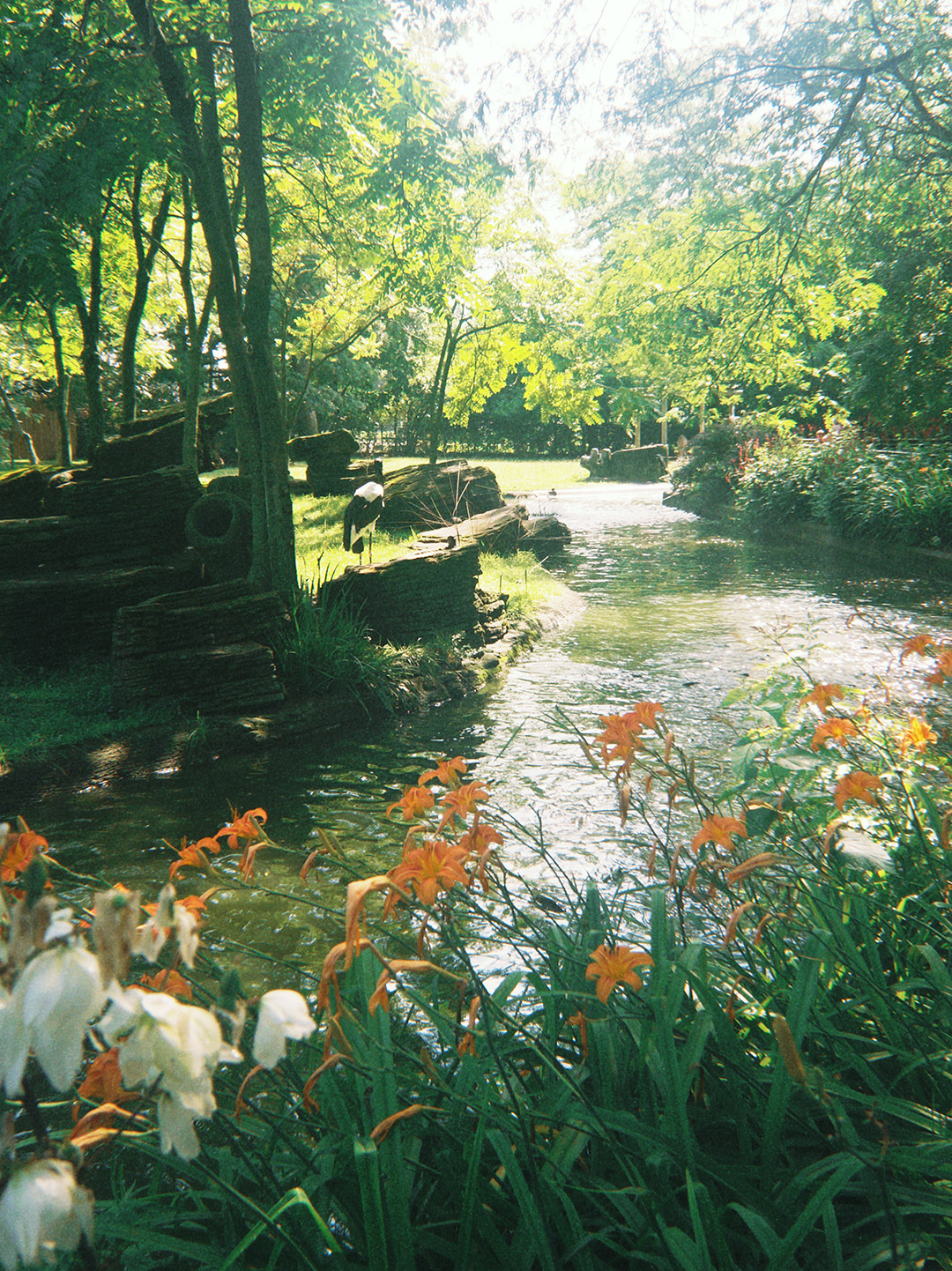
“We’ve had a few field trips to the Potawatomi Zoo and the Indiana Museum of Medical History, which used to be a mental institution and now features a pathology exhibit with the brains of former patients on display. Additionally, the program is hosting what they have dubbed “The Notre Games,” which is a program-wide competition where we have been split into teams battling for a prize through basketball and volleyball tournaments, a trivia night, a campus scavenger hunt, a regatta, and an upcoming massive game of hide and seek. That sounds a little silly to write, but I am very excited,” Anne reports.
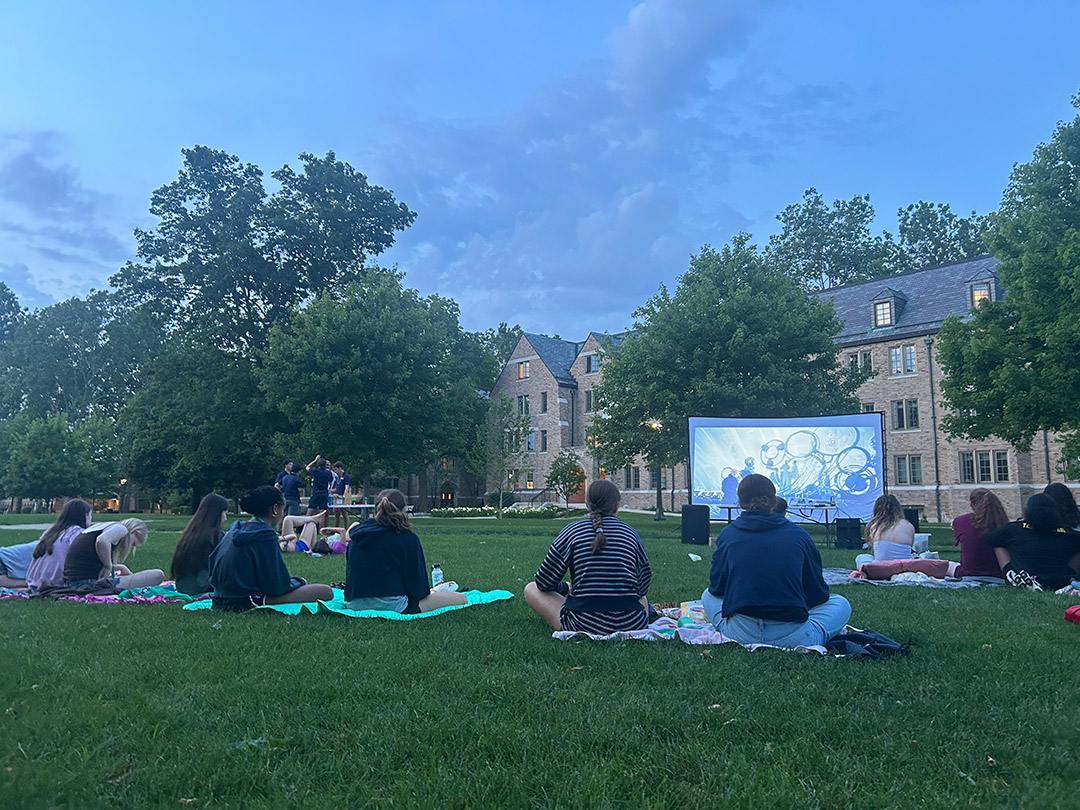
“Also, I have attended an admissions session, spent time with a comfort K-9, attended a Q&A about college majors, a watercolor painting event, bracelet making, powderpuff games, movies on the quad, world cup viewing parties, and rosaries on campus, which have made my week feel both balanced and magical. I occasionally do feel homesick, but I know that my parents want me to focus on all that these two weeks have to offer me. So far, this program has been everything and more academically and socially, and there is still so much to discover, so many activities to do, so many people to meet, and so many opportunities to get out of my comfort zone ahead of me, and I am ineffably thankful for the Garwin Family Foundation for allowing me to pursue my future with this program,” Anne says.
Week Two — Research Projects & EEG Technology
Anne reports that week two began with students working in groups to brainstorm and create research projects.
“We began the week in groups brainstorming and creating research projects based on the case studies in our prerequisite reading, An Anthropologist on Mars, with each project utilizing our EEG technology. My group was assigned the study ‘To See and Not to See,’ a chapter that details the life of a man named Virgil who was completely blind for virtually his entire life as a result of cataracts. When he was fifty, Virgil’s fiancée pushed for him to undergo surgery to remove his cataracts so he could see on their wedding day. Though the surgery was successful from a medical standpoint, Virgil entered a visual world he had no framework for understanding; his retinas were healthy, but he had no context in which to process what he was seeing, and the sudden appearance of shapes and colors surrounding him was frightening and confusing. It was particularly difficult for him to process items that appeared different from how he had imagined them when he was blind. For example, Virgil had the preconceived notion that spaghetti was brown, so when he realized that it was in reality more yellow, he was unable to reconcile reality with his expectations, leading to difficulty processing and perceiving the food. This instance was the basis upon which my group and I built our experiment; we were curious about how our expectations affect us neurologically, specifically when they differ from reality,” Anne explains.
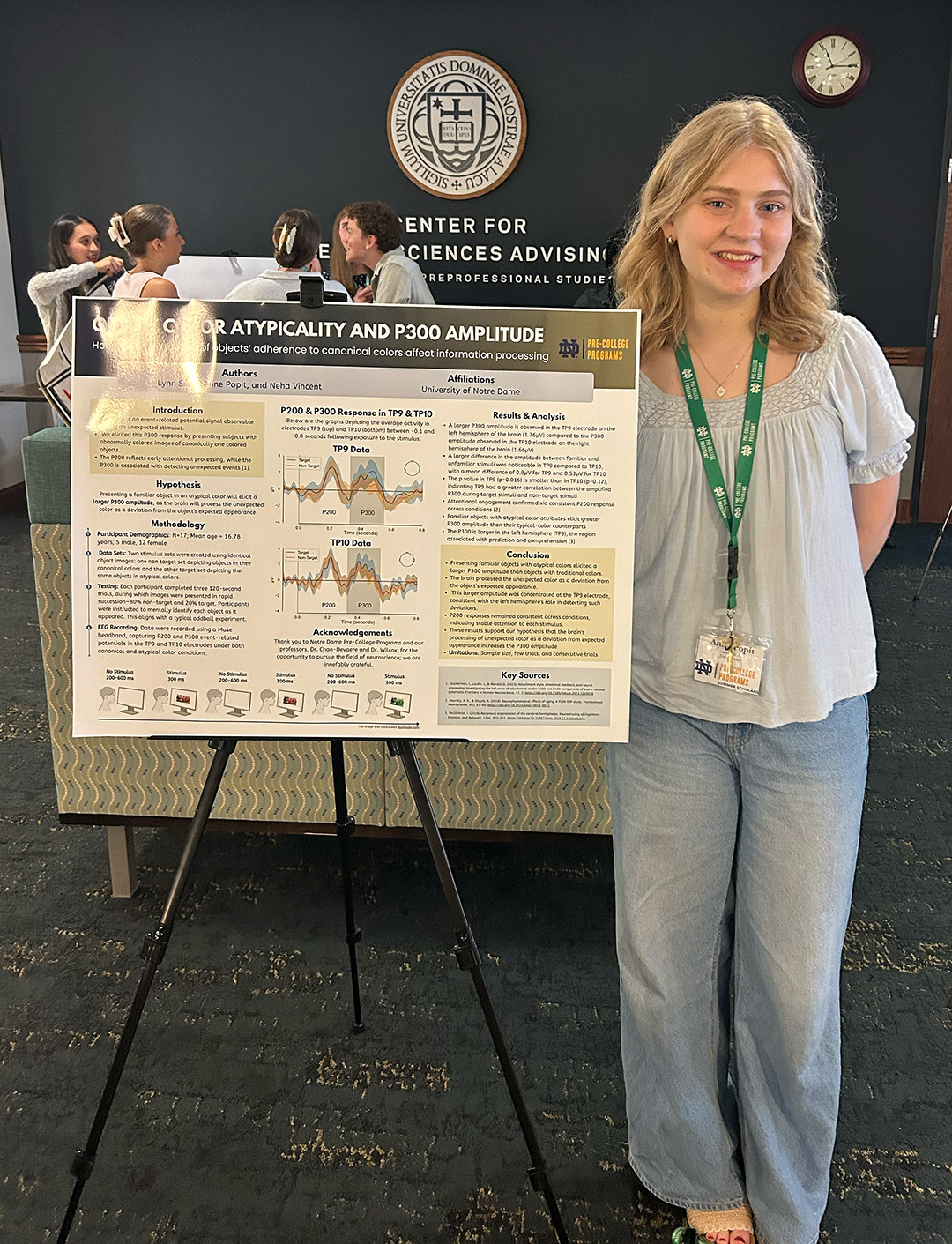
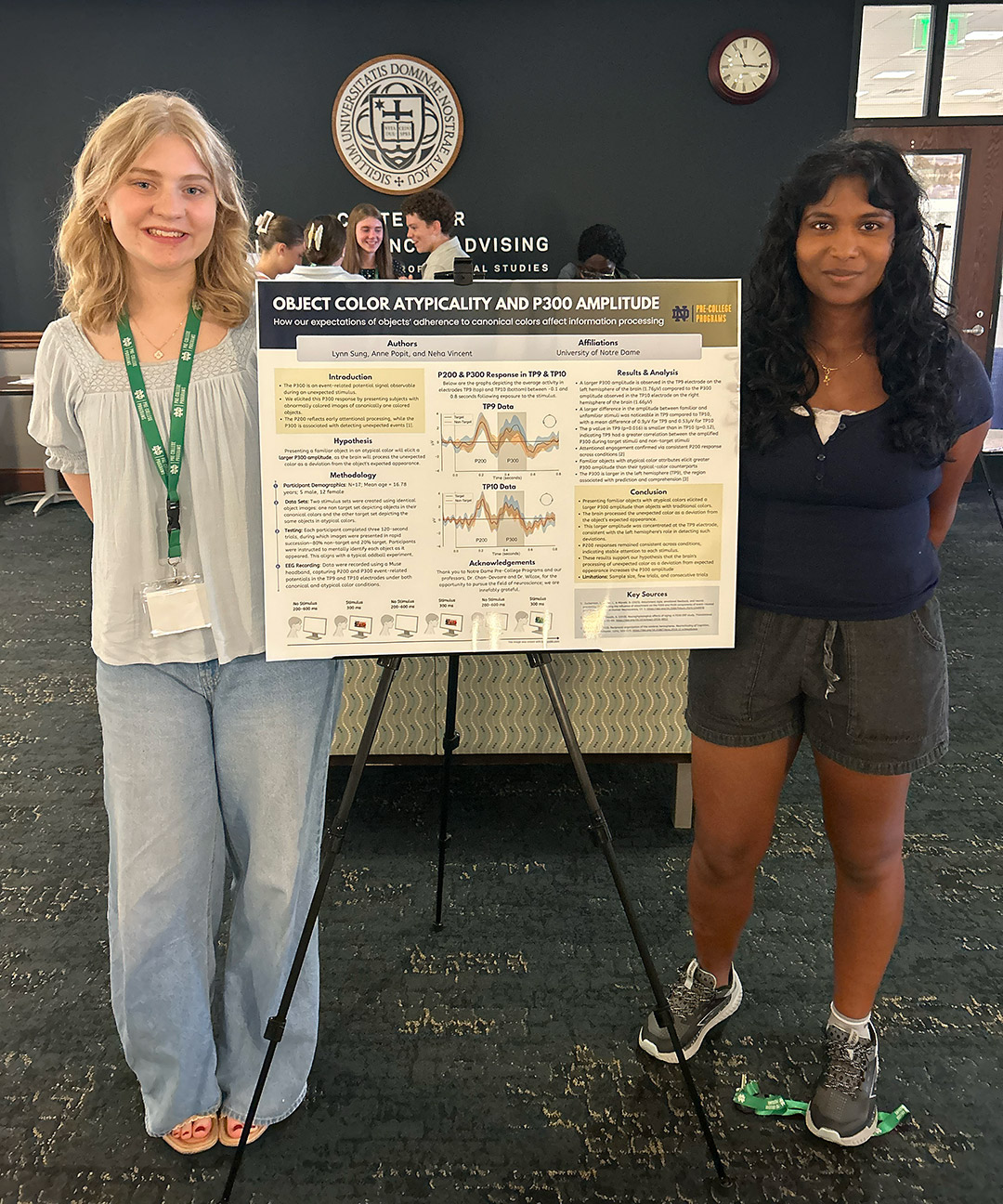
“Obviously, with limited technology, we were unable to conduct a broad investigation, so we focused on object color atypicality and its effects on our P300 amplitude. Essentially, we sought to determine how our expectations of an object’s canonical color affect information processing because the P300 is the event-related potential that functions as a neurological response to an unexpected stimulus. We created two sets of stimuli, one consisting of canonically single-colored common objects (e.g., red firetrucks, green trees) and the other with identical images, this time portraying the objects with atypical colorings (e.g., yellow firetrucks, rainbow trees). During each trial, images would be shown in rapid, randomized succession for 120 seconds, with canonically colored (non-target) images appearing 80% of the time and color-atypical (target) images presented for the other 20%. Our hypothesis was that observing objects with atypical coloring would elicit a larger P300 amplitude in participants than viewing objects in their canonical colors. After finalizing our experimental design, creating our stimuli sets, and completing a few trial runs, we were ready to spend the entire next day in data collection,” Anne adds.
“Our professors really wanted us to gain an appreciation and respect for what it is like to be a subject in a research trial, so while running our own tests, my fellow students and I also participated in each other’s projects. There were five experiments in total, and each required around fifteen minutes per subject to complete. Our EEG headbands were sensitive to eye and facial movement, so the authenticity of everyone’s data rested on our ability to keep still and refrain from blinking as much as possible during these tests, which is just as difficult as it sounds. It was definitely a bit of a monotonous process, but it was beyond worth it.,” Anne explains.
After experiments were complete, students spent the next two days analyzing their data.
“We filtered out “noisy” data (data containing unwanted signals from blinks, adjustments to the EEG headband, or movements of the face and jaw muscles) and graphed EEG responses to the target (abnormally colored) and non-target (canonically colored) images. Upon examining data from all four of the tested electrodes, my group found that we were unable to make sense of what we saw; even with filtering, none of our findings seemed statistically significant. However, when we isolated the data from the TP9 electrode, we noticed that the findings were congruent with our hypothesis. The difference in P300 amplitude for the non-target and target stimuli was substantial, with a considerably larger response elicited by our target stimuli. Through further analysis of additional research, we found that the left hemisphere of the brain (over which the TP9 is positioned) seems to have a preference for the familiar. Consequently, when presented with routine activities or expected stimuli, the left hemisphere proves efficient; however, when faced with a divergence from preconceived expectation, the unexpected stimulus cannot be processed as effectively, as it violates the brain’s prediction, leading to the elicitation of the P300: the neurological response associated with unexpected stimuli and prediction error. I did not anticipate going down such a specific rabbit hole when we first began our project, but it was fascinating to discover how deeply one can explore a singular, intricate neurological function,” Anne reports.
“The information we collected was then condensed and displayed on our research posters, which we spent around a day designing, and presented to our peers and counselors as well as our professors and their colleagues on our final day of class. I was able to listen to my classmates explain their projects and findings in depth, which I found riveting, as they were all unique and drastically different from my own. Additionally, I relayed the details and results of my group’s project to both of my professors individually, which may seem intimidating, but I was beyond excited to display how much I had learned during the week,” Anne adds.
“My professors were the biggest contributors to my educational advancement over my two weeks at Notre Dame. They were incredibly kind, funny, and intelligent, and both worked to foster an environment where my curiosity thrived. Our course was a perfect balance of lectures, lab work, and research, but we also made time for some friendly competition with an end-of-session neuroscience quiz bowl, which I am delighted to report my team won. This last week of class was fast-paced and a little hectic, but learning how to conduct, display, and present real research in such a short time was immensely rewarding, especially at this stage in my life,” Anne says.
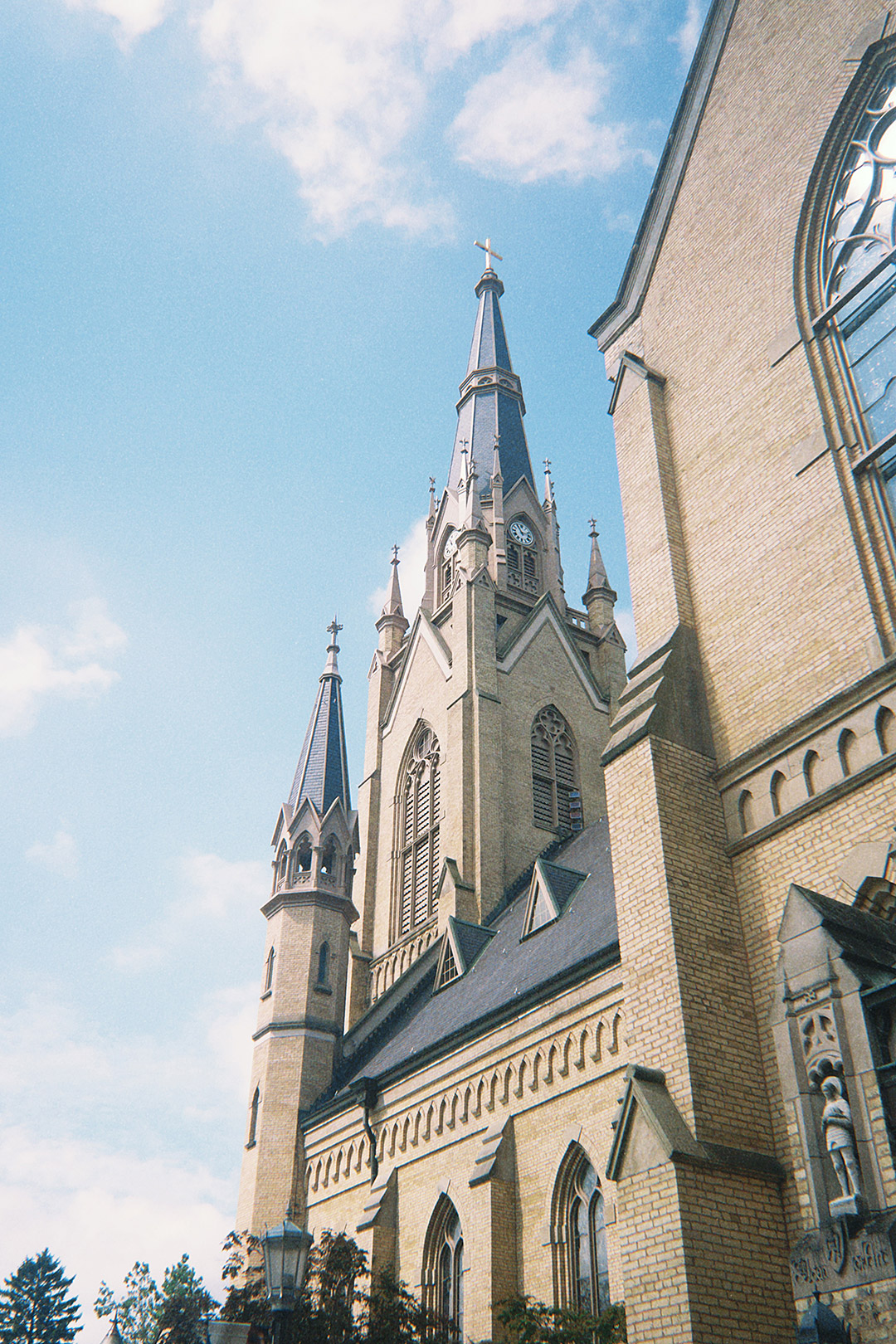
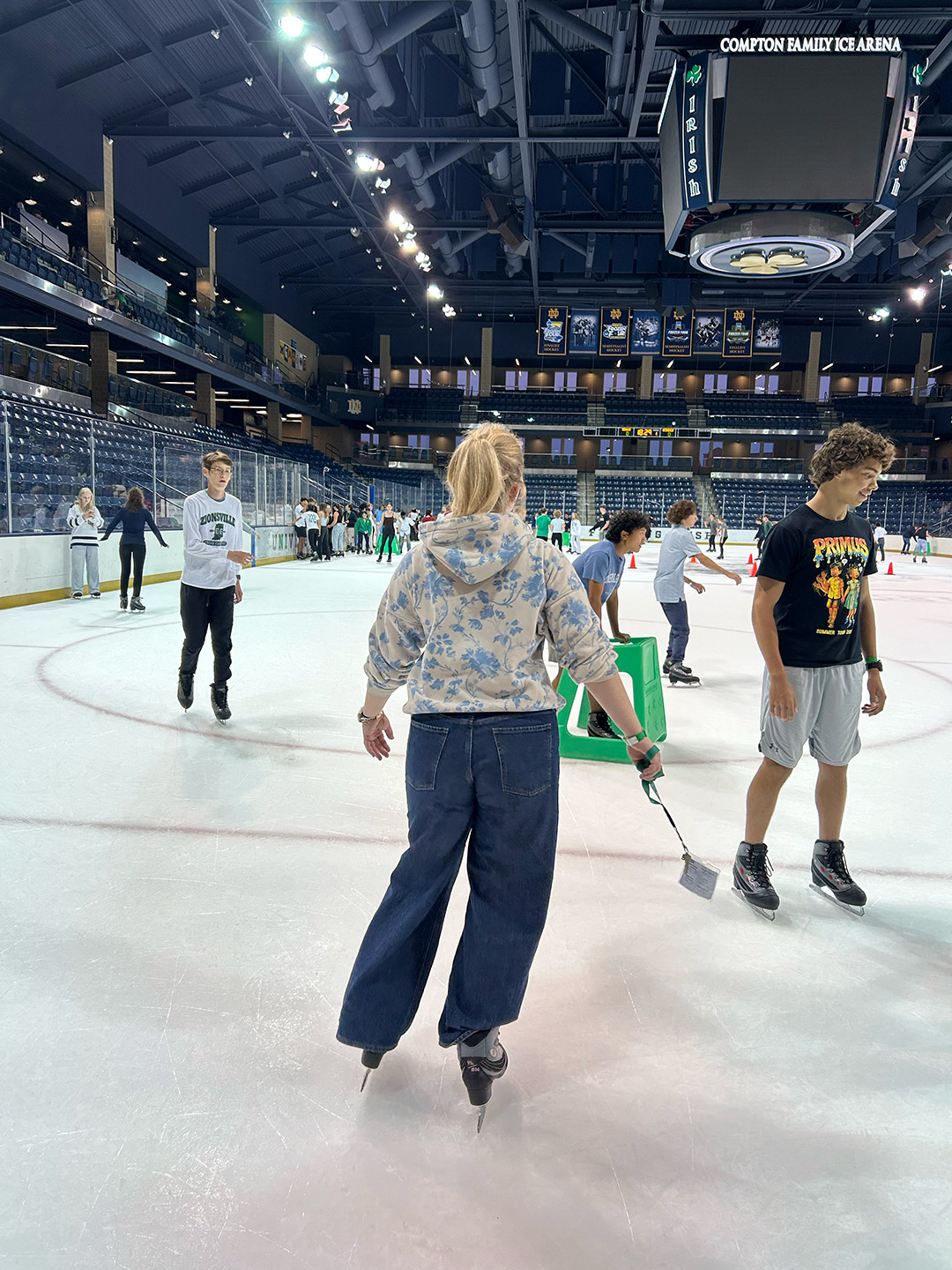
When not in class, Anne says she was able to participate in many activities offered by the program. Anne went ice skating, sang karaoke, attended a slime making, a Basilica tour, a gigantic bonfire, a film festival, bingo, and a Hunger Games-style game of hide and seek, a catered dinner at the Morris Inn (the hotel on campus), and a mass at the grotto—a shrine and replica of the grotto in Lourdes, France. The week ended with a dance for the students.
“I was pleasantly surprised by the counselors’ DJing abilities, and I loved showcasing my totally awesome and newly acquired line dancing skills. That evening was very bittersweet; I was eager to see my family again, but I was unprepared for how hard it would be to leave the friends who had become a second family and pack up the dorm room that had functioned as home. However, leaving a place does not have to mean leaving behind the friendships or the memories, and I have been in consistent contact with my friends and classmates since I departed from campus. I am truly thankful to have had something that made saying goodbye so difficult,” Anne says.
“On our last day of class, my professors asked us to each share something we felt we had learned over the course of the two weeks, and for me, that was to stay open-minded, dedicated, and curious. I hope to be lucky enough to continue to surround myself with thoughtful, diligent, like-minded individuals who will push me to do my best in all aspects of life, but I have also come to understand that these environments will inevitably bring with them doubt, insecurity, and anxiety. Embracing these feelings, leaning into the uncertainty of not knowing why or what is next, and choosing to pursue my interests and curiosity is always going to be worth it to me. I loved every minute I spent at the University of Notre Dame this summer, and I cannot express my gratitude to the Garwin Family Foundation enough for allowing me to gain not only an extended education, but lifelong friends, and a deeper understanding of how to navigate the intellectual world,” Anne adds.
We are happy to hear that you learned so much at Notre Dame and left the experience with lifelong friendships. Great work, Anne!
>> Read Anne Popit’s Final Report (PDF File, 75 KB).
>> Learn about the other students’ experiences in the GFF Scholarship Program.