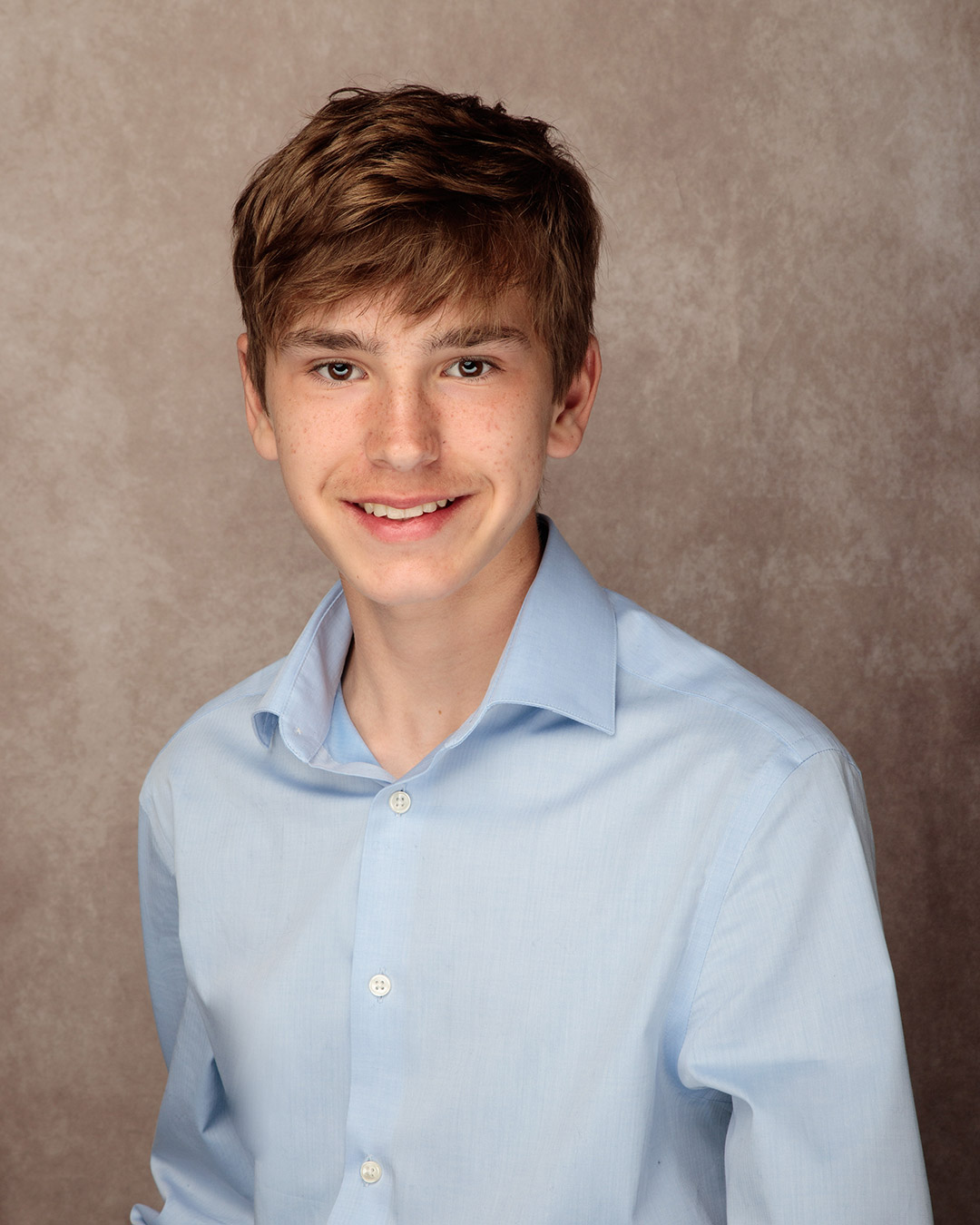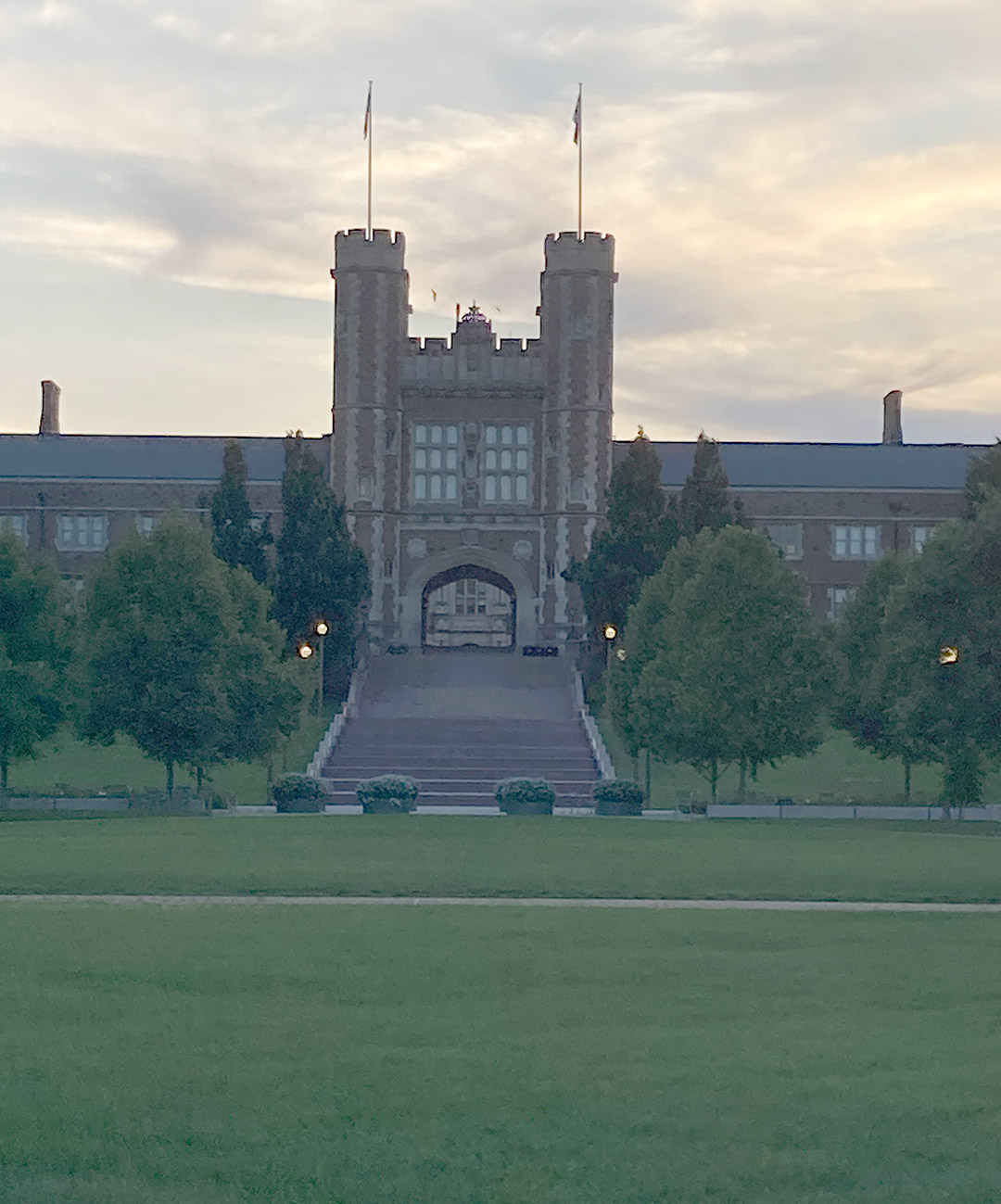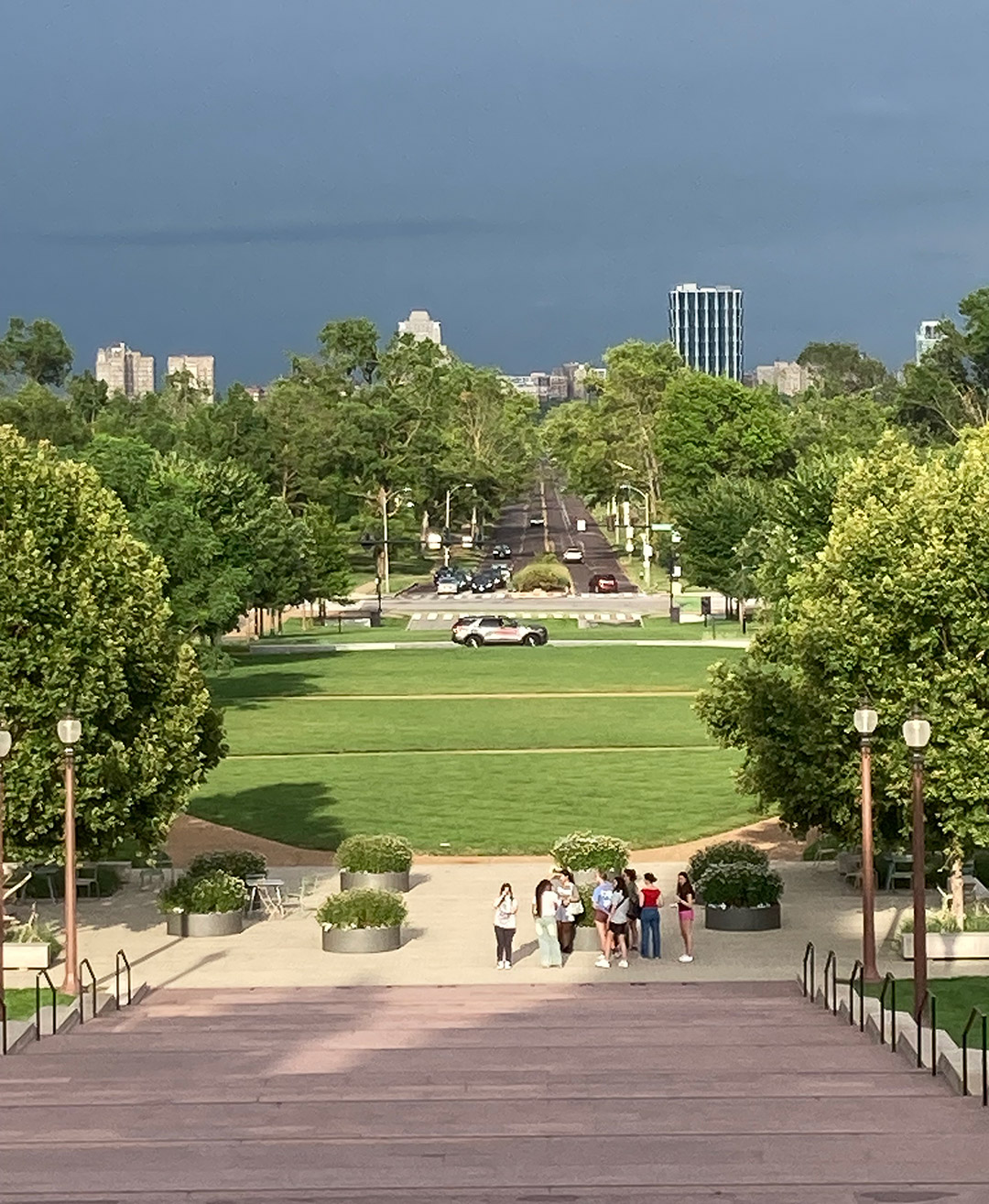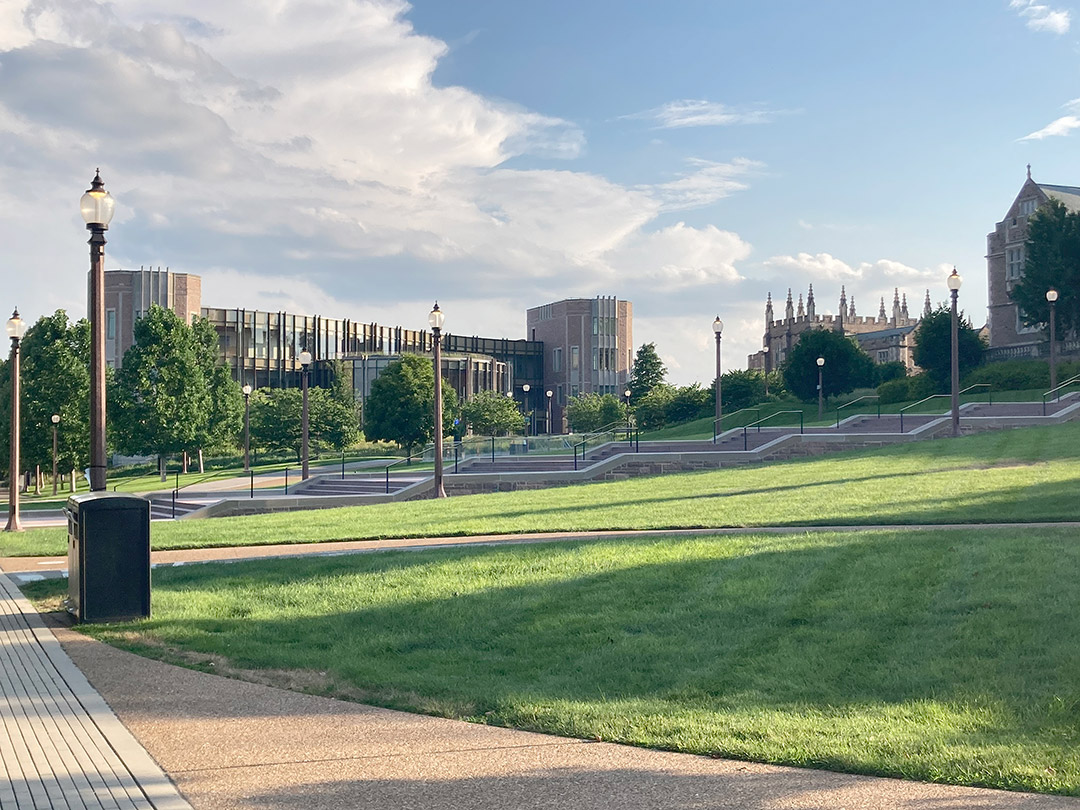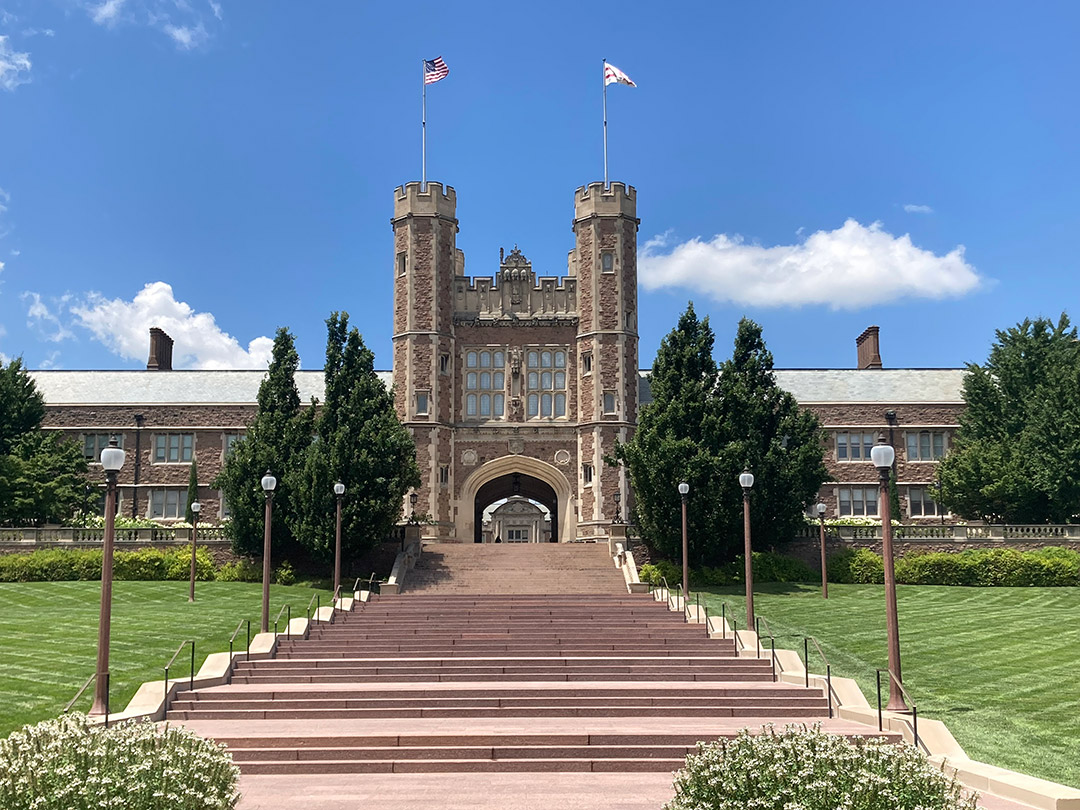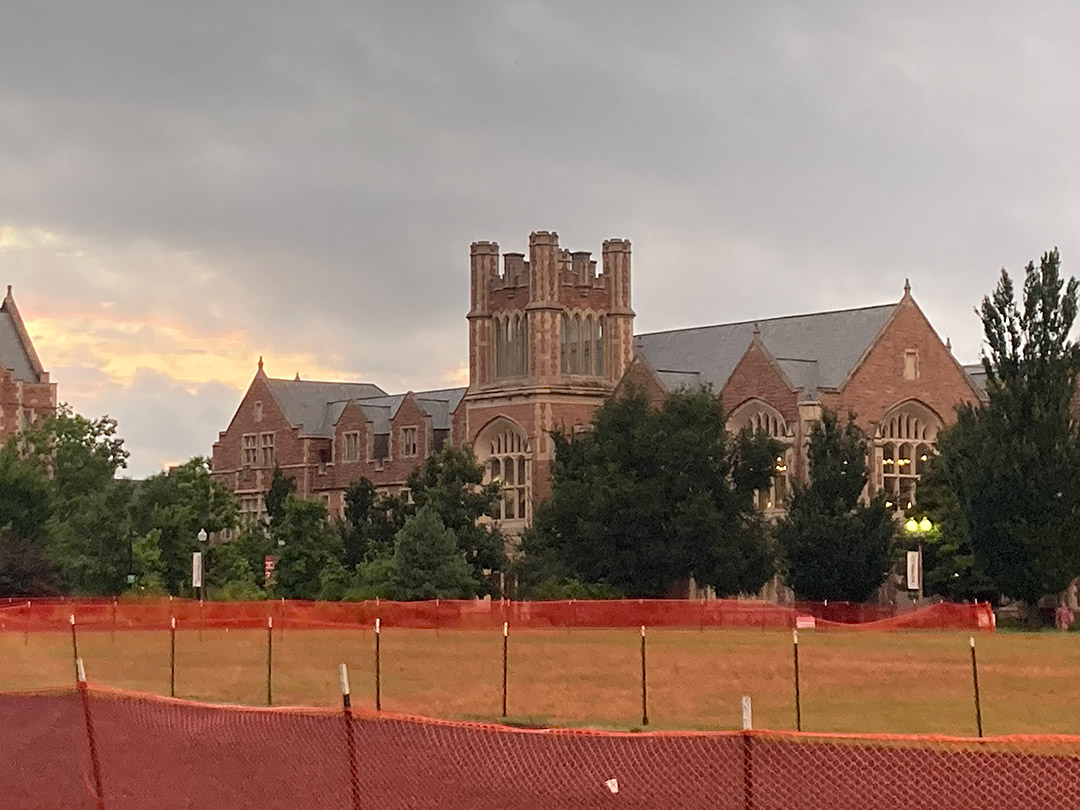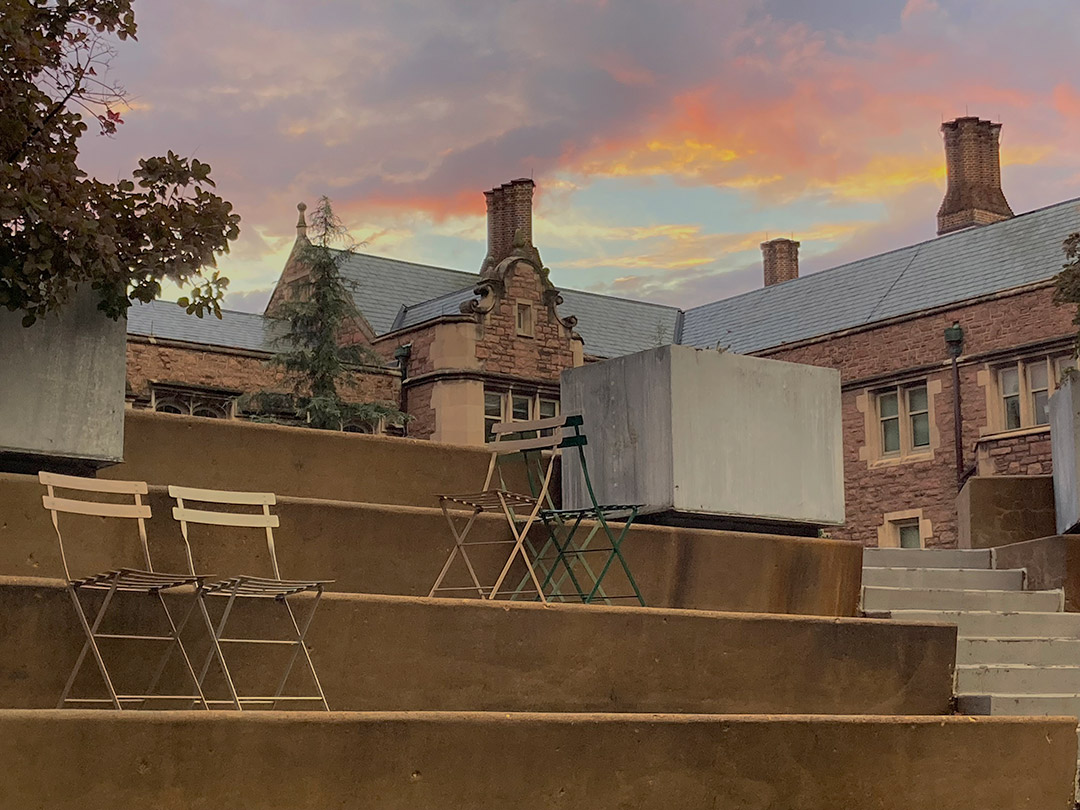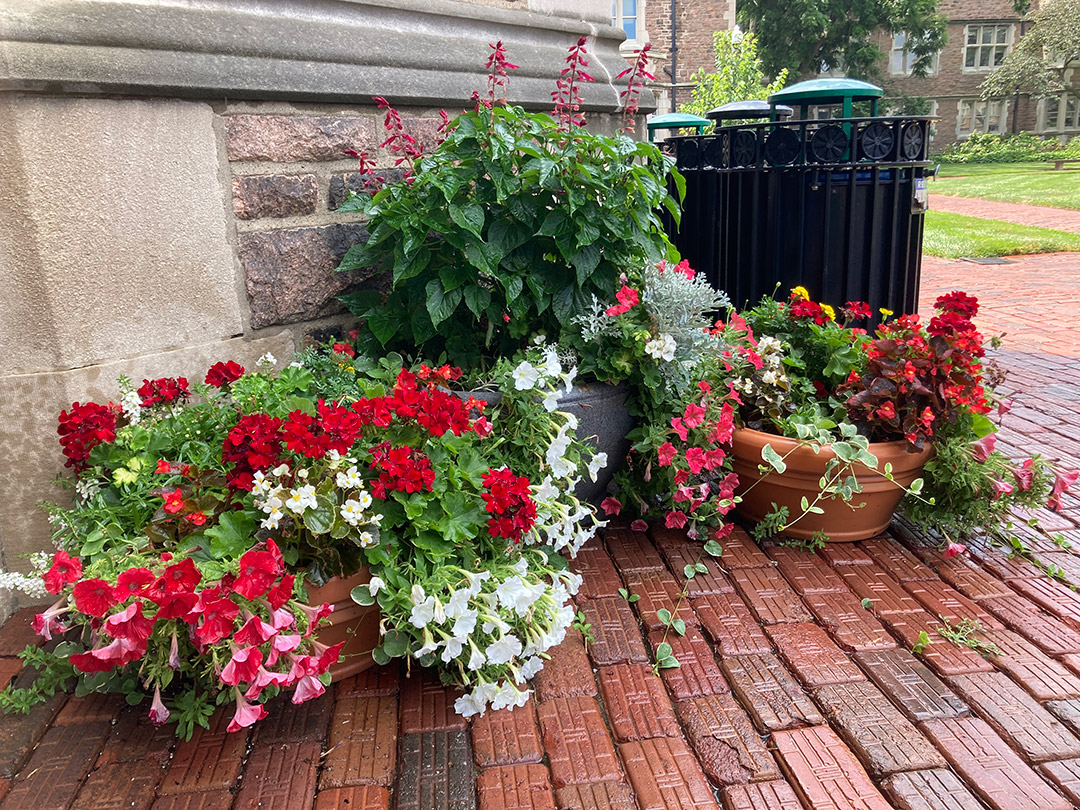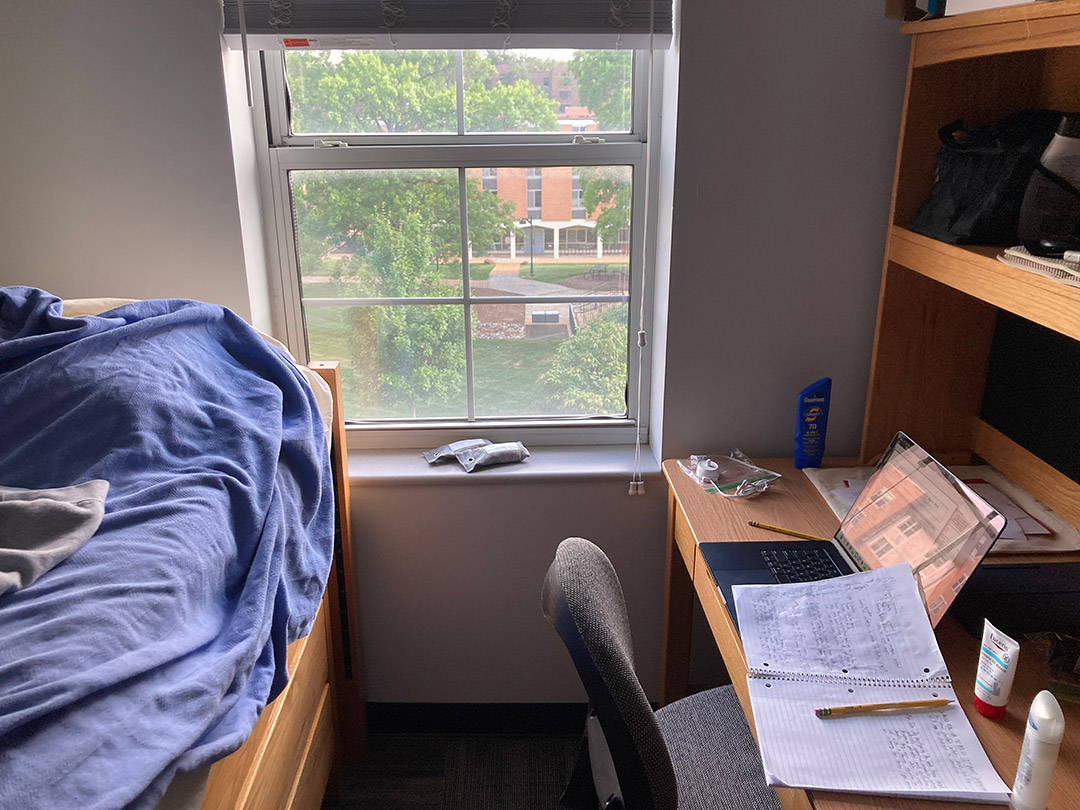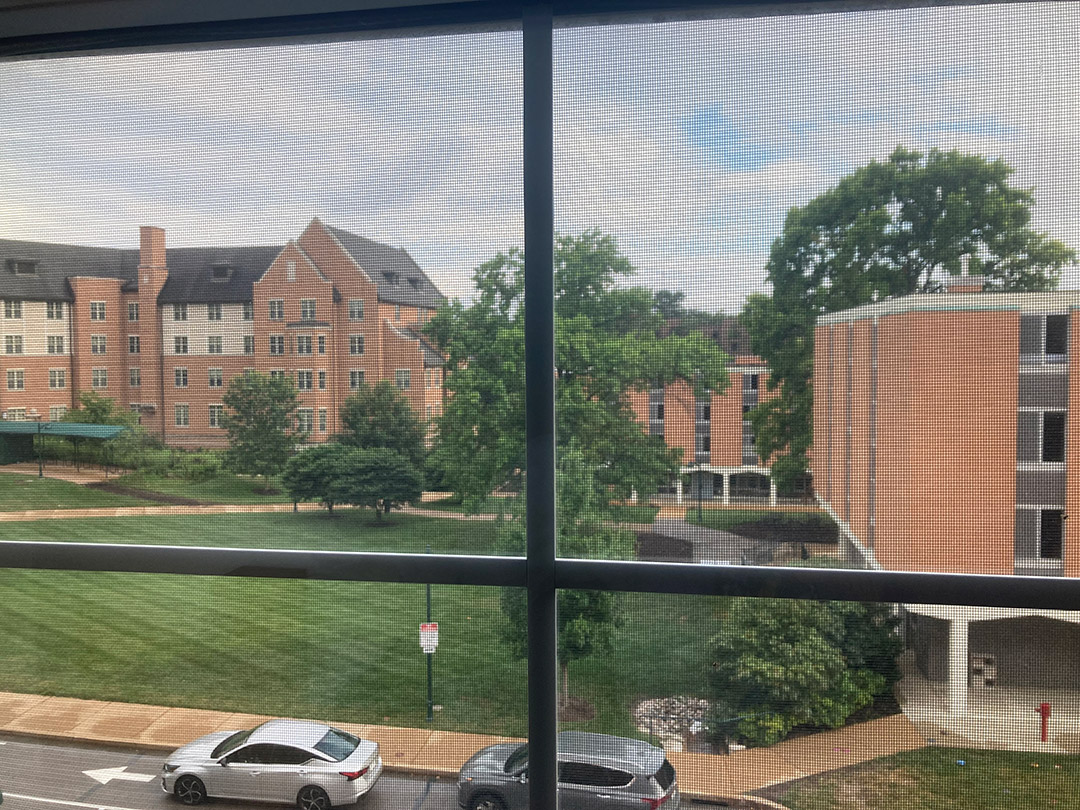
Alexei Kadyrov reports on his experience at the Washington University Research Development Institute. After settling in and meeting two of his roommates, Alexei toured the Washington University campus. While touring the campus, Alexei and his roommate Jason started finding and collecting tiny bears which were part of a scavenger hunt set up throughout the campus. After that, it was time to attend the first day of class.
“There were two sections to the institute, and our room was split down the middle, with Luca and me in session 1 and Kent and Jason in session 2. The morning session, 10 AM – 12 PM, was a brief introduction to the class as well as a notes session on summary vs. analysis led by one of WashU’s English professors, Dr. Iler, who is a super chill and nice dude. During lunch, I saw Francis [Bu] on a walk back to the dorm,” Alexei reports.
“The afternoon session, 2 PM – 4 PM, had a few more notes on the differences between primary sources and secondary sources, but, more importantly, we had to start thinking about research topics that we would want to focus on for the rest of the class. From this assignment, I came up with an idea to start my final project—looking at wormholes through Interstellar, a sci-fi film by Christopher Nolan. We also had our first mandatory group meeting with our program assistant, where we talked about our initial thoughts about the program,” Alexei adds.
Alexei reports that during his first week, the class was taught how to analyze primary and secondary sources, thinking critically about similar elements and differences. The class also read and analyzed a short story, “The Yellow Wallpaper,” as one of his assignments for the course.
“In class, we read over an article that analyzed, ‘The Yellow Wallpaper’ from the viewpoint of the main character’s prison being a panopticon to showcase an example of analyzing the primary source we picked for our research topic,” Alexei explains.
The next major lesson and assignment was learning how to create an annotated bibliography.”Here, we would need to find three scholarly sources, summarize them, and then source two quotes from them and place them in relevance to your interpretation of the original primary source. This assignment would be, for me, a lot harder and more tedious because, as I was unfortunately discovering, finding and understanding scholarly sources about theoretical physics is not the easiest task. To finish the morning session, we had some notes on analyzing secondary sources.
When not in class, Alexei and his roommate Jason went on morning runs, explored a local barbecue place for lunch, played in an online tournament, and searched for more bears around campus.
“For lunch, we went back to the barbecue place, and for the afternoon session we went to the library to start looking for scholarly sources. Afterwards, Jason and I rushed back to the dorm as all of the bears from the bear hunt, mentioned Monday, were due today. We turned ours in, totally 69 after finding additional bears throughout the lobby, and for 30 minutes, no one else came. We were very hopeful, as we knew that there were some people who had found over 200 bears while we went on a run that first Monday, and the closer and closer it got to the due date, 5:00 PM, the higher and higher our hopes rose. Unfortunately, at exactly 5:00 PM, those people who found 200 bears came down to turn in their supply, ruining our chances of winning off of a default. Bummer,” Alexei reports.
In addition, Alexei says he travelled off campus for the first time this week to visit the Delmar Loop in St. Louis. He played tennis with friends, participated in a Karaoke session, and played a game of scrabble. The week ended with more ad analysis and notes on constructing a thesis.
“Overall, this was a really fun week, and I’m ready for the next one,” Alexei says.
Week Two — Constructing a Thesis & Final Presentations
Alexei began his second and final week researching sources for his project about wormholes, and found that Monday was his most challenging day of the week.
“Today was the most stressful day thus far. Going into today, I realized that a lot of the work I had done on my annotated bibliography did not really matter as I did not have a clear research question on Interstellar that I could focus on for researching. Therefore, after the morning session where our professor showed us an example for the research process (I had one of my best interpretations of the class where I pulled that the protagonist was a drone operator in the poem we read which was pretty sweet), and the evening session where we had some notes on claims and how to build a rational argument, I went overtime on finding a research question,” Alexei says.
“I found the bare bones for it today, but the final question was, ‘Interstellar, in order to fulfill its needs as a watchable film, constructed a model heavily based on real-life theories and ideas, but intentionally ignored some areas to improve cinematography. In the approach of the unrepresentable, as seen in Interstellar’s model of wormholes, how are real-life theories simplified and converted to reach out to wider audiences, and how could they be improved to match real-life even more?’ Despite this, working through sources was still a slow and difficult process due to the amount of content in each article, but by working throughout the entire afternoon session, which also included a brief notes session continuing on the idea of creating thesis statements, and at the dorm, including a brief interruption for another group meeting, this one about how to manage time effectively which is a little ironic, I finished the annotated bibliography,” Alexei adds.
As the week continued, Alexei received positive comments on his bibliography and advice on how to continue with his research process. In addition, the class received their third assignment for the course: conversing with sources, plus a lesson on avoiding fallacies in arguments.
“Here, we would need to give our interpretation of the primary source, then present a secondary source that would confirm/deny the primary source interpretation, and then imagine what the primary source would have done to address the claims brought up by the secondary source. Essentially, to complete this assignment you need a clear thesis. At this stage of my research project, I was floating between several thesis statements, none of which I was particularly happy with, so I started on the conversing with sources assignment,” Alexei reports.
After class, Alexei worked on finding a thesis for his class project, then participated in a UNO tournament.
“Today was the longest day of the program. Before doing the conversing with sources assignment, I needed to come up with a thesis for my project to make the assignment flow easier. This was, however, easier said than done as I had realized that my previous thesis could have been more closely related to what I had done research on than it was, so I struggled through both class periods, including a lecture about how to make a clear thesis which was fitting, to come up with a workable thesis, which, in shorter words, was a look into why Interstellar willingly gave up realism, the main focus of the film, by constructing a more realistic model of the wormhole and comparing the two,” Alexei explains.
“Also in class was a partner assignment where a randomly assigned classmate would look over the outline for your project and give their thoughts on it, and my classmate was impressed with what I had done, a very good sign. Once I did that, the conversing with sources assignment was nothing much, and it was completed around 6. However, I wasn’t out of the woods yet, because now it was time for the biggest assignment of them all, the presentation. I had to present on Thursday, and to do that I needed a transcript and a slideshow to go along with it. Now, it was time for an overnight work session. In the main suite, Jason and I agreed to stay up with each other and work on our transcripts and give feedback to one another on our transcripts, and it was crunch time. Hours later, with much writing and rewording having been done, we had both finished our transcripts, mine being 2,000 words long, and went to bed to prepare for the following day,” Alexei adds.
The week ended with sleepless nights and final class presentations. Alexei was able to prepare one last time during lunch for his afternoon presentation.
“With a stressful lunch break at the DUC, where I looked over my graded conversing with sources assignment which had all positive comments along with a comment on how to improve my thesis, the afternoon session started. I was ninth in the session, and the pressure slowly built throughout the eight previous presentations until I was called up to start. Thankfully, all of the pressure immediately dissipated the second I started to talk, and I flowed through the transcript summarizing all of the research I had done on wormholes. Ten minutes later, I finished my presentation, answered all of my classmates’ questions, and sat down to the class’s applause,” Alexei reports.
“With the end of that presentation, I had, technically, finished the program. The two following presentations after mine passed by quickly, and I left the class feeling victorious. All of the hours and effort I had put into the presentation hadn’t been wasted, and I was happy with how I did. For a little celebration of the program, I decided to go to the sand volleyball tournament with my roommates. It was more of a causal thing with everyone who came being split into two teams, but our team (which included the four of us) won overall, which was a nice way to end the day,” Alexei adds.
Alexei ended the week observing the other students’ final presentations, a trip to the ER for a wasp bite, and a gathering of classmates at the Delmar Loop to celebrate the end of the program. “There were interesting presentations today, including a pair that directly disagreed with each other on the ethics of bioengineering so it was almost a debate,” Alexei says
“After two weeks of meeting new people and making new friends, it was all ending. I woke up in time to say bye to one of my roommates, who left almost directly after I woke up (and forgot so much stuff it’s insane), and left together with my other roommates after saying bye to the many people I met during the program,” Alexei says.
“I agreed to learn a magic trick from one of the WashU program assistants, Steven. Later, I picked up a thank-you note from my assigned program assistant and talked with my roommates all the way to the main hall. Here, I officially signed out of the program, saw my parents for the first two weeks, and left Nemerov House for the last time,” Alexei adds.
We are happy to hear that your final presentation was well received. Congratulations, good job, Alexei!
>> Read Alexei Kadyrov’s final report (PDF File, 37 KB)
>> Learn about the other students’ experiences in the GFF Scholarship Program.